This is the epic story of the stars, and how discovering their tale has transformed our own understanding of the universe. Once we thought the sun and stars were gods and giants. Now we know, in a way, our instincts were right. The stars do all have their own characters, histories and role in the cosmos. Not least, they played a vital part in creating us. There are old, bloated red giants, capable of gobbling up planets in their orbit; explosive deaths - supernovae - that forge the building blocks of life; and black holes, the most mysterious stellar tombstones. And, of course, stars in their prime, like our own sun. Leading astronomers reveal how the grandest drama on tonight is the one playing above our heads.
Hope you're finding these documentaries fascinating and eye-opening. It's just me, working hard behind the scenes to bring you this enriching content.
Running and maintaining a website like this takes time and resources. That's why I'm reaching out to you. If you appreciate what I do and would like to support my efforts, would you consider "buying me a coffee"?
BTC: bc1q8ldskxh4x9qnddhcrgcun8rtvddeldm2a07r2v
ETH: 0x5CCAAA1afc5c5D814129d99277dDb5A979672116
With your donation through , you can show your appreciation and help me keep this project going. Every contribution, no matter how small, makes a significant impact. It goes directly towards covering server costs.
The Ship of the Imagination embarks on a journey through space and time to grasp how the autobiography of the Earth is written in its atoms, its oceans, its continents and all living things. Later, American geologist Marie Tharp creates the first true map of Earth's ocean floor, and discovers microscopic life that exists deep beneath the ocean.
S1E9 • Cosmos: A Spacetime Odyssey • Astronomy
Nikolai Vavilov risked his life for a discovery that would change the history of science.
4/13 • Cosmos: Possible Worlds • 2020 • Astronomy
In just half a century, the human population has doubled to 7.4 billion, and during that time, astronaut and satellite photos have been capturing the startling changes on our planet. See how humans have made their mark reshaping the planet in our quest for new sources of food, power, and shelter. From glimmering new megacities like Shenzhen, China to areas affected by climate change like Mt. Kilimanjaro and Florida, witness Earth's changing look--the spectacular and the shocking--from 250 miles up.
2017 • Astronomy
Mercury is the closest planet to the sun. It has no atmosphere and is, as such, covered in craters. It's also incredibly hot but, surprisingly, has water ice hiding beneath its surface.
13 • Crash Course Astronomy • Astronomy
This is the epic story of the James Webb Space Telescope, told first-hand by the scientists who developed it. Building the largest, most advanced, and most expensive telescope ever made does not come without its challenges. But seeing further into space than ever before will be worth the struggle.
S4E1 • Breakthrough • 2021 • Astronomy
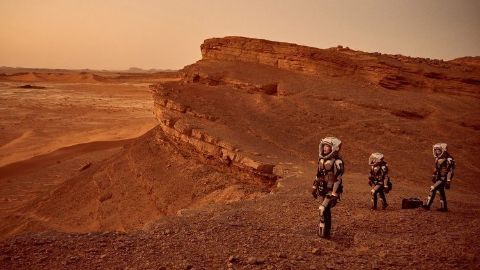
Watch as the Mars Perseverance Rover makes its historic landing on the Red Planet. We take you inside the harrowing February 18, 2021 landing, the science mission, and cutting-edge technology, including the first-ever Martian helicopter.
S4E6 • Breakthrough • 2021 • Astronomy