Andy Warhol created some of the most instantly recognisable art of the 20th century. But perhaps his greatest work of art was himself - the cool, enigmatic pop art superstar. Stephen Smith sets out to discover the real Andy Warhol - in the hour-by-hour detail of his daily life.
Hope you're finding these documentaries fascinating and eye-opening. It's just me, working hard behind the scenes to bring you this enriching content.
Running and maintaining a website like this takes time and resources. That's why I'm reaching out to you. If you appreciate what I do and would like to support my efforts, would you consider "buying me a coffee"?
BTC: bc1q8ldskxh4x9qnddhcrgcun8rtvddeldm2a07r2v
ETH: 0x5CCAAA1afc5c5D814129d99277dDb5A979672116
With your donation through , you can show your appreciation and help me keep this project going. Every contribution, no matter how small, makes a significant impact. It goes directly towards covering server costs.
You may think you know who wrote the Declaration of Independence and what it says -- but do you really? Political theorist Danielle Allen looks at the document's origin and originators to give us a picture of the men and the moment in time that shaped the United States of today.
S1E2 • Curiosity Retreats: 2015 Lectures • 2015 • People
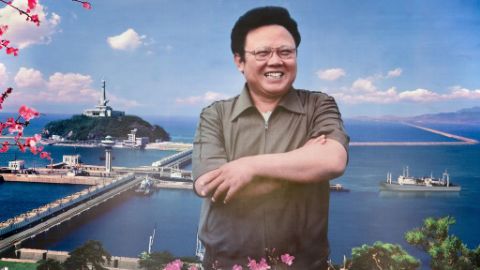
In May 2016, BBC reporter Rupert Wingfield-Hayes was expelled from North Korea for showing disrespect and 'distorting facts'. He now tells the full story of his visit to the country and explores what his detention and interrogation by senior Korean officials say about this secretive state. He investigates the apparent upturn in the North Korean economy and asks if the signs of improvement in the capital Pyongyang are real. He also examines whether the people there are genuinely loyal to their young leader or whether Kim Jong Un is ruling by reign of terror.
2016 • People
Is evil rational? If it is, then how can we depend on reason alone to make a better world? Best-selling author Dennis Prager has a challenging answer.
2013 • People
In a series about scientists with brilliant minds, James Lovelock explains how his maverick way of thinking led him not only to technical breakthroughs in atmospheric detection systems on Earth and Mars, but also to Gaia - a new way of thinking about the Earth as a holistic, self-regulating system. He tells of his struggle against the scientific consensus of the day, the ridicule of his peers and his belief that the mainstream scientific establishment stifles intellectual creativity.
S1E2 • Beautiful Minds • 2010 • People
The philosopher Friedrich Nietzsche was one of the most brilliant and dangerous minds of the 19th century. His uncompromising and often brutal ideas smashed the comfortable presuppositions and assumptions of religion, morality and science. His was a world not just bereft of God but almost of humanity, breathtaking in both its post-religious starkness and its originality. Bettany Hughes goes in search of the beliefs of a man whose work is amongst the most devastatingly manipulated and misinterpreted in philosophical history. Nietzsche's dislike of systems and of seeking truths left his ideas ambiguous and sometimes incoherent. It was this that made him vulnerable to interpretation, and as a result his thoughts - which warned against the very notion of a political system like totalitarianism - were manipulated to strengthen its ideals. Vocally opposed to anti-Semitism, his anti-Semitic sister made sure he became the poster boy for Hitler's drive for an Aryan ideal.
Part 2 • Genius of the Modern World • 2016 • People
A look at tabloid journalism in the late 1980s; sensational TV shows focus on sex, scandal and celebrities, instead of politics; TV show hosts Larry King, Connie Chung and Maury Povich reveal how this new format blurred the lines.
S1E2 • 1989: The Year that Made the Modern World • 2019 • People