Carl Sagan talks about religion and the universe
Hope you're finding these documentaries fascinating and eye-opening. It's just me, working hard behind the scenes to bring you this enriching content.
Running and maintaining a website like this takes time and resources. That's why I'm reaching out to you. If you appreciate what I do and would like to support my efforts, would you consider "buying me a coffee"?
BTC: bc1q8ldskxh4x9qnddhcrgcun8rtvddeldm2a07r2v
ETH: 0x5CCAAA1afc5c5D814129d99277dDb5A979672116
With your donation through , you can show your appreciation and help me keep this project going. Every contribution, no matter how small, makes a significant impact. It goes directly towards covering server costs.
Our species has discovered a way to communicate through the dark, to transcend immense distances
1989 • Astronomy
"You might have thought, as I did then, that our species would be on Mars before the century was over"
1989 • Astronomy
Carl Sagan talks about our future and the exploration of space
1989 • Astronomy
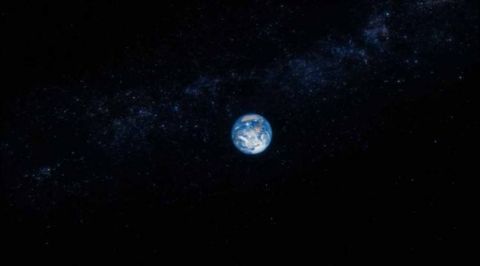
"That's home. That's us. On it, everyone you ever heard of, every human being who ever lived.."
1990 • Astronomy
In July 2022, the James Webb Space Telescope released its first images. They were visually stunning, and it was clear they provided more detail of stars, galaxies and planets than ever before. But for the scientists waiting on the data, this was just the beginning of their journey to discover what the new telescope would reveal. Since then, they have been working hard and publishing papers on all the data JWST has been sending back. Two years ago, just after the first images were released, Chris Lintott set off on a road trip to meet some of the scientists that were excitedly waiting on the first data. He wanted to find out what they hoped it could reveal. To mark the second anniversary Chris, along with fellow presenters Maggie Aderin-Pocock and George Dransfield, headed off to meet scientists old and new, to find out what the Webb Telescope has told us so far. Chris gives us a run-down of the highs and lows the Webb Telescope has been through and the other discoveries it has made. Maggie is off to Bristol University to revisit Dr Hannah Wakeford who has been using JWST data to reveal what interesting chemicals exoplanet atmospheres contain. George meets Professor Leigh Fletcher at the University of Leicester. When Chris met him two years ago, only one JWST image of Jupiter had been released. Now, he has data from all four of the outer planets of the solar system, and they have all thrown up surprises. JWST has revealed new jet streams on Jupiter and provided a greater understanding of its Galilean moons. Seasonal changes on Saturn have now been documented, and Uranus and Neptune have thrown up quirks that need another few years of work to understand. Chris also visits the University of Cambridge to meet Dr Sandro Tacchella, who has been part of a team looking back at some of the earliest galaxies. He explains what new light the JWST data can shed on ancient stars, and what that can reveal about how our cosmos formed after the Big Bang. Finally, our resident astronomer Pete Lawrence guides us through what there is to see in this month’s night sky, and how you too can look at some of the same targets as the James Webb Space Telescope – just not quite in the same level of detail!
S68E4 • BBC The Sky at Night • 2024 • Astronomy
Black holes are not the violent monsters people think they are, and new discoveries reveal that they might have been essential to creating stars, giving light, and building the universe itself.
S7E4 • How the Universe Works • 2019 • Astronomy
New discoveries help experts in their search for the first alien moon outside our solar system, which could be Earth-like worlds with the potential for life; they haven't found any, but 21st-century methods might change everything.
Space's Deepest Secrets • 2019 • Astronomy
Worried about black holes? Consider this: Every time you accelerate - you generate an event horizon behind you. The more you accelerate away from it the closer it gets. Don’t worry, it can never catch up to you, but the Unruh radiation it generates sure can.
PBS Space Time • 2018 • Astronomy
Supernovas are the violent death of giant stars, and new discoveries reveal that these cataclysmic events create the elements that are essential to all life in the universe.
S7E2 • How the Universe Works • 2019 • Astronomy
An adventure spanning billions of years into the evolution of life.
1/13 • Cosmos: Possible Worlds • 2020 • Astronomy