Humanity’s history has been full of great architects. However, what is less well known is that animals are also very talented. Embark on a surprising journey along with bowerbirds, ants, beavers, and chimpanzees to discover their secret skills.
Hope you're finding these documentaries fascinating and eye-opening. It's just me, working hard behind the scenes to bring you this enriching content.
Running and maintaining a website like this takes time and resources. That's why I'm reaching out to you. If you appreciate what I do and would like to support my efforts, would you consider "buying me a coffee"?
BTC: bc1q8ldskxh4x9qnddhcrgcun8rtvddeldm2a07r2v
ETH: 0x5CCAAA1afc5c5D814129d99277dDb5A979672116
With your donation through , you can show your appreciation and help me keep this project going. Every contribution, no matter how small, makes a significant impact. It goes directly towards covering server costs.
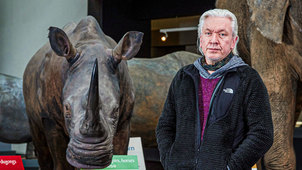
In Snowball, Chris Packham tells the story of the astonishing moment in Earth’s distant past, when almost the entire planet froze – a glistening ‘Snowball Earth’ in the dark void of space. With ice wrapped around the planet to the equator, the chances of life surviving hang in the balance. Earth’s terrifying journey into the deep freeze started with fire, not ice. 800 million years ago, long before the age of the dinosaurs, before there was even animal life, the giant supercontinent Rodinia broke up. Earth’s vast powerful tectonic forces ripped the land apart, kicking off a series of events that resulted in huge amounts of carbon dioxide being sucked from the atmosphere and sending global temperatures plummeting. This plunge into the deep freeze couldn’t have come at a worse time. The very first forms of complex life - the ancestors to the amazing life we see around us today - were evolving but, as the planet froze to the equator, it looked like their days were numbered. Happily, Chris discovers that after 50 million years locked in ice, volcanic eruptions drove a great thaw. Life broke free from the ice and soon made a giant leap, from the microscopic, to the first animals big enough to see and touch.
S1E2 • Earth: One Planet, Many Lives • 2023 • Nature
From ice-covered seas to snow-capped mountains, mammals have conquered the cold, living in the harshest places on earth thanks to their remarkable intelligence and adaptations. The programme features polar bears on the Arctic islands of Svalbard, arctic foxes in Canada's Hudson Bay, and snow leopards in the lofty mountains of the Qinghai-Tibet Plateau in China.
S1E4 • Mammals with David Attenborough • 2024 • Nature
Often referred to as the gray ghost or ghost of the mountains, this animal's rarity and elusiveness was legendary. In the past, it was known as the ounce, but today we've settled on the name snow leopard.
S1E2 • The Secret Lives of Big Cats • 2019 • Nature
Travel the the globe to experience the vital connection between humans, animals, and our planet through stunning, rarely before seen footage which exposes the effects that deforestation have had on endangered species.
2022 • Nature
David Attenborough chooses his ten favourite animals that he would most like to save from extinction. From the weird to the wonderful, he picks fabulous and unusual creatures that he would like to put in his 'ark', including unexpected and little-known animals such as the olm, the solenodon and the quoll. He shows why they are so important and shares the ingenious work of biologists across the world who are helping to keep them alive.
Natural World • 2012 • Nature
Slip through millennia-old caves in the Yucatan Peninsula of Mexico. These spooky, labyrinth-like places were considered magical as early as the Mayan era. Plus you can hitch a ride with sucker fish, dodge gigantic ocean devil fish and be entranced by the dance of a majestic 6-metre long manta ray.
Part 6 • The Magic of The Big Blue • 2011 • Nature