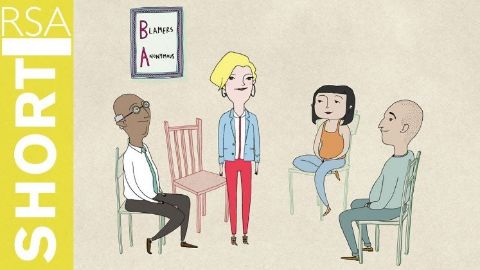
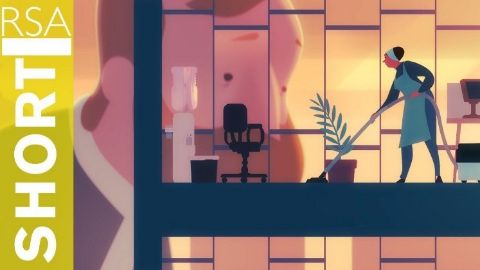
You are probably a bit of a blamer - most of us are. But why should we give it up? In this witty sequel to our most watched RSA Short, inspirational thinker Brené Brown considers why we blame others, how it sabotages our relationships, and why we desperately need to move beyond this toxic behaviour.
Hope you're finding these documentaries fascinating and eye-opening. It's just me, working hard behind the scenes to bring you this enriching content.
Running and maintaining a website like this takes time and resources. That's why I'm reaching out to you. If you appreciate what I do and would like to support my efforts, would you consider "buying me a coffee"?
BTC: bc1q8ldskxh4x9qnddhcrgcun8rtvddeldm2a07r2v
ETH: 0x5CCAAA1afc5c5D814129d99277dDb5A979672116
With your donation through , you can show your appreciation and help me keep this project going. Every contribution, no matter how small, makes a significant impact. It goes directly towards covering server costs.
We have taken huge steps towards tackling some of the biggest threats on humanity throughout history, and in many ways our lives have never been better! So where do we go from here? Author and historian Rutger Bregman argues that in order to continue towards a better world, we need big ideas and a robust vision of the future. Revolutionary ideas, that were once dismissed as a utopian fantasy, became reality through people believing there was a better way – but what if our progress is hindered by our own dim view of human nature?
2018 • Economics
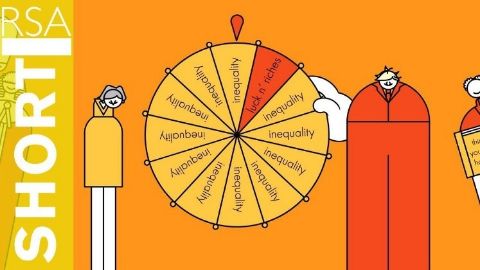
Are we wholly responsible for our actions? We don’t choose our brains, our genetic inheritance, our circumstances, our milieu – so how much control do we really have over our lives? Philosopher Raoul Martinez argues that no one is truly blameworthy. Our most visionary scientists, psychologists and philosophers have agreed that we have far less free will than we think, and yet most of society’s systems are structured around the opposite principle – that we are all on a level playing field, and we all get what we deserve.
2017 • Brain
You are probably a bit of a blamer - most of us are. But why should we give it up? In this witty sequel to our most watched RSA Short, inspirational thinker Brené Brown considers why we blame others, how it sabotages our relationships, and why we desperately need to move beyond this toxic behaviour.
2015 • People
After 9/11, Osama goes into hiding. But US Navy Seals are on his tail. In 1997, bin Laden's al-Qaida expanded its operations in Afghanistan. With the United States as his target, he occasionally gives interviews to US networks from his base in the mountains to take his threats straight into the enemy's living room. In 1998, bin Laden followed with his infamous fatwa, in which he declared the killing of civilians and soldiers of the United States and its allies everywhere as the duty of every Muslim. Just months later, the US embassies in Tanzania and Kenya are bombed, followed by a missile attack on Bin Laden's training camp and placing him on the FBI's 10 Most Wanted List. That doesn't deter him, however: in 2000, the secret services already suspected that "something was up" when al-Qaeda activists attacked a US warship and killed 17 people. In 2001, the first plans for an attack on the twin towers were already five years old. One of bin Laden's closest associates, Abu Hafs, disagrees with the strategy and leaves al-Qaeda before the operation goes ahead. On September 11, when the only TV station authorized by the Taliban broadcast the attack, a revolt broke out among the mujahideen. When George W. Bush declared the war on terror, bin Laden withdrew to the Tora Bora mountains. He never stays in the same place and always stays out of reach of American forces. In 2005, he and his family moved into a large house in Abbottabad, Pakistan. There he lived unnoticed by the public until he was shot dead during an intelligence operation by US Navy SEALs in 2011.
S1E3 • Bin Laden: The Road to 9.11 • 2021 • People
Durst reveals details about his childhood including witnessing his mother's suicide.
S1E2 • The Jinx: The Life and Deaths of Robert Durst • 2015 • People
The second episode delves into the moral framework that religions are often cited as providing and argues against the indoctrination of children. Dawkins compares religious faith to a virus, being passed from parents to offspring and teachers to pupils. He visits a London Hasidic Jewish school, where students are largely isolated from outside ideas, and Phoenix Academy, a semi-independent city academy following the American Accelerated Christian Learning curriculum. Dawkins interviews the headteacher about the integration of biblical stories into various academic subjects and explores the differences between secular ethics and morality based on religious law. He also discusses concepts from evolutionary biology, such as reciprocal altruism and kin selection, as explanations for morality.
S1E2 • The Root of All Evil • 2006 • People
A language that can be spoken, hummed, or whistled? A language with no unique words for colour or numbers? Linguistics professor Daniel Everett claims that the unique language of the Piraha people of the Amazon is exactly that. More than 30 years ago, he travelled as a missionary into the Amazon rainforest to teach the tribe, but they ended up teaching him. Their way of life and unique form of communication have profoundly changed Everett, and inspired a theory that could undermine the most powerful theory (or theorist) of linguistics.
2012 • People
Chuck D and Arsenio Hall discuss the pop-culture revolution of 1989 that raised the collective social consciousness.
S1E4 • 1989: The Year that Made the Modern World • 2019 • People
Documentary that follows a lone Inuit as he hunts, fishes and constructs an igloo. It tells the story of skills that are disappearing and of how climate change is affecting the lives of Greenland's indigenous people. With its focus on the ingenious craft of igloo building before it becomes too late to record it, this is a meditative and poetic sensory immersion in a landscape of ice and snow, an elegy to a world that is melting away.
2019 • People