Set against the backdrop of breathtaking Patagonia, David Lama, the worlds youngest climbing world champion, sets out to climb an unfathomable route on Cerro Torre, a mountain once said to be the most difficult in the world.
Hope you're finding these documentaries fascinating and eye-opening. It's just me, working hard behind the scenes to bring you this enriching content.
Running and maintaining a website like this takes time and resources. That's why I'm reaching out to you. If you appreciate what I do and would like to support my efforts, would you consider "buying me a coffee"?
BTC: bc1q8ldskxh4x9qnddhcrgcun8rtvddeldm2a07r2v
ETH: 0x5CCAAA1afc5c5D814129d99277dDb5A979672116
With your donation through , you can show your appreciation and help me keep this project going. Every contribution, no matter how small, makes a significant impact. It goes directly towards covering server costs.
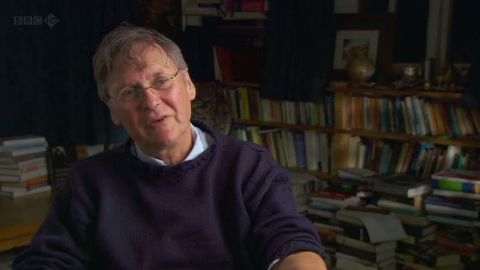
Dr Tara Shine explores the gases that make up the air we breathe, one of which may provide the answer to transport in the future.
S1E3 • BBC Royal Institution Christmas Lectures - Planet Earth: A User's Guide • 2020 • People
"Richared Feynman won the nobel prize for physics in 1965. He was considered by many to be the greatest scientific mind since Einstein."
The Feynman Series • 2011 • People
Against all odds, African-American chemist Percy Julian became one of the great scientists of the 20th century. The grandson of Alabama slaves, Percy Julian met with every possible barrier in a deeply segregated America. He was a man of genius, devotion, and determination. As a black man he was also an outsider, fighting to make a place for himself in a profession and country divided by bigotry—a man who would eventually find freedom in the laboratory. By the time of his death, Julian had risen to the highest levels of scientific and personal achievement, overcoming countless obstacles to become a world-class scientist, a self-made millionaire, and a civil-rights pioneer.
Have you ever wondered why people believe things like religion, spirituality, conspiracy theories and political ideology without evidence? Why it's so hard to change their minds, even after presenting the facts? Reasons To Believe is a thought-provoking documentary by filmmaker Ben Fama Jr., that explores the psychology and science of belief and why we believe, sometimes falsely, in things that may not match up with reality. Facilitated by leaders in the fields of science, philosophy, neuroscience, moral reasoning, psychology, perception, memory formation, and indoctrination, these experts answer a variety of thought provoking questions and provide tangible structure to the definition and creation of belief in the human brain. Fama asks the question: Why do we believe?
2017 • People
Thirty years after the collapse of the USSR, the martial rhetoric and other trappings of the "strong men" of the totalitarian era are making a comeback. Why? The film's director Ivo Briedis and the journalist Rita Rudusa were both born in the Soviet Union. Together, they embark on a journey to explore the phenomenon of HOMO SOVIETICUS. They want to know if a totalitarian mindset can still be found in countries that were formerly part of the Soviet Union. The thinker Alexander Zinoviev defined as Homo Sovieticus as a person who is, at their core, an opportunist. They do not rebel against their leadership, and want to take as little individual responsibility as possible. Did these characteristics develop specifically as a result of growing up in the Soviet Union, or can they develop in any society? To find out, they speak with people who lived under the Soviet regime, as well as with members of the first post-Soviet generation.
2021 • People
The extraordinary and dramatic story of Gertrude Bell, the most powerful woman in the British Empire in her day. She shaped the modern Middle East after World War I in ways that still reverberate today. More influential than her friend and colleague Lawrence of Arabia, Bell helped draw the borders of Iraq and established the Iraq Museum. Using never-seen-before footage of the region, the film chronicles Bell's extraordinary journey into both the uncharted Arabian desert and the inner sanctum of British male colonial power. With unique access to documents from the Iraq National Library and Archive and Gertrude Bell's own 1,600 letters, the story is told entirely in the words of the players of the day, excerpted verbatim from intimate letters, private diaries and secret communiques. It is a unique look at both a remarkable woman and the tangled history of Iraq.
2017 • People