Chasing Coral taps into the collective will and wisdom of an ad man, a self-proclaimed coral nerd, top-notch camera designers, and renowned marine biologists as they invent the first time-lapse camera to record bleaching events as they happen. Unfortunately, the effort is anything but simple, and the team doggedly battles technical malfunctions and the force of nature in pursuit of their golden fleece: documenting the indisputable and tragic transformation below the waves. With its breathtaking photography, nail-biting suspense, and startling emotion, Chasing Coral is a dramatic revelation that won’t have audiences sitting idle for long.
Hope you're finding these documentaries fascinating and eye-opening. It's just me, working hard behind the scenes to bring you this enriching content.
Running and maintaining a website like this takes time and resources. That's why I'm reaching out to you. If you appreciate what I do and would like to support my efforts, would you consider "buying me a coffee"?
BTC: bc1q8ldskxh4x9qnddhcrgcun8rtvddeldm2a07r2v
ETH: 0x5CCAAA1afc5c5D814129d99277dDb5A979672116
With your donation through , you can show your appreciation and help me keep this project going. Every contribution, no matter how small, makes a significant impact. It goes directly towards covering server costs.
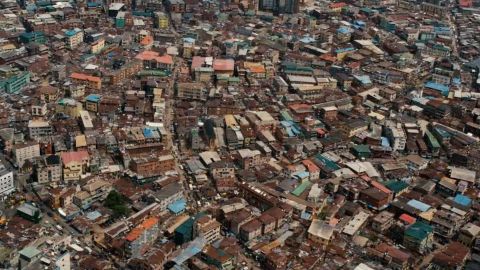
Prince William, Sir David Attenborough and astronaut Naoko Yamazaki hear the personal stories of people who are directly affected by air pollution and look at possible solutions.
S1E3 • The Earthshot Prize Repairing Our Planet • 2021 • Environment
From the Norwegian fjords to the coast of Jura in the English Channel and up to the peak of the Matterhorn; go from the volcanoes of the Massif Central in southern France to the Elbe Sandstone Mountains, or the “Grand Canyon of Europe”.
S1E2 • Expedition Europe • 2019 • Environment
No music. No commentary. HOMO SAPIENS is a film about the finiteness and fragility of human existence and the end of the industrial age, and what it means to be a human being. What will remain of our lives after we’re gone? Empty spaces, ruins, cities increasingly overgrown with vegetation, crumbling asphalt: the areas we currently inhabit, though humanity has disappeared. Now abandoned and decaying, gradually reclaimed by nature after being taken from it so long ago.
2016 • Environment
A gallop across the Steppe with extraordinary 'born in the saddle' Mongolian horsemen.
S1E6 • Human Planet • Environment
This episode focuses on the Asia-Pacific side of The Pacific Rim of Fire, which stands as a living testament to the beauty and danger that powerful geologic forces can deliver. The Pacific Rim is home to half of the world's active volcanoes and ninety percent of the world's earthquakes, yet nearly 800 million people continue to live within its violent edge. Our journey begins in New Zealand, a land of volcanoes and earthquakes, where we find a 500-kilometre long slip-strike fault deep under the Pacific Ocean. Geologist Hamish Campbell will take us to the crater of White Island, the country’s most active volcano. Then we'll visit the country's southern island with John Youngson, to find out how New Zealand’s longest fault-line contributes to the gold industry. Finally in Japan, viewers will hike up to Mount Fuji – the iconic peak where science and legend converge, getting up-close and personal with a fault-line witnessing firsthand what it’s like to discover new ways of monitoring, and hopefully one day predicting, seismic activity onboard the world’s most advanced drilling vessels.
S50E07 • The Nature of Things • 2010 • Environment
The Great Lakes region provided geologists with much of the evidence for the frequent ice ages that visited North America. But the lakes may be a rather transient feature of the continent dependent upon the recurring ice ages to maintain their existence.
S1E7 • How the Earth Was Made • 2009 • Environment