Citizenfour • 2014

Category: People

A documentarian and a reporter travel to Hong Kong for the first of many meetings with Edward Snowden.

Make a donation

Buy a brother a hot coffee? Or a cold beer?

Hope you're finding these documentaries fascinating and eye-opening. It's just me, working hard behind the scenes to bring you this enriching content.

Running and maintaining a website like this takes time and resources. That's why I'm reaching out to you. If you appreciate what I do and would like to support my efforts, would you consider "buying me a coffee"?

Donation addresses

Buy Me a Coffee at ko-fi.com

patreon.com

BTC: bc1q8ldskxh4x9qnddhcrgcun8rtvddeldm2a07r2v

ETH: 0x5CCAAA1afc5c5D814129d99277dDb5A979672116

With your donation through , you can show your appreciation and help me keep this project going. Every contribution, no matter how small, makes a significant impact. It goes directly towards covering server costs.

You might also like

Mystery of the Hope Diamond

Embark on an epic journey of Hope. The legend is as massive and multifaceted as the gem itself, spanning one billion years, three continents and leaving a trail of intrigue, envy and death. We uncover the science and secrets of history's most famous jewel by visiting different countries and getting expert opinions from forensic scientists and history scholars.

2010 • People

The God Delusion

In the first episode, Dawkins examines the unproven beliefs held as facts by many religions and the extremes to which some followers take them. He argues that faith is not a way of understanding the world but is fundamentally opposed to modern science, which tests hypotheses and builds theories to describe the world. Dawkins visits the United States to interview Pastor Ted Haggard, president of the National Association of Evangelicals, and travels to Jerusalem to interview Yousef al-Khattab, an American-born Jew who settled in Israel before converting to Islam. He uses Bertrand Russell's celestial teapot analogy to respond to charges that scientific understanding does not entitle one to reject religion.

S1E1 • The Root of All Evil • 2006 • People

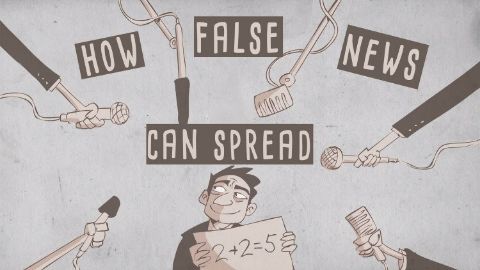
How False News Can Spread

In previous decades, most news with global reach came from several major newspapers and networks with the resources to gather information directly. The speed with which information spreads now, however, has created the ideal conditions for something called circular reporting. Noah Tavlin sheds light on this phenomenon.

TED-Ed • 2015 • People

Part 3

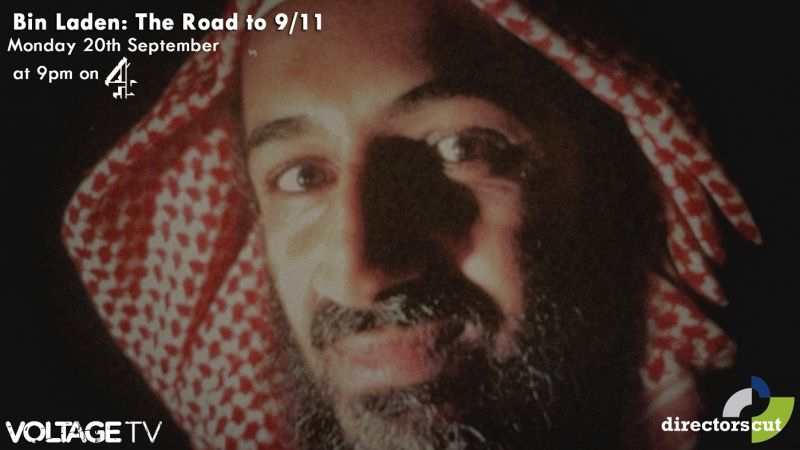
After 9/11, Osama goes into hiding. But US Navy Seals are on his tail. In 1997, bin Laden's al-Qaida expanded its operations in Afghanistan. With the United States as his target, he occasionally gives interviews to US networks from his base in the mountains to take his threats straight into the enemy's living room. In 1998, bin Laden followed with his infamous fatwa, in which he declared the killing of civilians and soldiers of the United States and its allies everywhere as the duty of every Muslim. Just months later, the US embassies in Tanzania and Kenya are bombed, followed by a missile attack on Bin Laden's training camp and placing him on the FBI's 10 Most Wanted List. That doesn't deter him, however: in 2000, the secret services already suspected that "something was up" when al-Qaeda activists attacked a US warship and killed 17 people. In 2001, the first plans for an attack on the twin towers were already five years old. One of bin Laden's closest associates, Abu Hafs, disagrees with the strategy and leaves al-Qaeda before the operation goes ahead. On September 11, when the only TV station authorized by the Taliban broadcast the attack, a revolt broke out among the mujahideen. When George W. Bush declared the war on terror, bin Laden withdrew to the Tora Bora mountains. He never stays in the same place and always stays out of reach of American forces. In 2005, he and his family moved into a large house in Abbottabad, Pakistan. There he lived unnoticed by the public until he was shot dead during an intelligence operation by US Navy SEALs in 2011.

S1E3 • Bin Laden: The Road to 9.11 • 2021 • People

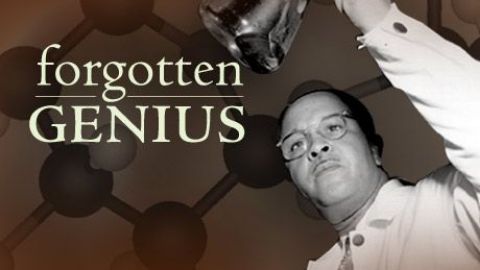
Percy Julian: Forgotten Genius

Against all odds, African-American chemist Percy Julian became one of the great scientists of the 20th century. The grandson of Alabama slaves, Percy Julian met with every possible barrier in a deeply segregated America. He was a man of genius, devotion, and determination. As a black man he was also an outsider, fighting to make a place for himself in a profession and country divided by bigotry—a man who would eventually find freedom in the laboratory. By the time of his death, Julian had risen to the highest levels of scientific and personal achievement, overcoming countless obstacles to become a world-class scientist, a self-made millionaire, and a civil-rights pioneer.

NOVA PBS • 2007 • People

Addendum

The Zeitgeist Film Series is about examining the world we share, the values we hold, the problems we face, along with what we can do to make it better.

S1E2 • Zeitgeist • People