"The world is strange... but when you look at the details, you find out that the rules are very simple..."
Hope you're finding these documentaries fascinating and eye-opening. It's just me, working hard behind the scenes to bring you this enriching content.
Running and maintaining a website like this takes time and resources. That's why I'm reaching out to you. If you appreciate what I do and would like to support my efforts, would you consider "buying me a coffee"?
BTC: bc1q8ldskxh4x9qnddhcrgcun8rtvddeldm2a07r2v
ETH: 0x5CCAAA1afc5c5D814129d99277dDb5A979672116
With your donation through , you can show your appreciation and help me keep this project going. Every contribution, no matter how small, makes a significant impact. It goes directly towards covering server costs.
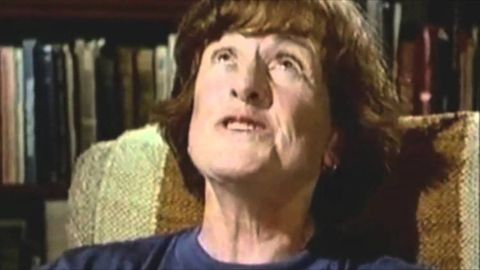
"When a scientist gazes silently up at the sky..."
2011 • People
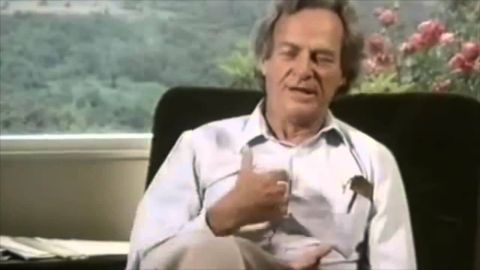
"... we had a lot of little games, like you would say at the dinner table..."
2011 • People
“I would rather have questions that can't be answered than answers that can't be questioned.”
2015 • Science
Luminous tells the story of the first astronomer in history to publicly predict the near-future explosion of a star--will he be right? Others in the astronomical community are skeptical, and professional reputations hang in the balance. In production for five years, Luminous follows Larry Molnar's journey to test an unprecedented prediction, knowing that its success or failure will unfold squarely in the international spotlight.
2022 • Astronomy
Documentary marking the fiftieth anniversary of Yuri Gagarin's flight into space. It was hailed by the Soviet Union as a triumph for socialist science over capitalism, but the true story is much stranger. George Carey's film shows how the Soviet space programme was kick-started by a mystic who taught that science would make us immortal, and carried forward by a scientist who believed that we should evolve into super-humans who could leave our overcrowded planet to colonise the universe. Stranger still, Carey shows how those ideas have survived Communism and adapted themselves to the science of the modern world.
2011 • Astronomy
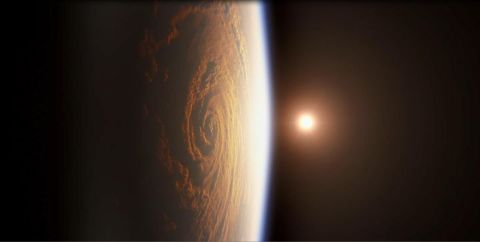
The first of the two-part series, titled "From Space," explores the birth and early life of Earth, as seen from orbit, using clues from over 300 satellites and space stations surveying Earth’s landmarks to work backwards and piece together what the planet’s early days might have looked like.
S1E1 • The Life of Earth • 2019 • Astronomy
Dark matter and dark energy are locked in an epic battle for control of the cosmos, and the winner will determine the fate of the universe. New discoveries might reveal which force will emerge victorious.
S7E7 • How the Universe Works • 2019 • Astronomy
Here it is, folks: the end. In our final episode of Crash Course Astronomy, Phil gives the course a send off with a look at some of his favorite topics and the big questions that Astronomy allows us to ask.
46 • Crash Course Astronomy • 2016 • Astronomy
Sagan discusses comets and asteroids as planetary impactors, giving recent examples of the Tunguska event and a lunar impact described by Canterbury monks in 1178. It moves to a description of the environment of Venus, from the previous fantastic theories of people such as Immanuel Velikovsky to the information gained by the Venera landers and its implications for Earth's greenhouse effect. The Cosmos Update highlights the connection to global warming.
4/13 • Cosmos: A Personal Voyage • 1980 • Astronomy