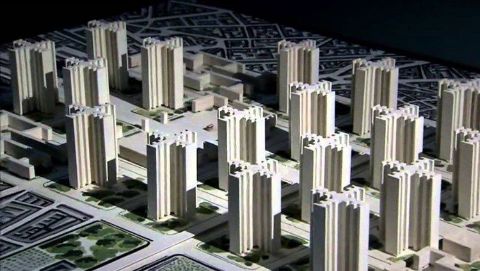
In the crisis-stricken decades of the 1920s and 1930s, with the world at the tipping point between two global wars, design suggested dramatically different ideas about the shape of things to come, from the radical futurism of the Bauhaus to the British love affair with mock-Tudor architecture and the three-piece suite.
Hope you're finding these documentaries fascinating and eye-opening. It's just me, working hard behind the scenes to bring you this enriching content.
Running and maintaining a website like this takes time and resources. That's why I'm reaching out to you. If you appreciate what I do and would like to support my efforts, would you consider "buying me a coffee"?
BTC: bc1q8ldskxh4x9qnddhcrgcun8rtvddeldm2a07r2v
ETH: 0x5CCAAA1afc5c5D814129d99277dDb5A979672116
With your donation through , you can show your appreciation and help me keep this project going. Every contribution, no matter how small, makes a significant impact. It goes directly towards covering server costs.
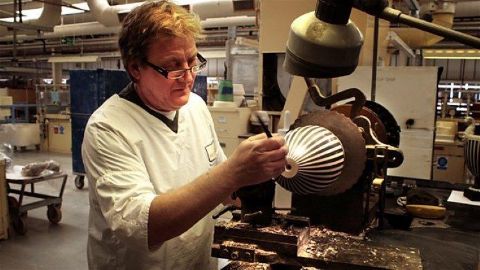
The first episode of this new series tells the fascinating story of the birth of industrial design. Alongside the celebrated names, from Wedgwood to William Morris, it also explores the work of the anonymous designers responsible for prosaic but classic designs for cast-iron cooking pots to sheep shears - harbingers of a breed of industrially produced objects culminating in the Model T Ford. Includes interviews with legendary designer Dieter Rams and J Mays, Ford Motors' global head of design.
2010 • Design
In the crisis-stricken decades of the 1920s and 1930s, with the world at the tipping point between two global wars, design suggested dramatically different ideas about the shape of things to come, from the radical futurism of the Bauhaus to the British love affair with mock-Tudor architecture and the three-piece suite.
2010 • Design
The Genius of Design examines the Second World War through the prism of the rival war machines designed and built in Germany, Britain, the USSR and the USA, with each casting a fascinating sidelight on the ideological priorities of the nations and regimes which produced them.
2010 • Design
The story of design enters the 50s and 60s, when a revolutionary new material called plastic combined with the miracles of electronic miniaturisation to allow designers to offer post-war consumers something new: liberation.
2010 • Design
Picking up the story of design from the drab days of the late 70s, the final episode tracks the explosion of wild creativity that defined the 'designer decades' of the 80s and early 90s. By addressing wants rather than needs and allying themselves to the blatant consumerism of 'retail culture' designers emerged from the backrooms to claim a starring role in the shaping of modern life.
2010 • Design
We each spend three years of our lives on the toilet, but how happy are we talking about this essential part of our lives? This film challenges that mindset by uncovering its role in our culture and exploring the social history of the toilet in Britain and abroad - as well as exploring many of our cultural toilet taboos. Starting in Merida, Spain with some of the the earliest surviving Roman toilets, we journey around the world - from the UK to China, Japan and Bangladesh - visiting toilets, ranging from the historically significant to the beautiful, from the functional and sometimes not-so-functional to the downright bizarre. Leading the journey is Everyman figure, Welsh poet and presenter Ifor ap Glyn, who has a passionate interest in the toilet, its history and how it has evolved over the centuries, right up to the development of the current design. Finally, there's a glimpse of the future and a possible solution to the global sanitation issues we now face.
2012 • Design
Every Rembrandt exhibition is eagerly anticipated, but a once-in-a-lifetime show at London's National Gallery and Amsterdam's Rijksmuseum that took 15 years to prepare was remarkable. With exclusive and privileged access to both galleries, this film documents this landmark exhibition while interweaving Rembrandt's life story with behind-the-scenes preparations at these world-famous institutions. Rembrandt is the greatest artist that ever lived to many, and this film seeks to explore the truth.
Piers Taylor and Caroline Quentin visit an island in Norway, spending two days in a house built on a footprint of just 100 square metres. In Spain, the pair head to a home built into a steep cliff face overlooking the Mediterranean, featuring a cantilevered terrace offering maximum sea views and a swimming pool as well as an unusual tiled roof. After viewing a house in New Zealand crafted from two separate wooden cladded structures, the duo explore a home in Canada inspired by two ships in dry dock, designed to peer over the coast, allowing the sea to pass underneath.
S1E3 • The World's Most Extraordinary Homes • 2017 • Design
In Spain, Caroline and Piers see a farmhouse made of steel, a home with a floating pool, a circular sanctuary and a shared dwelling for three sisters.
S2E5 • The World's Most Extraordinary Homes • 2019 • Design
Caroline and Piers start the season in Portugal, where a fully automated home, a serpentine design, an X-shaped stunner and a woodland property await
S2E2 • The World's Most Extraordinary Homes • 2018 • Design
Piers and Caroline travel to Norway to see a charming family cottage, a summer house built around a rock, a daring concrete home and a rugged retreat.
S2E7 • The World's Most Extraordinary Homes • 2019 • Design