Explores the digital afterlife business. What if a person's death did not mean the end of their life? What if their loved ones could still talk to them long after their body has been cremated or is lying lifeless in the ground? What sounds like the scenario of a science fiction movie is already offered by companies today. By using AI, these startups create avatars of deceased people to allow their loved ones to interact with them. Eternal You tells the story of a human experiment: what does it do to people to resurrect their deceased loved ones in order to talk to them? Who takes responsibility for the psychological and ethical consequences? And do we even want all this?
Hope you're finding these documentaries fascinating and eye-opening. It's just me, working hard behind the scenes to bring you this enriching content.
Running and maintaining a website like this takes time and resources. That's why I'm reaching out to you. If you appreciate what I do and would like to support my efforts, would you consider "buying me a coffee"?
BTC: bc1q8ldskxh4x9qnddhcrgcun8rtvddeldm2a07r2v
ETH: 0x5CCAAA1afc5c5D814129d99277dDb5A979672116
With your donation through , you can show your appreciation and help me keep this project going. Every contribution, no matter how small, makes a significant impact. It goes directly towards covering server costs.
Concerns the exponential growth of technology and where it is taking us. The film focuses on how future technology could significantly change the two inevitable features of the human experience; punching the clock and fading away. It explores how advanced automation, AI and technological singularity could be achievable in the next 30 years. How job obsolescence and technological unemployment could consequently occur and how digital immortality may not be a thing of science fiction. But what are the socio-political repercussions of these innovations and are we ready for them? Does working less mean living more and is ending ageing incumbent on us? Worldwide experts in the fields of futurology, anthropology, neuroscience and philosophy share their thoughts on these future advancements.
2016 • Technology
Documentary which tells the story of the most ambitious project ever conceived on the internet and the people who tried to stop it. In 1937 HG Wells predicted the creation of the 'world brain', a giant global library that contained all human knowledge which would lead to a new form of higher intelligence. 70 years later the realisation of that dream was under way, as Google scanned millions of books for its Google Books website. However, over half those books were still in copyright and authors across the world launched a campaign to stop them, climaxing in a New York courtroom in 2011. A film about the dreams, dilemmas and dangers of the internet, set in spectacular locations in China, USA, Europe and Latin America.
2013 • Technology
GPS location apps on a smartphone can be very handy when mapping a travel route or finding nearby events. But how does your smartphone know where you are?
In 50 years from now, cities will be home to 70% of all human beings. They will have seven billion mouths to feed and will face an immense challenge in terms of food supply. Are hydroponics and vertical farming going to solve this challenge?
S1E3 • Cities of Tomorrow • 2016 • Technology
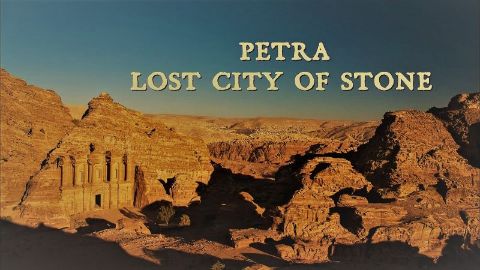
More than 2,000 years ago, the thriving city of Petra rose up in the bone-dry desert of what is now Jordan. An oasis of culture and abundance, the city was built by wealthy merchants whose camel caravans transported incense and spices from the Arabian Gulf. They carved spectacular temple-tombs into its soaring cliffs, raised a monumental Great Temple at its heart, and devised an ingenious system that channeled water to vineyards, bathhouses, fountains, and pools.
S1E2 • Building Wonders • 2020 • Technology
Twenty-five years after the world wide web was created, it is now caught in the greatest controversy of its existence: surveillance.