Great Lakes Untamed • 2022

Category: Nature | Torrent:

At the heart of the US-Canada border sit The Great Lakes - the world's largest freshwater ecosystem, containing as much as one fifth of the planet's supply. Chapter 1: Source to Sea The water's journey from source to sea spans half a continent - 2,000 miles - and takes more than three centuries to complete. This first of three documentaries charts the feature and its surrounding flora and fauna, showing how beavers, wolves, loons, moose help shape this incredibly vast watershed. Chapter 2: The Big Freeze s winter descends on The Great Lakes, life must contend with the return of the ice that carved this immense watershed thousands of year ago. A polar vortex paralyses fish and ducks and attracts hundreds of bald eagles. Wolves hunt deer trapped by ice, but are manipulated by ravens. Chapter 3: Marvels and Mysteries The spring thaw in America's Great Lakes creates ice tsunamis. Photosynthetic salamanders, fishing wolves, deep-diving moose, baby rattlesnakes and colourful fish hunting mid-air all illustrate unique adaptations to to the warmer, brighter season.

Make a donation

Buy a brother a hot coffee? Or a cold beer?

Hope you're finding these documentaries fascinating and eye-opening. It's just me, working hard behind the scenes to bring you this enriching content.

Running and maintaining a website like this takes time and resources. That's why I'm reaching out to you. If you appreciate what I do and would like to support my efforts, would you consider "buying me a coffee"?

Donation addresses

Buy Me a Coffee at ko-fi.com

patreon.com

BTC: bc1q8ldskxh4x9qnddhcrgcun8rtvddeldm2a07r2v

ETH: 0x5CCAAA1afc5c5D814129d99277dDb5A979672116

With your donation through , you can show your appreciation and help me keep this project going. Every contribution, no matter how small, makes a significant impact. It goes directly towards covering server costs.
You might also like

Survivors

What changes has the Earth has undergone through the eyes of the puma and leopard? From the almost complete disappearance of American wildlife to the rise of man and the industrialized and urban areas of the modern 21st century. Big cats face numerous threats to their survival.

S1E3Age of Big Cats • 2018 • Nature

Should We Close Our Zoos

Liz Bonnin presents a controversial and provocative episode of Horizon, investigating how new scientific research is raising hard questions about zoos - the film explores how and why zoos keep animals, and whether they need to change to keep up with modern science, or ultimately be consigned to history. Should zoos cull their animals to manage populations? Liz travels to Copenhagen Zoo, who killed a giraffe and fed it to the lions, to witness their culling process first hand. They think it is a natural part of zoo keeping that is often swept under the carpet. Should some animals never be kept in captivity? In a world exclusive, Liz visits SeaWorld in Florida and asks if captivity drove one of their orcas to kill his trainer. But could zoos be the answer to conserving endangered species? Liz examines their record, from helping breed pandas for the wild to efforts to save the rhinos. She meets one of the last surviving northern white rhinos and discovers the future of this species now lies in a multimillion-dollar programme to engineer them for stem cells. Veteran conservation scientist Dr Sarah Bexell tells Liz the science of captive breeding is giving humanity false hope.

Horizon • 2016 • Nature

Opportunists

David Attenborough meets the omnivores - the opportunists. When it comes to food, this diverse range of animals, which includes grizzly bears at one end and rats on the other, are so adaptable that they can always make the most of whatever happens to be around at the time. They are nature's generalists but each is equipped with some very specialised skills.

S1E6The Life of Mammals • 2008 • Nature

Residents

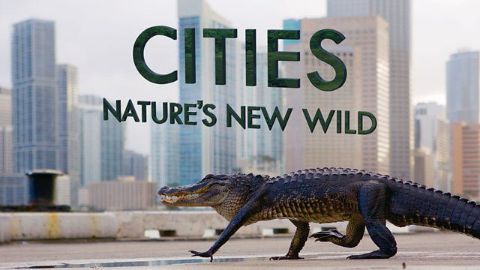
The world's cities are growing at a faster rate than any other habitat on the planet. And while most of us imagine them to be concrete jungles devoid of nature, for animals of all shapes and sizes they are just a new habitat filled with new and surprising opportunity. With similar needs to humans, these wild animals face similar challenges, and like us, if they play their cards right, they can find everything they need in the city. With the natural world shrinking, and our urban centres continuing to grow, adapting to life in the city has never been more important. This first episode examines what it takes for these wild residents to thrive in the newest and fastest changing habitat on the planet. From smooth-coated otters at home in Singapore and huge colonies of megabats in Adelaide to reticulated pythons living on the streets of Bangkok, experience our cities through fresh eyes - the eyes of the animals that live in them, and discover a wilder side to a world we think we know.

S1E1Cities: Nature's New Wild • 2018 • Nature

Forests

A journey through an underground cave in North America turns perilous when a young Triceratops is separated from its mother.

S1E5Prehistoric Planet • 2022 • Nature

The Invisible Universe Of The Human Microbiome

The next time you look in a mirror, think about this: In many ways you're more microbe than human. There are 10 times more cells from microorganisms like bacteria and fungi in and on our bodies than there are human cells.

Nature