They are constantly circling hundreds of miles above our heads, driving our daily lives - yet we barely give satellites a second thought. Satellite engineer Maggie Aderin Pocock wants to change all that. She wants to make us realise and appreciate what these unsung heroes of the modern world have done for us. Maggie reveals how satellites have revolutionised exploration, communication, location-finding and spying. She discovers how they have transformed not only the way we see our planet but our understanding of the dangers within it, like volcanoes and earthquakes. Plus, she discovers the jaw-dropping power of the technology used by satellites to make our lives run smoothly.
Hope you're finding these documentaries fascinating and eye-opening. It's just me, working hard behind the scenes to bring you this enriching content.
Running and maintaining a website like this takes time and resources. That's why I'm reaching out to you. If you appreciate what I do and would like to support my efforts, would you consider "buying me a coffee"?
BTC: bc1q8ldskxh4x9qnddhcrgcun8rtvddeldm2a07r2v
ETH: 0x5CCAAA1afc5c5D814129d99277dDb5A979672116
With your donation through , you can show your appreciation and help me keep this project going. Every contribution, no matter how small, makes a significant impact. It goes directly towards covering server costs.
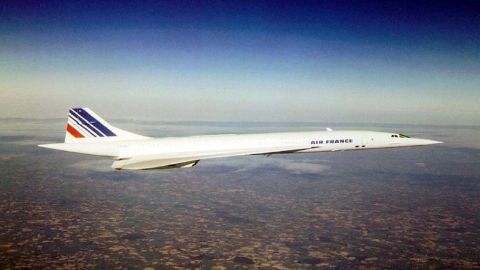
Britain and France collaborated to build the world's first Concorde, a jet that could traverse the Atlantic in just 3 hours, at twice the speed of sound. The all-metal Trident jet was a popular choice for airlines but couldn't compete with the glamour and allure of the Concorde
9/13 • The Amazing World Of Aviation • 2009 • Technology
Traditionally, regulators had insisted that all passenger aircraft be powered by at least three engines. But the development of more sophisticated airplanes eventually made twin-engine, long-distance travel feasible. A new standard was introduced, known as Extended-range Twin-engine Operational Performance Standards, or ETOPS.
11/13 • The Amazing World Of Aviation • 2009 • Technology
From the Stone Age to the Silicon Age, materials have helped drive forward our civilisation. By manipulating materials we have been able to transform our world and our lives - and never more so than in the past century when we have discovered and designed more materials than at any other time in human history. (Part 1: Metal) Professor Mark Miodownik travels to Israel to trace the history of our love affair with gleaming, lustrous metal. He learns how we first extracted glinting copper from dull rock and used it to shape our world and reveals how our eternal quest for lighter, stronger metals led us to forge hard, sharp steel from malleable iron and to create complex alloys in order to conquer the skies. He investigates metals at the atomic level to reveal mysterious properties such as why they get stronger when they are hit, and he discovers how metal crystals can be grown to survive inside one of our most extreme environments - the jet engine.
S1E1 • How It Works • 2012 • Technology
What will communication look like in 2050? First, the internet will be everywhere. Researchers and scientists from around the world are working on ways to make this happen, for example with self-sufficient balloons equipped with wifi to cover digital deserts.
S2E2 • Dream the Future • 2018 • Technology
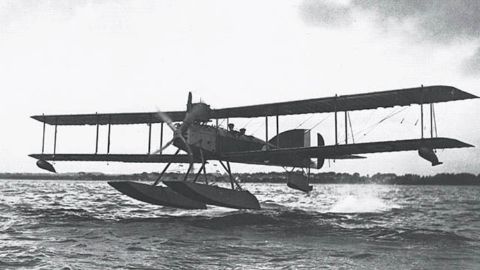
Seaplanes saw the dawn of the aviation industry as they could accommodate large numbers of passengers between continents, and only required a smooth body of water to land. Since the 1920's, advances in floatplane technology saw metal hulls introduced, a cantilevered design and single engine. Seaplanes continue to be an extremely popular mode of transportation.
5/13 • The Amazing World Of Aviation • 2009 • Technology
The world's most iconic buildings were built in the heyday of the American century, and as New York became the capital for these innovative new skyscrapers, experts used cutting-edge tech to push engineering to new heights.
S1E2 • Skyscrapers Engineering the Future • 2019 • Technology