Why are bees, worldwide, facing extinction? With the tenacity of a man out to solve a world-class mystery, Markus Imhoof investigates this global phenomenon, from California to Switzerland, China, and Australia.
Hope you're finding these documentaries fascinating and eye-opening. It's just me, working hard behind the scenes to bring you this enriching content.
Running and maintaining a website like this takes time and resources. That's why I'm reaching out to you. If you appreciate what I do and would like to support my efforts, would you consider "buying me a coffee"?
BTC: bc1q8ldskxh4x9qnddhcrgcun8rtvddeldm2a07r2v
ETH: 0x5CCAAA1afc5c5D814129d99277dDb5A979672116
With your donation through , you can show your appreciation and help me keep this project going. Every contribution, no matter how small, makes a significant impact. It goes directly towards covering server costs.
We live in an age when technological innovation seems to be limitlessly soaring. But for all the satisfying speed with which our gadgets have improved, many of them share a frustrating weakness: the batteries. Though they have improved in last century, batteries remain finicky, bulky, expensive, toxic, and maddeningly short-lived. The quest is on for a “super battery,” and the stakes in this hunt are much higher than the phone in your pocket. With climate change looming, electric cars and renewable energy sources like wind and solar power could hold keys to a greener future...if we can engineer the perfect battery. Join host David Pogue as he explores the hidden world of energy storage, from the power—and danger—of the lithium-ion batteries we use today, to the bold innovations that could one day charge our world.
NOVA PBS • 2017 • Environment
Ben Fogle and Victoria Pendleton are guided by professional mountaineer Kenton Cool, a veteran of twelve Everest summits. As they head up the mountain, into the notorious "death zone", physical exhaustion, extreme conditions and misfortune will test the pair to their limits, 65 years after Edmund Hillary and Tenzing Norgay became the first climbers known to have reached the summit. Since that day in 1953, more than 4000 people have successfully climbed Everest but nearly 300 climbers have died on her icy slopes. As Ben and Victoria begin their expedition and face their fears, they know Everest will be life-changing.
2018 • Environment
We start at the oldest cliffs of the palaeocontinent Baltica in the Extreme North of Russia atop an ancient mountain now covered in water. From the Urals in the east to the forgotten Tabernas Desert in the west, volcanic landscapes with plants from every climate zone, dolphins and whales will amaze.
S1E1 • Expedition Europe • 2019 • Environment
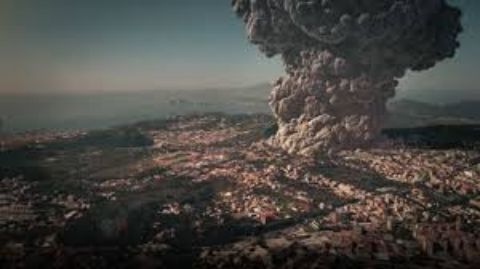
NOVA follows a team of volcano sleuths as they embark on a worldwide hunt for an elusive volcanic mega-eruption that plunged the medieval earth into a deep freeze. The mystery begins when archaeologists find a hastily dug mass grave of 4,000 men, women, and children in London. At first they assume it's a plague pit from the Black Death, but when they date the bones, they're a century too early. So what killed off these families? The chronicles of that time describe a run of wild weather that devastated crops and spread famine across Europe. NOVA's expert team looks for the signature of a volcanic eruption big enough to have blasted a huge cloud of ash and sulfuric acid into the atmosphere, which chilled the entire planet. From Greenland to Antarctica, the team finds telltale "fingerprints" in ice and soil layers until, finally, they narrow down the culprit to a smoldering crater on a remote Indonesian island. Nearly 750 years ago, this volcano's colossal explosion shot a million tons of rock and ash into the atmosphere. Across the globe, it turned summer into winter. What would happen if another such cataclysm struck again today?
NOVA PBS • 2017 • Environment
Professor Chris Jackson charts the planet's changing climate. He shows how the oldest rocks and fossils provide evidence of radical climate changes throughout its history, revealing that what drives them is the amount of carbon dioxide in the atmosphere.
S1E1 • BBC Royal Institution Christmas Lectures - Planet Earth: A User's Guide • 2020 • Environment
The geological history of New York City is as superlative as it's current economic impact including; a titanic mountain rage, massive volcanic eruptions, immense glaciers and an enormous flash flood.
S1E5 • How the Earth Was Made • 2009 • Environment