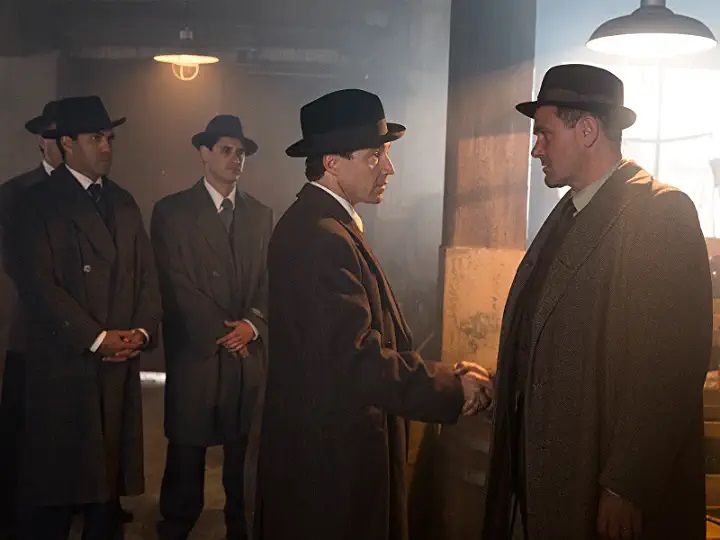
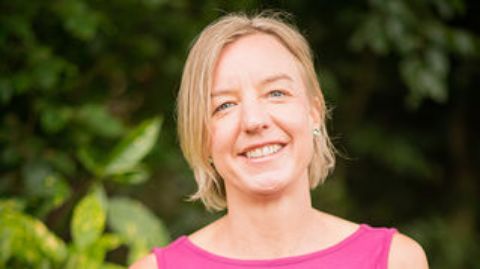
Benito Mussolini seized power in Italy in October 1922, after his March on Rome. He would hold it in his grasp until his death in 1945, establishing a dictatorship that lasted more than two decades. Long considered a buffoon and a second-rate dictator, Il Duce invented fascism that was imitated by Adolf Hitler, who viewed the Italian as his political master. Mussolini wanted to transform his country into a warrior nation and promised Italians a return to the grandeur of the Roman Empire. He governed by violence and trickery and was one of the first populist leaders of modern times, leading his country into the catastrophe of the Second World War. But who was Benito Mussolini, this former teacher who came from the extreme left to become a newspaper editor and creator of the Italian Fascist Party? Why did he ally himself with Adolf Hitler? Were the Italian people really behind him? With rare archives, some of which have been colorized, and interviews with the last-surviving witnesses of the era, along with perspectives from historian Marie-Anne Matard-Bonucci, this portrait takes a look back at one of the most notorious dictators of the 20th century.
Hope you're finding these documentaries fascinating and eye-opening. It's just me, working hard behind the scenes to bring you this enriching content.
Running and maintaining a website like this takes time and resources. That's why I'm reaching out to you. If you appreciate what I do and would like to support my efforts, would you consider "buying me a coffee"?
BTC: bc1q8ldskxh4x9qnddhcrgcun8rtvddeldm2a07r2v
ETH: 0x5CCAAA1afc5c5D814129d99277dDb5A979672116
With your donation through , you can show your appreciation and help me keep this project going. Every contribution, no matter how small, makes a significant impact. It goes directly towards covering server costs.

Bettany Hughes travels to Vienna on the trail of Sigmund Freud, the father of psychoanalysis. Freud's influence surrounds us. In our vocabulary - repression, penis envy, the Freudian slip - and in the freedom we take for granted, to talk openly about our deepest feelings and insecurities. A pioneer in the study of the human mind, Freud's psychoanalytic methods addressed emotional issues, seldom even discussed in the 19th century. Talking to his patients inspired his radical understanding of the unconscious mind, as a repository of hidden repressed emotions and irrational primal desires.
Part 3 • Genius of the Modern World • 2016 • People
A series of interviews featuring linguist, philosopher and activist Noam Chomsky done in hand-drawn animation. From Michel Gondry, the innovative director of Eternal Sunshine of the Spotless Mind and The Science of Sleep, comes this unique animated documentary on the life of controversial MIT professor, philosopher, linguist, anti-war activist and political firebrand Noam Chomsky. Through complex, lively conversations with Chomsky and brilliant illustrations by Gondry himself, the film reveals the life and work of the father of modern linguistics while also exploring his theories on the emergence of language. The result is not only a dazzling, vital portrait of one of the foremost thinkers of modern times, but also a beautifully animated work of art.
2013 • People
Unpacking the unique Kim father-son relationship further, “Son of God” tracks the decline of Kim Il Sung and the rise of his son, Kim Jong Il.
S1E2 • Inside North Korea's Dynasty • 2018 • People
"I told you so..." H.G. Wells' self penned epitaph underscores a lifetime of grim yet uncanny prophecy. With stories like The Time Machine, The Invisible Man, The World Set Free, and The War of the Worlds, H.G. Wells established himself as a sci-fi writer of almost clairvoyant talent.
S1E3 • Prophets of Science Fiction • 2011 • People
Bin Laden's on the run and plotting an audacious plan to strike at the US. Bin Laden returns to Saudi Arabia from Afghanistan, where he is hailed as a war hero after the Soviets left because he believes he made a significant contribution to the military victory. 18 months later, Saddam Hussein invades Kuwait, prompting worried Saudi authorities to turn to the US for protection. Horrified by what he perceives as an invasion of the holy places by the American army, bin Laden publicly opposes the Saudi royal family declaring Jihad against the US and is eventually forced to flee to Sudan. There he reinvents himself as a major agricultural producer of sunflowers and watermelons, while expanding al-Qaeda's work and setting up training camps that attract recruits from across the region. Under pressure from Saudi Arabia and the United States, bin Laden finally has to give up his refuge in Sudan. Stateless and without much prospect of alternative quarters, he returns to Afghanistan in 1996. Just a few months later, he issued a 30-page fatwa declaring holy war against the Americans who occupied the Arabian Peninsula. He surrounded himself with increasingly radical extremists, and in the summer of 1996 finally suggested piloting planes to American targets. The plan to attack the Twin Towers is born. This compelling history documentary looks at the factors that transformed Bin Laden from a renowned freedom fighter to a devoted enemy of America and the West. What drove him to plot his most audacious attack?
S1E2 • Bin Laden: The Road to 9.11 • 2021 • People
Adolf Hitler is infamous today as a war criminal - arguably one of the worst war criminals in history. Yet during the 1930s he was loved by millions of Germans. How was this possible? In this fascinating series, award-winning historian and documentary maker Laurence Rees examines the background to Hitler's 'charismatic' rule.
S1E3 • The Dark Charisma of Adolf Hitler • 2012 • People