Filmmaker Alex Gibney investigates the fact that the 400 richest Americans control more wealth than the 150 million people in the bottom 50 percent of the population.
Hope you're finding these documentaries fascinating and eye-opening. It's just me, working hard behind the scenes to bring you this enriching content.
Running and maintaining a website like this takes time and resources. That's why I'm reaching out to you. If you appreciate what I do and would like to support my efforts, would you consider "buying me a coffee"?
BTC: bc1q8ldskxh4x9qnddhcrgcun8rtvddeldm2a07r2v
ETH: 0x5CCAAA1afc5c5D814129d99277dDb5A979672116
With your donation through , you can show your appreciation and help me keep this project going. Every contribution, no matter how small, makes a significant impact. It goes directly towards covering server costs.
The global economy is in crisis. The exponential exhaustion of natural resources, declining productivity, slow growth, rising unemployment, and steep inequality, forces us to rethink our economic models. Where do we go from here? In this feature-length documentary, social and economic theorist Jeremy Rifkin lays out a road map to usher in a new economic system. A Third Industrial Revolution is unfolding with the convergence of three pivotal technologies: an ultra-fast 5G communication internet, a renewable energy internet, and a driverless mobility internet, all connected to the Internet of Things embedded across society and the environment. This 21st century smart digital infrastructure is giving rise to a radical new sharing economy that is transforming the way we manage, power and move economic life.
2017 • Economics
Jamie Bartlett reveals how Silicon Valley's mission to connect the world is disrupting democracy, helping plunge us into an age of political turbulence. Many of the Tech Gods were dismayed when Donald Trump - who holds a very different worldview - won the American presidency, but did they actually help him to win? With the help of a key insider from the Trump campaign's digital operation, Jamie unravels for the first time the role played by social media and Facebook's vital role in getting Trump into the White House. But how did Facebook become such a powerful player? Jamie learns how Facebook's vast power to persuade was first built for advertisers, combining data about our internet use and psychological insights into how we think. A leading psychologist then shows Jamie how Facebook's hoard of data about us can be used to predict our personalities and other psychological traits. He interrogates the head of the big data analytics firm that targeted millions of voters on Facebook for Trump - he tells Jamie this revolution is unstoppable. But is this great persuasion machine now out of control? Exploring the emotional mechanisms that supercharge the spread of fake news on social media, Jamie reveals how Silicon Valley's persuasion machine is now being exploited by political forces of all kinds, in ways no one - including the Tech Gods who created it - may be able to stop.
S1E2 • Secrets of Silicon Valley • 2017 • Economics
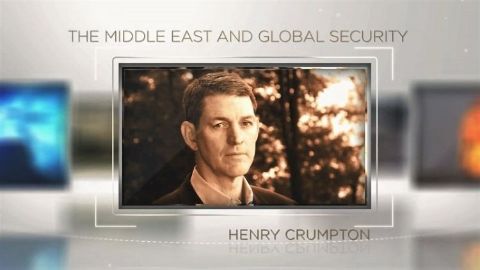
Ambassador Henry Crumpton, a veteran CIA operative with experiences on the front line of America's initial campaign against the Taliban in Afghanistan, considers the paradigm shift caused by the increased role of non-state actors in the Mid-East and other issues facing that region and the world.
8/10 • Curiosity Retreats: 2014 Lectures • 2014 • Economics
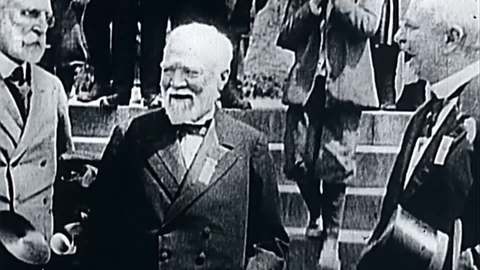
At the end of the 19th century, a club of millionaires — John D. Rockefeller and his oil monopoly, steel king and philanthropist Andrew Carnegie and banker J. P. Morgan, who financed the Industrial Revolution from Wall Street — took over the United States, where immigrants provided a labor force that was ruthlessly exploited.
S1E1 • American Capitalism – The Cult of Wealth • 2023 • Economics
Jan Leeming narrates a look at controversies, scandals and surprises in TV, film, music and politics from 1990, when Mark Fowler rocked Walford with a dramatic return to EastEnders and a sitcom about Adolf Hitler was pulled off air after just one episode. The Poll Tax riots caused chaos on the streets of London and it was the end of the road for Britain's longest serving prime minister when Margaret Thatcher resigned. Heavy metal band Judas Priest were accused of hiding subliminal messages in their songs, and pop duo Milli Vanilli's career came to a dramatic end when it was revealed they were nothing more than a mime act.
S1E5 • Controversially: That Was the Year that Was • 2023 • Economics
In the first of this three-part series investigating consumer spending, Jacques reveals how the concept of 'product lifespan' holds the key to our ever-churning consumerism. Exploring the historical origin of planned obsolescence, when some of the world biggest electrical manufacturers formed a light bulb cartel in the 1920s, Jacques reveals how products that are essential to our modern lifestyles are still made to break. During his investigation, Jacques uncovers the process by which a crucial transformation happened and attitudes towards spending were transformed. Instead of needing new goods because our old ones were broken, we learned to want them for reasons of fashion and aspiration - awaking a consumer appetite that could never be satisfied. In the US, he visits a recycling centre where brand-new high-tech goods are destroyed before they have even come out of the box. Jacques also meets some of the companies that encourage consumers to be dissatisfied with what they have and encourage purchases as part of an ever-faster cycle of 'upgrades'. He asks a senior IKEA executive why, despite the company's commitment to sustainability, it still encourages repeated discarding and purchasing. Jacques also talks to a former senior Apple employee who reveals how the company's new focus on fashion, with its colourful iPhones, keeps us buying even when technological innovation slows.
S1E1 • The Men Who Made Us Spend • 2014 • Economics