The Ukrainian government says that thousands of children have been taken unlawfully to Russia since the start of the war. The International Criminal Court has issued a warrant for President Putin's arrest. Now, Panorama investigates what happened to more than 40 children taken by Russian forces from a children's home in Kherson. The film-makers, working with journalists in Ukraine, uncover birth certificates, a secret adoption and a trail of evidence leading all the way to the Russian parliament.
Hope you're finding these documentaries fascinating and eye-opening. It's just me, working hard behind the scenes to bring you this enriching content.
Running and maintaining a website like this takes time and resources. That's why I'm reaching out to you. If you appreciate what I do and would like to support my efforts, would you consider "buying me a coffee"?
BTC: bc1q8ldskxh4x9qnddhcrgcun8rtvddeldm2a07r2v
ETH: 0x5CCAAA1afc5c5D814129d99277dDb5A979672116
With your donation through , you can show your appreciation and help me keep this project going. Every contribution, no matter how small, makes a significant impact. It goes directly towards covering server costs.
Traveling through three countries from Nuremberg to Auschwitz, Chris Tarrant explores the darkest chapter in the history of the railways - their role in the Nazi Holocaust of WWII.
2018 • History
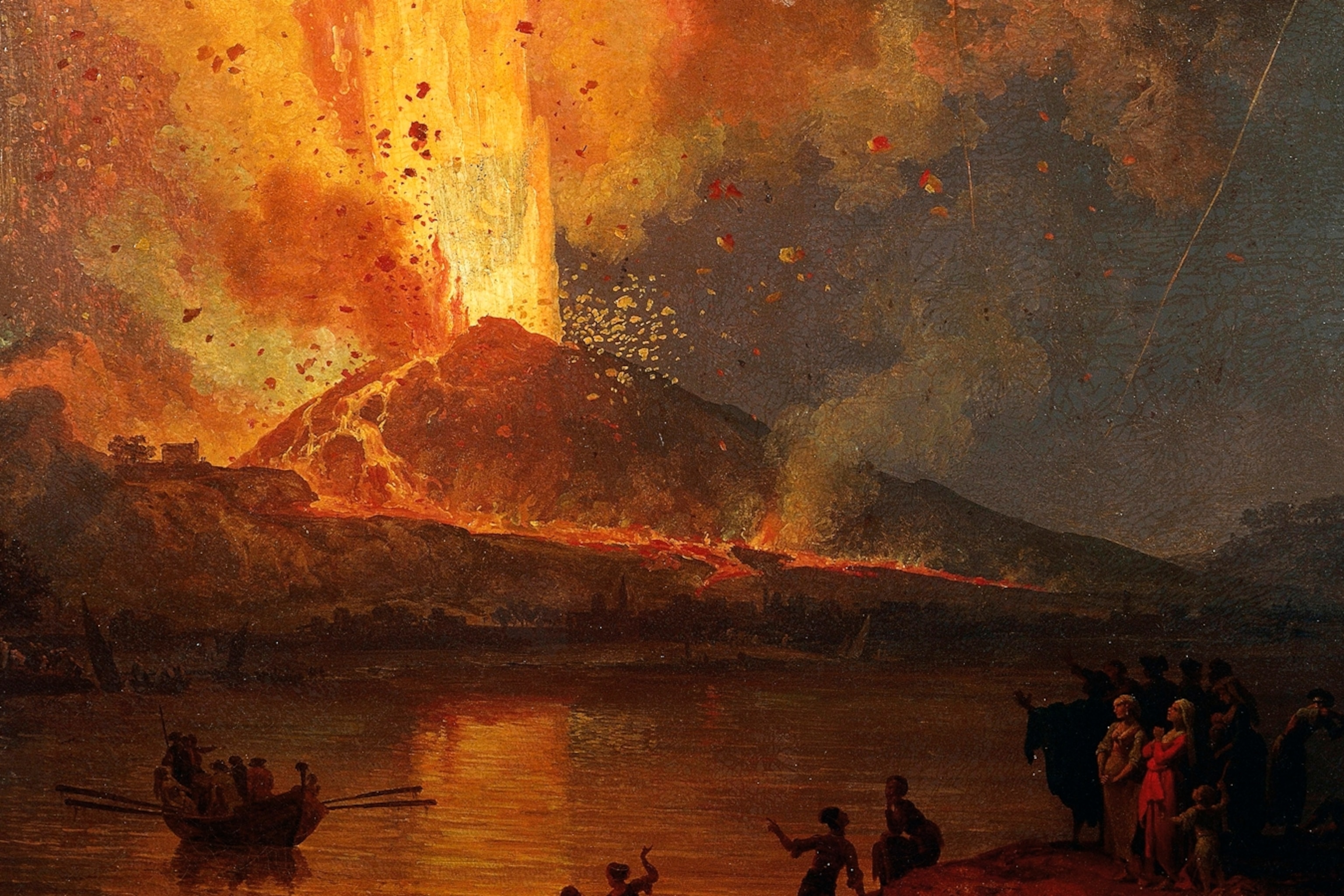
Pompeii: The Last Day is a dramatized documentary that tells of the eruption of Mount Vesuvius, covering the Roman cities of Pompeii and Herculaneum in ash and pumice, killing everyone trapped between the volcano and the sea. On 24 August AD79, the magnificent Roman cities of Pompeii and nearby Herculaneum came to a devastating end. In just 18 hours, the entire city of Pompeii and all its inhabitants were buried in volcanic ash. Pompeii - The Last Day tells the heart rending story of the last hours of both Pompeii and Herculaneum.Their story is told first-hand by those who witnessed the disaster, including a local politician and his family, a fuller, his wife, and two gladiators. Historical characters include Pliny the Elder and his nephew Pliny the Younger. Pompeii: The Last Day draws heavily on the eyewitness account of Pliny the Younger, as well as historical research and recent discoveries in volcanology. This BAFTA nominated and Emmy Award winning drama is the ultimate disaster movie. It's Man versus Volcano - how the greatest civilisation in the world was brought to its knees by a deadly threat it knew nothing about. It s a true story and its significance today is that it could all happen again, much sooner than most people realise. One of history's greatest stories, the destruction of the city of Pompeii was a natural disaster on an epic scale that has fascinated a succession of cultures around the world for centuries. The twin cities lay undisturbed under metres of volcanic debris for more than 1500 years, during which time all memory of them faded. The seal of wet ashes preserved public structures temples, theatres, baths, shops and private dwellings. The remains of some of the victims, including gladiators, soldiers, slaves and their masters, and entire families, were found in the ruins. Archaeological excavations only began in 1748 and have been continued since then. A massive area has now been excavated, however, even today more than a quarter of Pompeii still awaits excavation. The Last Day is based on archaeological evidence and the writings of Pliny the Younger. The documentary, which portrays the different phases of the eruption, was directed by Peter Nicholson and written by Edward Canfor-Dumas. Extensive CGI was used to recreate the effects of the eruption. One of the greatest natural disasters - and most fateful days - comes to vivid life in this critically acclaimed dramatization. Starring Jim Carter (Downton Abbey), and Tim Pigott-Smith OBE (King Charles III 2017, Victoria and Abdul 2017, Alice in Wonderland).
2003 • History
France is in chaos. The French people take to the roads, trying to escape. The government signs an armistice as Germans take over half the country. May 1940. The French and the English retreat desperately. In Dunkirk, there are more than 300,000 troops waiting to be transhipped in hundreds of ships, which perform a heroic back and forth trips to England. Thousands of men perish at the sea, struck down by German bombs. Celebrated as heroes throughout Britain, the soldiers of Dunkirk were saved by the sacrifice of French soldiers. To take advantage of the booty, Mussolini's Italy attacked in turn in the Alps. Paris is emptying of millions of refugees who experience a desperate exodus on the roads, and the government surrender. The entry of two major figures does not change anything: on June 17 Petain was appointed head of state and calls for an end to the fight, when de Gaulle urges, on June 18, to resist. But the armistice was signed, in a ceremony desired by Hitler to reverse the humiliation of the Germans in 1918. Half occupied by the Germans, the other subject to the Vichy regime, France offered its coasts and airfields to the Germans who want to invade England. Will she be able to survive this Apocalypse better than France?
S1E2 • Apocalypse: Hitler Takes on the West • 2020 • History
Harald Sandner, a history enthusiast, has traced Adolf Hitler's early life. From his childhood home, through his relationship with his family, the challenges he endured as a young man, and the home he made for himself in the German military. Follow the world's greatest murderer's rise to power.
S1E1 • Adolf Hitler The Itinerary • 2018 • History
During the seventh episode of NEW YORK: A DOCUMENTARY FILM, the turbulent and often harrowing years from 1945 to the present are explored. Emerging from the Depression and the Second World War as the most powerful metropolis on Earth, New York soon confronted urban woes of unprecedented proportions, and fought for its very existence. In exploring the social, economic and physical forces that swept through the city in the post-war period, Episode Seven examines the great African-American migration and Puerto Rican immigration of the '40s, '50s, and '60s; the beginnings of white flight and suburbanization; and the massive physical changes wrought by highways and urban renewal -- all of which were directed, to a surprising degree, by one man: Robert Moses. The film comes to a climax with the destruction of Penn Station, the battle over the Lower Manhattan Expressway, the social and fiscal crises of the '60s and '70s, and New York's miraculous revival in the last quarter-century.
S1E7 • New York: A Documentary Film • 1999 • History
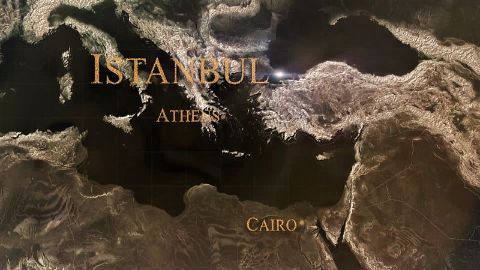
Istanbul: At the crossroads of Europe and Asia, many of its secrets are concealed or underground. The latest 3D imaging technology reveals the city as no human eye ever could to show how the city has had to reinvent itself over and over through its turbulent past.
S1E3 • Ancient Invisible Cities • 2018 • History