Marking what would have been Queen Elizabeth II's 100th year, this landmark documentary tells the story of her life alongside a century of momentous change in Britain. Through archive and eyewitness reflections, the film explores how she led the monarchy through profound social, political and cultural change. Contributions from some of Britain's best-known faces and international figures, including Dame Helen Mirren, Sir David Attenborough, Barack Obama and Queen Camilla, reveal how she remained a constant in a changing world.
Hope you're finding these documentaries fascinating and eye-opening. It's just me, working hard behind the scenes to bring you this enriching content.
Running and maintaining a website like this takes time and resources. That's why I'm reaching out to you. If you appreciate what I do and would like to support my efforts, would you consider "buying me a coffee"?
BTC: bc1q8ldskxh4x9qnddhcrgcun8rtvddeldm2a07r2v
ETH: 0x5CCAAA1afc5c5D814129d99277dDb5A979672116
With your donation through , you can show your appreciation and help me keep this project going. Every contribution, no matter how small, makes a significant impact. It goes directly towards covering server costs.

Freeman's quest to understand what makes a rebellion successful brings him face-to-face with exiles, whistleblowers, hackers and movement leaders. From Berlin to Bolivia to the United States, he'll see the courage, dedication, hard work and hope that it takes to try to change the world.
S1E6 • The Story of Us with Morgan Freeman • 2017 • People
In 1966, drought and an exploding population confronted India with the imminent threat of a severe famine that many scientists and intellectuals feared was a harbinger of global catastrophes to come, as the world's population outstripped its ability to produce food. India turned to Norman Borlaug, an unassuming plant breeder from Iowa whose combination of scientific knowledge and raw determination had made him a legend among a small handful of fellow specialists. The Man Who Tried to Feed the World recounts the story of the man who would not only solve India's famine problem, but would go on to lead a "Green Revolution" of worldwide agriculture programs, saving countless lives. He was awarded the 1970 Nobel Peace Prize for his work but spent the rest of his life watching his methods and achievements come under increasing fire.
2020 • People
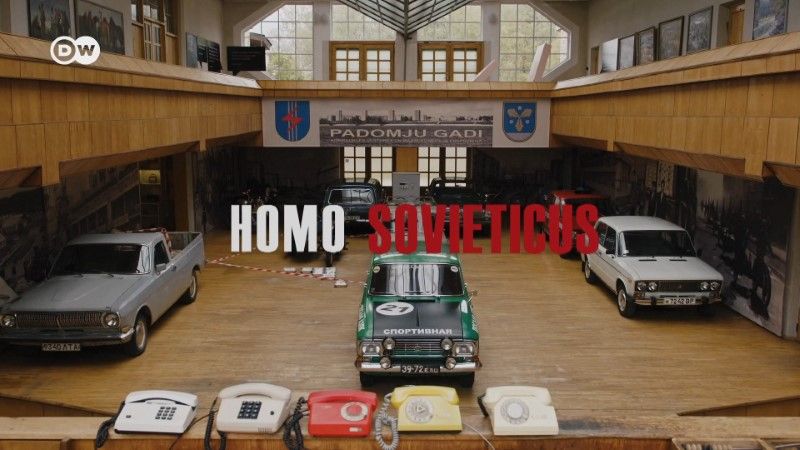
Thirty years after the collapse of the USSR, the martial rhetoric and other trappings of the "strong men" of the totalitarian era are making a comeback. Why? The film's director Ivo Briedis and the journalist Rita Rudusa were both born in the Soviet Union. Together, they embark on a journey to explore the phenomenon of HOMO SOVIETICUS. They want to know if a totalitarian mindset can still be found in countries that were formerly part of the Soviet Union. The thinker Alexander Zinoviev defined as Homo Sovieticus as a person who is, at their core, an opportunist. They do not rebel against their leadership, and want to take as little individual responsibility as possible. Did these characteristics develop specifically as a result of growing up in the Soviet Union, or can they develop in any society? To find out, they speak with people who lived under the Soviet regime, as well as with members of the first post-Soviet generation.
2021 • People
Unable to bring mob boss Al Capone to justice for many of the crimes ascribed to him, the US Federal government took a new tack to end the rule of gangsters in the Depression.
S2E1 • Butterfly Effect • 2017 • People
It is hard to imagine a sky without an airplane in it. But David McCullough takes us back to the first days of aviation. We learn about the Wright Brothers, not only through their achievements, but by discovering who they were as people and the early family influences that shaped their characters.
S1E3 • Curiosity Retreats: 2015 Lectures • 2015 • People
Albert Einstein, the most famous scientist of all time, was a world-renowned celebrity, greeted like a rock star when he appeared in public. An anti-war firebrand, Einstein also spoke out on issues ranging from women's rights and racism to immigration and nuclear arms control. But today, his image has been neutered into that of a charmingly absent-minded genius. He was, in fact, a powerful force for social change and a model for political activism. Using a wealth of rarely-seen archival footage, correspondence and new and illuminating interviews, filmmaker Julia Newman makes the case that Albert Einstein's example of social and political activism is as important today as are his brilliant, groundbreaking theories.
2020 • People