Rise of Animals: Triumph of the Vertebrates • 2013

Category: Nature | Torrent: | Subtitle:

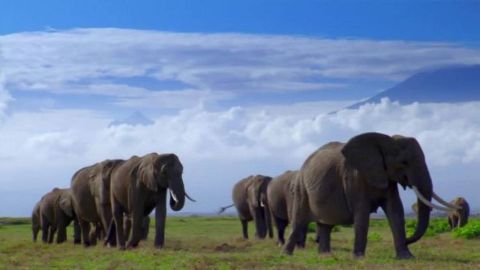
David Attenborough embarks on a sweeping 500-million-year odyssey tracing the rise of vertebrates—from primitive fish to dominant mammals—using stunning fossil discoveries and CGI to reveal how evolutionary innovations shaped us.

Make a donation

Buy a brother a hot coffee? Or a cold beer?

Hope you're finding these documentaries fascinating and eye-opening. It's just me, working hard behind the scenes to bring you this enriching content.

Running and maintaining a website like this takes time and resources. That's why I'm reaching out to you. If you appreciate what I do and would like to support my efforts, would you consider "buying me a coffee"?

Donation addresses

Buy Me a Coffee at ko-fi.com

patreon.com

BTC: bc1q8ldskxh4x9qnddhcrgcun8rtvddeldm2a07r2v

ETH: 0x5CCAAA1afc5c5D814129d99277dDb5A979672116

With your donation through , you can show your appreciation and help me keep this project going. Every contribution, no matter how small, makes a significant impact. It goes directly towards covering server costs.
You might also like

Snowball

In Snowball, Chris Packham tells the story of the astonishing moment in Earth’s distant past, when almost the entire planet froze – a glistening ‘Snowball Earth’ in the dark void of space. With ice wrapped around the planet to the equator, the chances of life surviving hang in the balance. Earth’s terrifying journey into the deep freeze started with fire, not ice. 800 million years ago, long before the age of the dinosaurs, before there was even animal life, the giant supercontinent Rodinia broke up. Earth’s vast powerful tectonic forces ripped the land apart, kicking off a series of events that resulted in huge amounts of carbon dioxide being sucked from the atmosphere and sending global temperatures plummeting. This plunge into the deep freeze couldn’t have come at a worse time. The very first forms of complex life - the ancestors to the amazing life we see around us today - were evolving but, as the planet froze to the equator, it looked like their days were numbered. Happily, Chris discovers that after 50 million years locked in ice, volcanic eruptions drove a great thaw. Life broke free from the ice and soon made a giant leap, from the microscopic, to the first animals big enough to see and touch.

S1E2Earth: One Planet, Many Lives • 2023 • Nature

The Invisible Universe Of The Human Microbiome

The next time you look in a mirror, think about this: In many ways you're more microbe than human. There are 10 times more cells from microorganisms like bacteria and fungi in and on our bodies than there are human cells.

Nature

Seeing the Pattern

Zebra stripes vary subtly between the different species but there is one group of animals that has evolved colourful patterns of seemingly infinite variety, the butterflies. In this episode David looks at two examples of animal patterns that have bedazzled and baffled science for a long time, and uses modern tools to unlock their secrets.

S1E5Natural CuriositiesNature

The Octopus in My House

Professor David Scheel takes an octopus into his home to learn about its intelligence and the extraordinary relationship he and his daughter develop with the creature. Named Heidi, the octopus is seen unravelling puzzles, recognising individual humans and even watching TV with the family. The film also looks at the remarkable behaviour of other octopuses around the world, from those that can change their colour and texture in a split second to the octopus that carries around its own coconut shell to hide in.

Natural World • 2019 • Nature

Say It with Sound

Sophie is joined in the theatre by chirping crickets, hissing cockroaches and groaning deer to reveal the very different ways that animals have adapted their bodies to send audible messages that are vital to their species. She also explores how and why the human voice evolved to become the most versatile sound producer in the natural world. She demonstrates what sound actually is and how it travels. Unpacking the power behind sound, she uses it to shatter glass and reveal how the human body can resonate in a way that amplifies our voices to send our messages further. She also explores how different species use very different frequencies to communicate and why humans can only hear a fraction of these animal messages. Finally, she investigates why we all have unique vocal prints, and how computers are learning to recognise these.

S1E1Royal Institution Christmas Lectures: The Language of Life • 2017 • Nature

Amazonian Manatee

Stephen and Mark set out to discover how the lugubrious Amazonian manatee, a freshwater mammal, has survived the last two decades.

S1E1Last Chance to See • 2009 • Nature