We've all heard that a glass of wine a day is healthy or that spinach is a good source of iron. But what is true and what is a myth?
Hope you're finding these documentaries fascinating and eye-opening. It's just me, working hard behind the scenes to bring you this enriching content.
Running and maintaining a website like this takes time and resources. That's why I'm reaching out to you. If you appreciate what I do and would like to support my efforts, would you consider "buying me a coffee"?
BTC: bc1q8ldskxh4x9qnddhcrgcun8rtvddeldm2a07r2v
ETH: 0x5CCAAA1afc5c5D814129d99277dDb5A979672116
With your donation through , you can show your appreciation and help me keep this project going. Every contribution, no matter how small, makes a significant impact. It goes directly towards covering server costs.
Renowned geneticist and author Spencer Wells reveals how changes in our genetic code have fueled major changes in our appearance and capabilities over time, and why scientists believe we're continuing to rapidly evolve today. By understanding these changes, we are better prepared for the future.
2018 • Health
From Oscar-nominated director Scott Hamilton Kennedy (The Garden) and narrated by Neil deGrasse Tyson, Food Evolution investigates the brutally polarized debate surrounding GMOs and our food. Traveling from Hawaiian papaya groves to banana farms in Uganda to the cornfields of Iowa, Food Evolution wrestles with the emotions and the science driving one of the most heated arguments of our time.
2018 • Health
BBC Scotland's political editor Glenn Campbell fell off his bike in June 2023. Alone on a country road with broken bones, he feared for his life and felt he'd had a lucky escape when help came his way. But six weeks after his accident, just as he was getting ready to go back to work, he had a seizure. He was diagnosed with incurable brain cancer, turning his world as he knew it upside down. In this film, Glenn shares his experience of living with a brain tumour and explores why treatments for the condition have barely changed in many years. Early in his cancer journey, Glenn realised there was nothing he could do to change his health outcomes, but the one thing he could do was tell his story. Glenn says, 'It's a golden rule as a journalist not to become the story, but in this case, I just felt that it was worth sharing my personal experience as a way of putting a bit of a spotlight on this most difficult of cancers.' Supported by family, friends and colleagues, Glenn has documented his story during what has been a very difficult year of gruelling treatment and endless uncertainty. Following surgery, which saw his malignant tumour removed successfully, he embarked on radiotherapy and chemotherapy. He also lives with the constant threat of seizures and has made the decision to share some very personal footage filmed while in the midst of one such episode. Brain cancer is the biggest cancer killer of people under 40. Every day, 33 people in the UK are diagnosed with a brain tumour. Motivated by his own shortened lifespan and the stories of friends made in the cancer community, Glenn has spent a huge amount of time and energy in the past year raising awareness of this often-misunderstood cancer. In this intimate film, we see the committed newsman in a different light as he faces down his mortality and considers what matters most in life. Sitting on the beach at Machir Bay on Islay – the island he hails from – he reflects: 'You realise what really matters, and maybe what doesn't quite so much. What really matters is family and friends and good times and making memories, and what maybe doesn't matter is the hubbub of everyday life, work and chores. I think being told you've got a life-limiting condition really puts that into perspective.'
2024 • Health
Obesity is one of America's biggest public health concerns. Two thirds of Americans are overweight or obese. The pressure to lose weight is intense and many are turning to surgical means to achieve results.
S1E4 • A User's Guide to Cheating Death • 2017 • Health
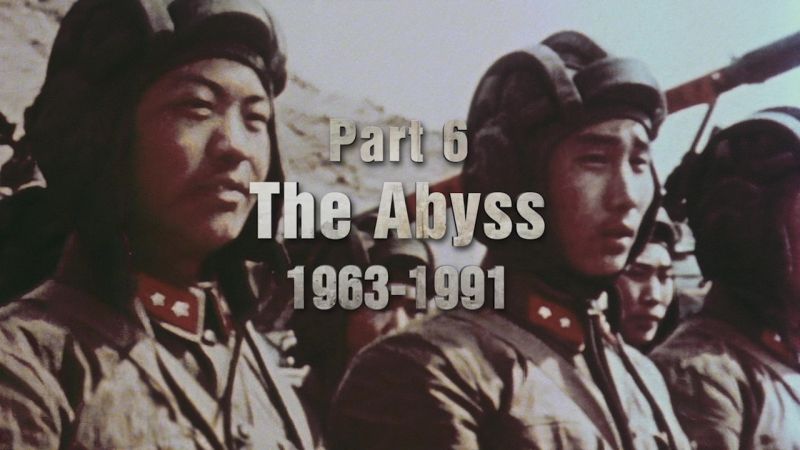
November 22, 1963. The entire world is in shock. President Kennedy has just been assassinated during a trip to Dallas. Even Khrushchev himself seems touched by the tragic news. In a surprising coincidence, South Vietnamese president Diem was assassinated twenty days earlier, in a coup organized by his generals... The players are changing, but the Vietnam war drags on. America's new President Johnson sinks his country further into the quagmire of war. Close to three million young Americans discover Hell - the jungle, the unbearable heat, and the Viet Cong, with its tunnels and traps. For the first time, television plays a special role in the war. In 1968, the images of the terrible "Tet Offensive" revealed to the population the fiasco which took place in Vietnam: the massacres, the abuses of American soldiers and the obvious rout of their army. Soon the United States has no choice but to recall its troops; a victory for the communist world... But the USSR emerges from it ruined. Weakened by its various campaigns around the world, it will not experience the same success in Afghanistan. Soon, the "satellite" republics will resume their rights, overthrowing in turn the regimes imposed by Moscow. In 1989, the Berlin Wall fell and the Soviet Empire collapses... The red flag with the gold star dismounted from the roofs of the Kremlin. This is the end of the cold war. The war of the worlds ends.
S1E6 • Apocalypse: War of Worlds 1945-1991 • 2019 • Health
Michael Mosley explores the latest science about how our personalities are created - and whether they can be changed. Despite appearances, Mosley is a pessimist who constantly frets about the future. He wants to worry less and become more of an optimist. He tries out two techniques to change this aspect of his personality - with surprising results. And he travels to the frontiers of genetics and neuroscience to find out about the forces that shape all our personalities.