Hank discusses some of the taboos which have plagued scientific inquiry in the past and a few that still exist today.
Hope you're finding these documentaries fascinating and eye-opening. It's just me, working hard behind the scenes to bring you this enriching content.
Running and maintaining a website like this takes time and resources. That's why I'm reaching out to you. If you appreciate what I do and would like to support my efforts, would you consider "buying me a coffee"?
BTC: bc1q8ldskxh4x9qnddhcrgcun8rtvddeldm2a07r2v
ETH: 0x5CCAAA1afc5c5D814129d99277dDb5A979672116
With your donation through , you can show your appreciation and help me keep this project going. Every contribution, no matter how small, makes a significant impact. It goes directly towards covering server costs.
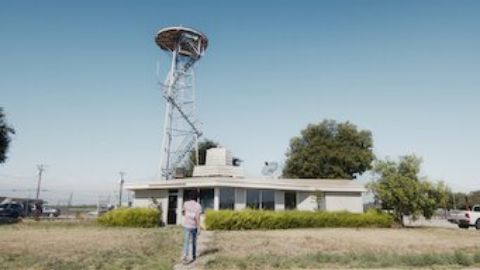
Antarctica is the last great wilderness. It's the coldest, windiest, driest and most isolated place on Earth. And every winter, for over three months of the year, the sun never rises. But it's also home to the British Antarctic Survey's Halley Research Station. A veteran of living and working at Halley in the early eighties, BBC weatherman Peter Gibbs makes an emotional return to the place he once called home. A place that, during his time, was key to the discovery of the ozone hole. The journey starts with an arduous 12-day, 3000-mile voyage onboard the RRS Ernest Shackleton. Once on the ice shelf, Peter is delighted to finally arrive at the futuristic research station and marvels at the cutting edge science being done at Halley today. From vital discoveries about how our lives are vulnerable to the sun's activities, to studying interplanetary travel and the threat of man-made climate change. But Peter's journey is also something of a rescue mission. The research station's home is a floating ice shelf that constantly moves and cracks, and the ice shelf has developed a chasm that could cast Halley adrift on a massive iceberg.
Professor Jim Al-Khalili tells the story of how we used light to reveal the cosmos.
S1E1 • Light and Dark • Science
Just about every solid, liquid, or gas in the world as we know it begins with reactions between individual atoms and molecules. Host David Pogue dives into the transformative world of chemical reactions, from the complex formula that produces cement to the single reaction that’s allowed farmers to feed a global population by the billions.
S1E2 • Beyond the Elements • 2020 • Science
Scientists at the "Centre for Existential Risk" grapple with the unprecedented number of planetary threats facing humanity, from runaway AI and cyber attacks to bioterror and nuclear war.
S1E7 • Stories of Impact • 2019 • Science
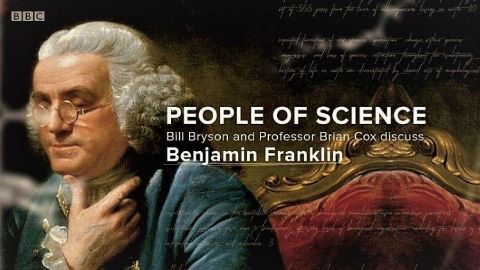
The writer Bill Bryson talks to Brian Cox about his admiration for the US scientist, author and inventor Benjamin Franklin and his many achievements.
S1E3 • People of Science with Brian Cox • 2018 • Science
A war has been raging for billions of years, killing trillions every single day, while we don’t even notice. This war involves the single deadliest being on our planet: The Bacteriophage.
In a Nutshell • 2018 • Science