A war has been raging for billions of years, killing trillions every single day, while we don’t even notice. This war involves the single deadliest being on our planet: The Bacteriophage.
Hope you're finding these documentaries fascinating and eye-opening. It's just me, working hard behind the scenes to bring you this enriching content.
Running and maintaining a website like this takes time and resources. That's why I'm reaching out to you. If you appreciate what I do and would like to support my efforts, would you consider "buying me a coffee"?
BTC: bc1q8ldskxh4x9qnddhcrgcun8rtvddeldm2a07r2v
ETH: 0x5CCAAA1afc5c5D814129d99277dDb5A979672116
With your donation through , you can show your appreciation and help me keep this project going. Every contribution, no matter how small, makes a significant impact. It goes directly towards covering server costs.
What is dark energy? What is dark matter? Well, if we knew exactly we would have a nobel prize – we know that they exist though. So what do we know about those strange things?
2015 • Astronomy
We are so used to some things that we stopped wondering about them. Like light. What is light? Some kind of wavy thing, right? Kind of.
2015 • Physics
Atoms are very weird. Wrapping your head around exactly how weird, is close to impossible – how can you describe something that is SO removed from humans experience? But then again, they kind of make up everything, so let us try anyways.
2015 • Physics
This video is adapted from Johann Hari's New York Times best-selling book 'Chasing The Scream: The First and Last Days of the War on Drugs.' For more information, and to take a quiz to see what you know about addiction, go to www.chasingthescream.com
2015 • Health
Where are the limits of human technology? And can we somehow avoid them? This is where quantum computers become very interesting.
2015 • Technology
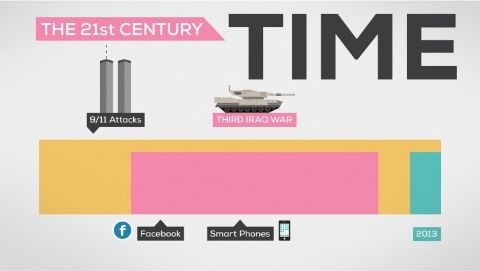
Time makes sense in small pieces. But when you look at huge stretches of time, it's almost impossible to wrap your head around things.
2015 • History
What is something? On the most fundamental level thinkable, what are things? Why are things? And why do things behave the way they do?
2015 • Physics
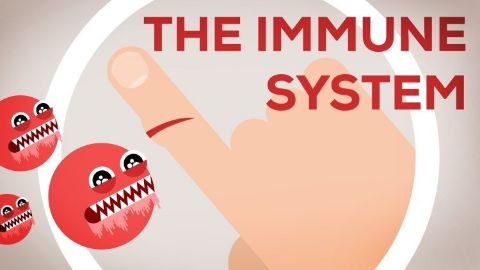
Every second of your life you are under attack. Bacteria, viruses, spores and more living stuff wants to enter your body and use its resources for itself. The immune system is a powerful army of cells that fights like a T-Rex on speed and sacrifices itself for your survival. Without it you would die in no time. This sounds simple but the reality is complex, beautiful and just awesome. An animation of the immune system.
2014 • Health
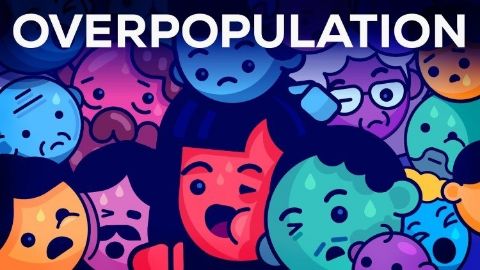
In a very short amount of time the human population exploded and is still growing very fast. Will this lead to the end of our civilization?
2016 • Economics
What would happen if we bring a sample (the size of a house) of the Sun to Earth?
2017 • Astronomy
"We humans are unable to experience the true nature of the universe..."
2017 • Technology
Automation in the Information Age is different.
2017 • Technology
What happens when microbes talk to your brain?
2017 • Health
If you could decide today... how long do you want to live?
2017 • Health
It's hard to get to space.But there is a concept that might make it possible: the space elevator. How exactly does it work.
2016 • Astronomy
What is UBI? How would free money change our lives.
2017 • Economics
Is there a border we will never cross? Are there places we will never be able to reach, no matter what? It turns out there are. Far, far more than you might have thought…
2016 • Astronomy
Finding alien life on a distant planet would be amazing news - or would it? If we are not the only intelligent life in the universe, this probably means our days are numbered and doom is certain.
2018 • Astronomy
Is String Theory the final solution for all of physic’s questions or an overhyped dead end?
2018 • Physics
What are the principles behind Homeopathy and does it work?
2018 • Health
Why should you care about the well-being of people half a globe away?
2018 • Economics
A war has been raging for billions of years, killing trillions every single day, while we don’t even notice. This war involves the single deadliest being on our planet: The Bacteriophage.
2018 • Science
Did you know that we could start building a Lunar Base today?
2018 • Astronomy
Meat is a complicated issue. But also a delicious one. Let's talk about it.
2018 • Environment
Organic food is a huge trend: it promises a healthier and better life. But can Organic food really live up to the expectations or is it just baloney?
2019 • Health
Everybody is talking about Measles – but what does the virus actually do in the body? Is it really so harmful that you need a vaccination? We go deep into the body of an infected person and see what Measles does and how the immune system reacts to it!
2015 • Health
Everybody feels lonely sometimes. But only few of us are aware how important this feeling was for our ancestors - and that our modern world can turn it into something that really hurts us. Why do we feel this way and what can we do about it?
2019 • Lifehack
Consciousness is perhaps the biggest riddle in nature. In the first part of this three part video series, we explore the origins of consciousness and take a closer look on how unaware things became aware.
2019 • Brain
How does Fusion Energy work and is it a good idea?
Modern life would be impossible without plastic – but we have long since lost control over our invention. Why has plastic turned into a problem and what do we know about its dangers? This video is a collaboration with UN Environment and their Clean Seas campaign, If you want to take action to turn the tide on plastics, go to http://www.cleanseas.org and make your pledge.
2019 • Environment
One of the key players of our immune system is the complement system. An army of millions and trillions of tiny bombs, which work together in a complex and elegant dance to stop intruders in your body.
2019 • Health
Humans. We have been around for a while now. When we think about our past we think about ancient civilizations, the pyramids, stuff like that. But this is only a tiny, tiny part of our history.
2016 • History
So. Are you your body? And if so, how exactly does this work? Lets explore lots of confusing questions.
2016 • Physics
Neutron stars are one of the most extreme and violent things in the universe. Giant atomic nuclei, only a few kilometers in diameter but as massive as stars. And they owe their existence to the death of something majestic.
2019 • Astronomy
Everybody is familiar with the feeling that things are not as they should be. That you are not successful enough, your relationships not satisfying enough. That you don’t have the things you crave. In this video we want to talk about one of the strongest predictors of how happy people are, how easily they make friends and how good they are at dealing with hardship. An antidote against dissatisfaction so to speak: Gratitude.
2019 • Lifehack
In December 2019 the Chinese authorities notified the world that a virus was spreading through their communities. In the following months it spread to other countries, with cases doubling within days. This virus is the “Severe acute respiratory syndrome-related coronavirus 2”, that causes the disease called COVID19, and that everyone simply calls Coronavirus.
2020 • Health
Since the Industrial Revolution, humans have released over 1.5 trillion tonnes of carbon dioxide or CO2 into the earth's atmosphere. In the year 2019 we were still pumping out around 37 billion more. That’s 50% more than the year 2000 and almost three times as much as 50 years ago. And it’s not just CO2. We’re also pumping out growing volumes of other greenhouse gases such as methane and nitrous oxide. Combining all of our greenhouse gases, we’re emitting 51 billion tonnes of carbon dioxide equivalents each year. And emissions keep rising – but they need to get down to 0!
2020 • Environment
The sun. Smooth and round and peaceful. Except when it suddenly vomits radiation and plasma in random directions. These solar flares and coronal mass ejections, or CMEs can hit earth and have serious consequences for humanity.
2020 • Astronomy
By the end of the 21st century, humanity is becoming desperate. Decades of heatwaves and droughts have led to unusually poor harvests, while the warming oceans yield fewer fish each year. In the tropical zones, millions suffer from famine and resource wars have made millions more flee to the north. As things quickly get worse, in an act of desperation, the world's governments decide to enact an emergency plan...
2020 • Technology
The largest things in the universe are black holes. In contrast to things like planets or stars they have no physical size limit, and can literally grow endlessly. Although in reality specific things need to happen to create different kinds of black holes, from really tiny ones to the largest single things in the universe. So how do black holes grow and how large is the largest of them all?
Never before in human history have we been richer, more advanced or powerful. And yet we feel overwhelmed in the face of rapid climate change. It seems simple on the surface. Greenhouse gases trap energy from the Sun and transfer it to our atmosphere. This leads to warmer winters, harsher summers. Dry places become drier and wet places wetter. Countless ecosystems will die while the rising oceans swallow coasts and the cities we build on them.
2021 • Environment
We take a fair look at some of the best counter arguments for legalization and see how they hold up in review.
2023 • Health
Somewhere in your body, your immune system just quietly killed one of your own cells, stopping it from becoming cancer, and saving your life. It does that all the time. The vast majority of cancer cells you develop will be killed without you ever noticing. Which is an incredibly hard job because of what cancer cells are: parts of yourself that start to behave as individuals even if it hurts you. What is cancer and how does your body kill it all the time?
2023 • Health
The universe isn't just a vast empty ocean sprinkled with galaxies – most of the atoms are actually drifting in between, in the intergalactic medium. If we look closely, we can see who is in charge here: Quasars, the single most powerful objects in existence. As small as a grain of sand compared to the amazon river, they reside in the centers of some galaxies, shining with the power of a trillion stars, blasting out huge jets of matter, completely reshaping the cosmos around them. They are so powerful that they can kill a galaxy. What are they, and how do they mold the structure of the universe at their whim?
2023 • Astronomy
We often assume that advanced technology will make it easy for aliens to colonize space. But what if space exploration is always difficult, no matter how advanced you are? Let’s travel back in human history, to the colonization of Oceania over 5000 years ago, to find parallels between ancient explorers and extraterrestrial civilizations.
2024 • Astronomy
Alcohol kills more people each year than wars, terrorism, homicides, and car accidents combined. It destroys bodies, relationships, and lives. Yet we toast with it at weddings, sip it at parties, and unwind with it after work. Why do we cling to something so harmful?
2025 • Health
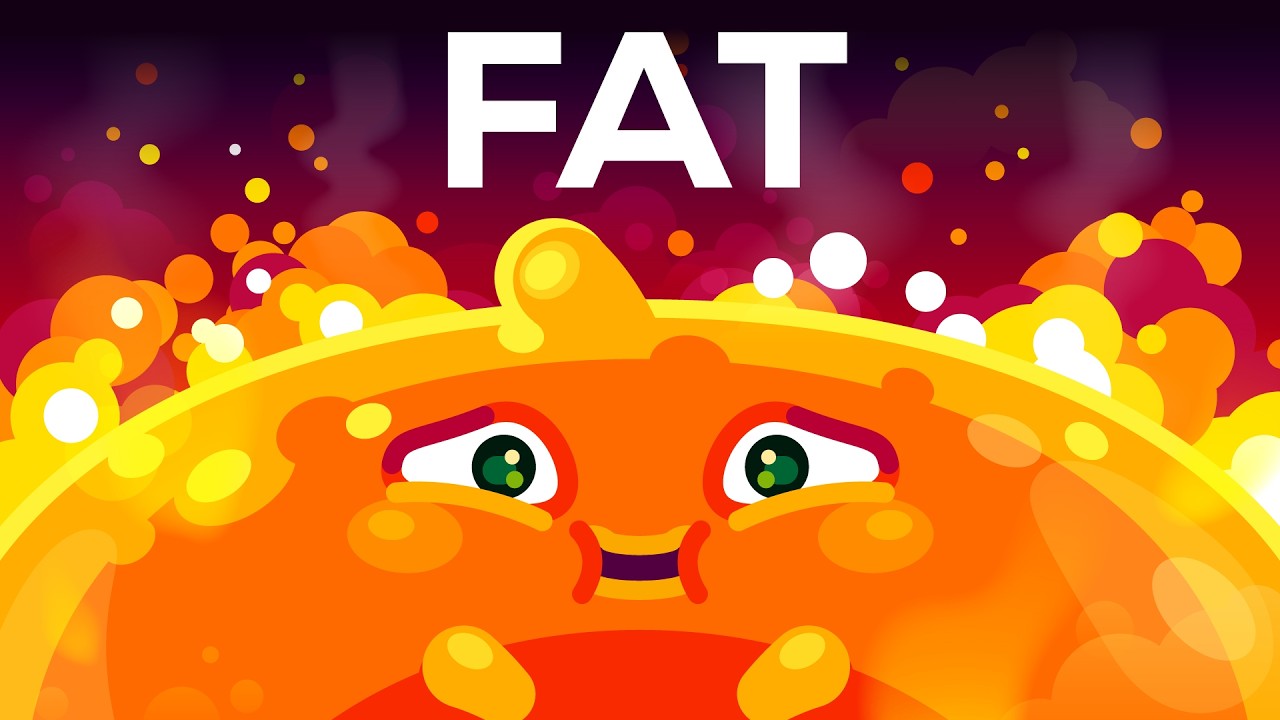
Fat is not just stored energy, it’s a complex organ that controls crucial hormones and communicates with your brain, immune system, and metabolism. It's one of the most powerful organs, but it can be one of the most dangerous ones, as well. When there’s too much of it, fat can trigger inflammation, disrupt hormonal balance, increase your risk for nearly every major disease, and significantly shorten your life. What is fat really, and how does it function? When does it become dangerous and can the damage caused by excessive amounts of fat be reversed?
2026 • Health
Saiful investigates how humans as living pulsing machines actually use energy, asking whether it's possible to 'supercharge' the human body and increase its performance. Live experiments explore everything from the explosive potential of everyday foods, to what we put into our bodies (and what comes out!), as well as how we measure up to the machines we use every day. Saiful even experiments on himself, showing images captured inside his own stomach. Every single one of us is an incredibly sophisticated energy conversion machine, finely tuned over millions of years of evolution. So will we ever be able to improve the human body's performance? Can we ever do more with less energy?
S1E2 • Supercharged: Fuelling the Future • 2016 • Science
From a wild ride with a pack of huskies and a family of urban mushers to the weird and wonderful world of Instagram dogs to a puppy pile-on with a squad of trainee service dogs, Jeff meets every kind of working dog imaginable and gets to the heart of why dogs mean so much to us.
S2E1 • The World According to Jeff Goldblum • 2021 • Science
Humanity is under threat - from storms that seem to get ever fiercer, earthquakes that seem ever more deadly, and killer viruses that are engulfing the globe. Some scientists think it's time for us to fight back. Can we - should we -hack the planet?
S8E03 • Through the Wormhole • 2017 • Science
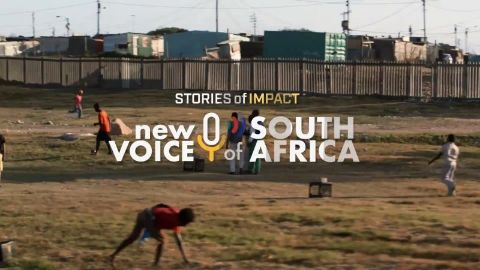
Young black teens in South Africa's townships are learning to be radio reporters by trying to understand the concept of "Ubuntu" and what it means to their community.
S1E4 • Stories of Impact • 2019 • Science
Saiful explores one of the most important issues facing the modern world - how to store energy. He tackles his toughest challenge yet - trying to work out how to store enough energy to power a mobile phone for a whole year and still fit it in his pocket!
S1E3 • Supercharged: Fuelling the Future • 2016 • Science
Throughout history, human society has run on trade, and trade moved on the oceans. The innovations that allowed faster an more accurate oceanic travel revolutionized to the world. New inventions now help people move on water for fun and recreation.