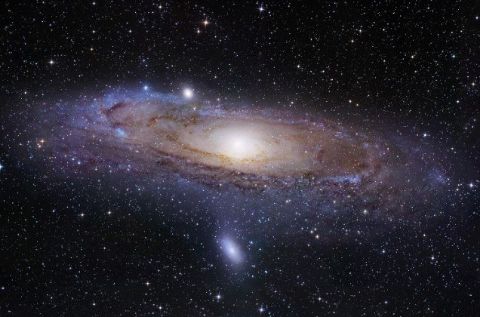
NOVA investigates a battery of high-tech telescopes that is joining the Hubble Space Telescope on its quest to unlock the secrets of our universe, a cosmos almost incomprehensible in its size, age, and violence.
Hope you're finding these documentaries fascinating and eye-opening. It's just me, working hard behind the scenes to bring you this enriching content.
Running and maintaining a website like this takes time and resources. That's why I'm reaching out to you. If you appreciate what I do and would like to support my efforts, would you consider "buying me a coffee"?
BTC: bc1q8ldskxh4x9qnddhcrgcun8rtvddeldm2a07r2v
ETH: 0x5CCAAA1afc5c5D814129d99277dDb5A979672116
With your donation through , you can show your appreciation and help me keep this project going. Every contribution, no matter how small, makes a significant impact. It goes directly towards covering server costs.
NOVA examines how a simple instrument, the telescope, has fundamentally changed our understanding of our place in the universe. What began as a curiosity—two spectacle lenses held a foot apart—ultimately revolutionized human thought across science, philosophy, and religion. "Hunting the Edge of Space" takes viewers on a global adventure of discovery, dramatizing the innovations in technology and the achievements in science that have marked the rich history of the telescope.
2012 • Astronomy
NOVA investigates a battery of high-tech telescopes that is joining the Hubble Space Telescope on its quest to unlock the secrets of our universe, a cosmos almost incomprehensible in its size, age, and violence.
2012 • Astronomy
While Jupiter is nowhere near massive enough to initiate fusion in its core, there are even more massive objects out there that fall just short of that achievement as well called brown dwarfs. Brown dwarfs, have a mass that places them between giant planets and small stars. They were only recently discovered in the 1990’s, but thousands are now known. More massive ones can fuse deuterium, and even lithium, but not hydrogen, distinguishing them from “normal” stars. Sort of.
28 • Crash Course Astronomy • 2015 • Astronomy
The shape, contents and future of the universe are all intricately related. We know that it's mostly flat; we know that it's made up of baryonic matter (like stars and planets), but mostly dark matter and dark energy; and we know that it's expanding constantly, so that all stars will eventually burn out into a cold nothingness. Renée Hlozek expands on the beauty of this dark ending.
Follow Dr. Ben Longmier and his team into the rugged Alaskan wilderness on a quest to build a whole new type of rocket engine. Their goal is to test sensitive components by launching them into radiation-filled environments of space aboard helium balloons. Their goal is to revolutionize space travel and exploration by harnessing the energy contained in the dynamic fourth state of matter: plasma.
In 1972, the crew of Apollo 17 captured the iconic 'Blue Marble': the first photograph ever taken by an astronaut of the entire Earth. This photo had a profound effect on our perception of ourselves. Since then, Nasa has taken millions more. In this epic, powerful and revelatory documentary, a new generation of astronauts, including Tim Peake, use those images of the Earth from space to reveal the astonishing transformation humanity has wrought in the 45 years since 'Blue Marble'. Together, the astronauts provide an armchair tour of the change they've witnessed from orbit, as humankind etches our presence on the planet. Using stunning time-lapse sequences, the programme reveals how we are reshaping our world, for better and for worse: from the sprawling megacities of China to vast desert farms in the Middle East and from the melting snowcap of Kilimanjaro to giant solar arrays in Nevada.
2017 • Astronomy
Professor Brian Cox explores the solar system’s wildest weather, encountering powerful lightning, strange metallic frosts and monsoon rains on a moon a billion kilometres from Earth.
S1E3 • Solar System • 2024 • Astronomy