Stuff happens. The weather forecast says it’s sunny, but you just got drenched. You got a flu shot—but you’re sick in bed with the flu. Your best friend from Boston met your other best friend from San Francisco. Coincidentally. What are the odds? Risk, probability, chance, coincidence—they play a significant role in the way we make decisions about health, education, relationships, and money. But where does this data come from and what does it really mean?
Hope you're finding these documentaries fascinating and eye-opening. It's just me, working hard behind the scenes to bring you this enriching content.
Running and maintaining a website like this takes time and resources. That's why I'm reaching out to you. If you appreciate what I do and would like to support my efforts, would you consider "buying me a coffee"?
BTC: bc1q8ldskxh4x9qnddhcrgcun8rtvddeldm2a07r2v
ETH: 0x5CCAAA1afc5c5D814129d99277dDb5A979672116
With your donation through , you can show your appreciation and help me keep this project going. Every contribution, no matter how small, makes a significant impact. It goes directly towards covering server costs.
The multiverse hypothesis, suggesting that our universe is but one of perhaps infinitely many, speaks to the very nature of reality. Join physicist Brian Greene, cosmologists Alan Guth and Andrei Linde, and philosopher Nick Bostrom as they discuss and debate this controversial implication of forefront research and explore its potential for redefining the cosmic order. Moderated by Robert Krulwich and featuring an original musical interlude, inspired by parallel worlds, by DJ Spooky.
2015 • Astronomy
Ninety years after the historic double-slit experiment, the quantum revolution shows no sign of slowing. Join a vibrant conversation with renowned leaders in theoretical physics, quantum computation, and philosophical foundations, focused on how quantum physics continues to impact understanding on issues profound and practical, from the edge of black holes and the fibers of spacetime to teleportation and the future of computers.
What we touch. What we smell. What we feel. They’re all part of our reality. But what if life as we know it reflects only one side of the full story? Some of the world’s leading physicists think that this may be the case. They believe that our reality is a projection—sort of like a hologram—of laws and processes that exist on a thin surface surrounding us at the edge of the universe.
2014 • Physics
From a bee’s hexagonal honeycomb to the elliptical paths of planets, symmetry has long been recognized as a vital quality of nature. Einstein saw symmetry hidden in the fabric of space and time. The brilliant Emmy Noether proved that symmetry is the mathematical flower of deeply rooted physical law. And today’s theorists are pursuing an even more exotic symmetry that, mathematically speaking, could be nature’s final fundamental symmetry: supersymmetry.
2016 • Math
A new generation of technology is revolutionizing neuroscience, allowing a closer study of the brain than had ever seemed possible. The techniques are hybrids of optics, genetics, and synthetic biology with the ability to manipulate brain activity, often in real time. Through direct stimulation of neural connections, some of these techniques hold the promise for the treatment of diseases like depression or schizophrenia.
2019 • Brain
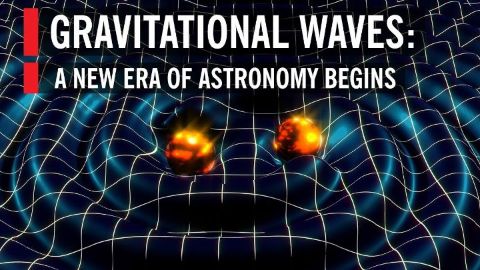
On September 14th, 2015, a ripple in the fabric of space, created by the violent collision of two distant black holes over a billion years ago, washed across the Earth. As it did, two laser-based detectors, 50 years in the making – one in Louisiana and the other in Washington State – momentarily twitched, confirming a century-old prediction by Albert Einstein and marking the opening of a new era in astronomy. Join some of the very scientists responsible for this most anticipated discovery of our age and see how gravitational waves will be used to explore the universe like never before.
2016 • Astronomy
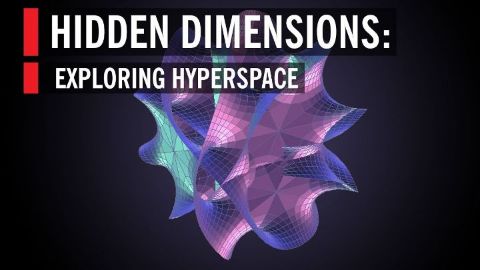
Extra dimensions of space — the idea that we are immersed in hyperspace — may be key to explaining the fundamental nature of the universe. Relativity introduced time as the fourth dimension, and Einstein’s subsequent work envisioned more dimensions still — but ultimately hit a dead end. Modern research has advanced the subject in ways he couldn’t have imagined. John Hockenberry joins Brian Greene, Lawrence Krauss, and other leading thinkers on a visual tour through wondrous spatial realms that may lie beyond the ones we experience.
2015 • Physics
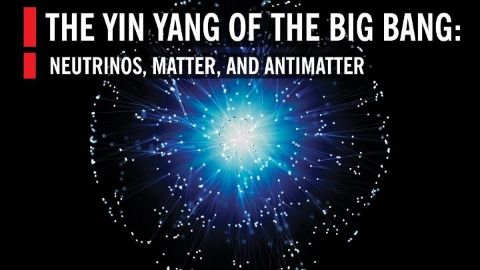
What happened to all of the universe's antimatter? Can a particle be its own anti-particle? And how do you build an experiment to find out? In this program, particle physicists reveal their hunt for a neutrino event so rare, it happens to a single atom at most once every 10,000,000,000,000,000,000,000,000 years: far longer than the current age of the universe. If they find it, it could explain no less than the existence of our matter-filled universe.
2019 • Physics
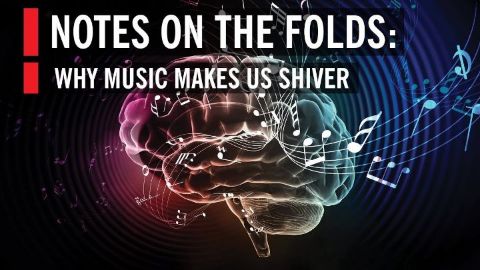
Scientists are now finally discovering what thinkers, musicians, or even any of us with a Spotify account and a set of headphones could have told you on instinct: music lights up multiple corners of the brain, strengthening our neural networks, firing up memory and emotion, and showing us what it means to be human. In fact, music is as essential to being human as language and may even predate it. Can music also repair broken networks, restore memory, and strengthen the brain?
2019 • Music
When no one is looking, a particle has near limitless potential: it can be nearly anywhere. But measure it, and the particle snaps to one position. How do subatomic objects shed their quantum weirdness? Experts in the field of physics, including David Z. Albert, Sean Carroll, Sheldon Goldstein, Ruediger Schack, and moderator Brian Greene, discuss the history of quantum mechanics, current theories in the field, and possibilities for the future.
2014 • Physics
Stuff happens. The weather forecast says it’s sunny, but you just got drenched. You got a flu shot—but you’re sick in bed with the flu. Your best friend from Boston met your other best friend from San Francisco. Coincidentally. What are the odds? Risk, probability, chance, coincidence—they play a significant role in the way we make decisions about health, education, relationships, and money. But where does this data come from and what does it really mean?
2015 • Math
You exist. You shouldn’t. Stars and galaxies and planets exist. They shouldn’t. The nascent universe contained equal parts matter and antimatter that should have instantly obliterated each other, turning the Big Bang into the Big Fizzle. And yet, here we are: flesh, blood, stars, moons, sky. Why? Come join us as we dive deep down the rabbit hole of solving the mystery of the missing antimatter.
2018 • Physics
Dr Hannah Fry explores the limits of our control, from dangerous miscalculations to creating and spotting fake videos, and questions how far we should be going with our mathematical skills. A gravity-defying BMX stunt kick-starts the debate around trusting the numbers, and launches us into an investigation of just how sure we can be about anything in our messy world. Together with maths comedian Matt Parker, Hannah uses flaming balloons and gigantic slices of melting cheese to get to the bottom of the guesswork used in real world calculations. A visiting drone zips through the corridors of the historic Royal Institution building, introducing the mother of all drones, a human-sized machine that delivers urgent parcels, and we welcome the team designing driverless helicopters and buying up London rooftops to prepare for the future. But these physical challenges are just the beginning of the debate on handing control over to machines. Hannah explores whether human jurors or robots make fairer decisions, and welcomes Atima Lui, who is on a mission to design the most unbiased facial detection software in the world, which will say goodbye to the 'fast track for white people' at automatic passport gates. Hannah dives into the issues around privacy in our modern world, with Glow Up make-up star Tiffany Hunt making a member of the audience invisible to CCTV, while Hannah explores the truth behind cookies and anonymity online. Finally, she delves into the world of fake news, to separate the truth from the lies. Leading deep fake creators team up with the Christmas Lectures to create a television first – a custom-made deep fake video of a child in the audience, highlighting our ability to use maths to warp reality however we please. Hannah ultimately explores who the real winners are, in an escalating arms race of mathematical tricks.
S1E3 • Royal Institution Christmas Lectures: Secrets and Lies - The Hidden Power of Maths • 2019 • Math
Documentary that reveals the secret story behind one of the greatest intellectual feats of World War II, a feat that gave birth to the digital age. In 1943 a 24-year-old maths student and a GPO engineer combined to hack into Hitler's personal super code machine - not Enigma but an even tougher system, which he called his 'secrets writer'. Their break turned the Battle of Kursk, powered the D-day landings and orchestrated the end of the conflict in Europe. But it was also to be used during the Cold War - which meant both men's achievements were hushed up and never officially recognised.
2011 • Math
We are bad at making decisions. According to science, our decisions are based on oversimplification, laziness and prejudice. And that's assuming that we haven't already been hijacked by our surroundings or led astray by our subconscious! Featuring exclusive footage of experiments that show how our choices can be confounded by temperature, warped by post-rationalisation and even manipulated by the future, Horizon presents a guide to better decision making, and introduces you to Mathematician Garth Sundem, who is convinced that conclusions can best be reached using simple maths and a pencil!
Hannah travels down the fastest zip wire in the world to learn more about Newton's ideas on gravity. His discoveries revealed the movement of the planets was regular and predictable. James Clerk Maxwell unified the ideas of electricity and magnetism, and explained what light was. As if that wasn't enough, he also predicted the existence of radio waves. His tools of the trade were nothing more than pure mathematics. All strong evidence for maths being discovered. But in the 19th century, maths is turned on its head when new types of geometry are invented. No longer is the kind of geometry we learned in school the final say on the subject. If maths is more like a game, albeit a complicated one, where we can change the rules, surely this points to maths being something we invent - a product of the human mind. To try and answer this question, Hannah travels to Halle in Germany on the trail of perhaps one of the greatest mathematicians of the 20th century, Georg Cantor. He showed that infinity, far from being infinitely big, actually comes in different sizes, some bigger than others. This increasingly weird world is feeling more and more like something we've invented. But if that's the case, why is maths so uncannily good at predicting the world around us? Invented or discovered, this question just got a lot harder to answer.
S1E2 • Magic Numbers: Hannah Fry's Mysterious World of Maths • 2018 • Math
Hannah explores a paradox at the heart of modern maths, discovered by Bertrand Russell, which undermines the very foundations of logic that all of maths is built on. These flaws suggest that maths isn't a true part of the universe but might just be a human language - fallible and imprecise. However, Hannah argues that Einstein's theoretical equations, such as E=mc2 and his theory of general relativity, are so good at predicting the universe that they must be reflecting some basic structure in it. This idea is supported by Kurt Godel, who proved that there are parts of maths that we have to take on faith. Hannah then explores what maths can reveal about the fundamental building blocks of the universe - the subatomic, quantum world. The maths tells us that particles can exist in two states at once, and yet quantum physics is at the core of photosynthesis and therefore fundamental to most of life on earth - more evidence of discovering mathematical rules in nature. But if we accept that maths is part of the structure of the universe, there are two main problems: firstly, the two main theories that predict and describe the universe - quantum physics and general relativity - are actually incompatible; and secondly, most of the maths behind them suggests the likelihood of something even stranger - multiple universes. We may just have to accept that the world really is weirder than we thought, and Hannah concludes that while we have invented the language of maths, the structure behind it all is something we discover. And beyond that, it is the debate about the origins of maths that has had the most profound consequences: it has truly transformed the human experience, giving us powerful new number systems and an understanding that now underpins the modern world.
S1E3 • Magic Numbers: Hannah Fry's Mysterious World of Maths • 2018 • Math
From a bee’s hexagonal honeycomb to the elliptical paths of planets, symmetry has long been recognized as a vital quality of nature. Einstein saw symmetry hidden in the fabric of space and time. The brilliant Emmy Noether proved that symmetry is the mathematical flower of deeply rooted physical law. And today’s theorists are pursuing an even more exotic symmetry that, mathematically speaking, could be nature’s final fundamental symmetry: supersymmetry.
World Science Festival • 2016 • Math