Where is the population in the world the smallest? What countries have the least people? It’s not the size that matters, and with countries, that is often the case. Some of the least populated countries in the world are also the wealthiest in terms of personal wealth and gross national product. And some of the larger nations have problems equally as huge to address. Some of these smaller countries are thinly populated because they are super-difficult to get to or sit in some of the world’s harshest regions. Some simply get by on one or two key industries and foreign aid. Some were used as strategic bases during war time. Some are playgrounds for the rich and famous. And one is reserved for holy activities. Today we take a closer look at the smallest of these nations, in this episode of the Infographics Show, The Ten Least Populated Countries in the World.
Hope you're finding these documentaries fascinating and eye-opening. It's just me, working hard behind the scenes to bring you this enriching content.
Running and maintaining a website like this takes time and resources. That's why I'm reaching out to you. If you appreciate what I do and would like to support my efforts, would you consider "buying me a coffee"?
BTC: bc1q8ldskxh4x9qnddhcrgcun8rtvddeldm2a07r2v
ETH: 0x5CCAAA1afc5c5D814129d99277dDb5A979672116
With your donation through , you can show your appreciation and help me keep this project going. Every contribution, no matter how small, makes a significant impact. It goes directly towards covering server costs.
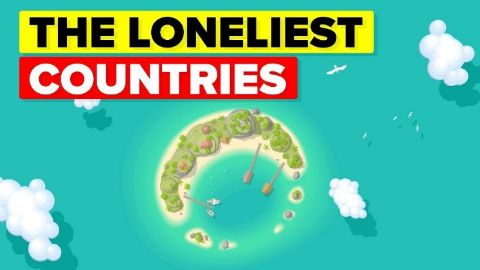
Where is the population in the world the smallest? What countries have the least people? It’s not the size that matters, and with countries, that is often the case. Some of the least populated countries in the world are also the wealthiest in terms of personal wealth and gross national product. And some of the larger nations have problems equally as huge to address. Some of these smaller countries are thinly populated because they are super-difficult to get to or sit in some of the world’s harshest regions. Some simply get by on one or two key industries and foreign aid. Some were used as strategic bases during war time. Some are playgrounds for the rich and famous. And one is reserved for holy activities. Today we take a closer look at the smallest of these nations, in this episode of the Infographics Show, The Ten Least Populated Countries in the World.
2018 • Travel
The clean minimalism of the Japanese home has been exported around the world, from modernist architecture to lifestyle stores like Muji. But the origins of this ubiquitous aesthetic evolved from a system of spiritual and philosophical values dating back centuries. James visits one of Japan's last surviving traditional wooden villages, and the 17th-century villa of Rinshunkaku, and reveals how the unique spirit of Japanese craftsmen turned joinery into an artform - creating houses without the need for nails, screws or glue. Exploring some of the traditional arts of the Japanese home, James also investigates attitudes to domestic culture in modern Japan, meeting photographer Kyoichi Tsuzuki, chronicler of Japan's crowded cities and tiny apartments. Other highlights include a performance by calligrapher and artist Tomoko Kawao and a visit to the hometown of architect Terunobu Fujimori.
S1E3 • The Art of Japanese Life • 2017 • Travel
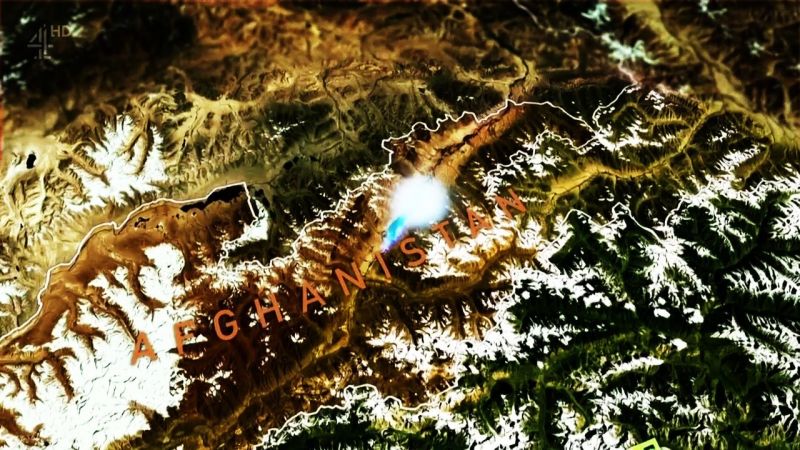
Levison Wood and his guide Malang Darya travel through Pakistan-controlled Kashmir and the Gilgit Valley, and aim to get as close to the heavily militarised border with India as they can, a dangerous journey that involves crossing a raging river and being met with suspicion by the local authorities. They meet a nomadic tribe that has driven herds across the Himalayas for centuries and visit a valley that has been closed to foreigners for nearly 70 years.
S1E2 • Walking the Himalayas with Levison Wood • 2016 • Travel
The final leg of Ade's tour of Africa sees him travelling from the beaches of Mozambique, through South Africa, before ending his entire trip in Zimbabwe. He begins on the golden sand beaches of Mozambique's Bazaruto Archipelago, one of Africa's highlights. At Paradise Island, he finds an abandoned hotel, a visual reminder of Mozambique's recent history - this place was once a high-end tourist destination, but 25 years of colonial and then civil war put a stop to development. But the local wildlife has benefited from the fact that so few tourists now come here, and Ade is able to snorkel with one of the world's most elusive sea creatures - a dugong. Since the wars, Mozambique has struggled to develop, and Ade meets someone for whom life is especially hard – a wheelchair user like himself. In a country where disability is viewed with fear and superstition – and believed by many to be contagious – even catching a bus proves impossible for Castigo. The best thing in his life is exactly the same thing that turned Ade's life around - wheelchair basketball - and Ade can't help getting carried away in a game. Along the coast, at one of Mozambique's largest ports, Ade finds out that China is investing a huge amount in Mozambique – and elsewhere across Africa. The money often comes with strings attached, but a poor country like Mozambique needs financial help, which has to come from somewhere. Ade's next stop is South Africa. The country is famous for its wildlife but Ade hears how Chinese influence is having a dramatic impact here – the country's rhino population has been decimated by poachers, driven by a demand for rhino horn in Chinese medicine. Ade follows rangers with a surprising way of tackling the problem - by cutting off the rhino horn themselves, they hope to deter poachers. Ade travels to Johannesburg to see how the country is faring 25 years after apartheid ended. On a tour of the city, he is upset to discover that although the black population now have voting rights, they are living in an economic form of apartheid, with 25% unemployed and many squatting on whatever land they can find. In an emotional scene, Ade visits a squatted piece of land, moments after the police have destroyed people's houses, to hear claims that Mandela's legacy has been forgotten. Land reform is the big political issue here today, with many calling for a redistribution of land from rich white farmers to the black population. The final stop on Ade's African adventure is Zimbabwe – where land reform has already happened, with disastrous results. Ade finds a country still struggling economically. His first stop is the Kariba dam, and a hair-raising boat ride on the vast and stunning Lake Kariba. Ade finds that locals are worried about the stability of the Kariba dam and work has begun to stabilize undermined foundations. The worrying decay of this crucial dam is a sign of how much this country suffered under the rule of Robert Mugabe. As Ade has seen so often on his trip around Africa, Zimbabwe is a country that should be rich. It has huge quantities of gold – enough, in theory, for the entire population to be a millionaire. But there isn't the infrastructure of investment to get at it - in a country dogged by poverty and corruption. But the departure of dictator Robert Mugabe brought a new optimism, and Ade meets gold miners who are willing to risk daily exposure to toxic mercury for every scrap of gold they can get and an entrepreneur who believes the industry can be transformed. Despite the return of violence and repression in Zimbabwe, Ade ends his journey on a high, visiting a remote hut that has been turned into the set of a music video. He joins UK indie musician Shingai Shoniwa as she shoots the video for her forthcoming debut single, Coming Home, in a country that she believes is on the up, and deserves a fresh chance.
S1E4 • Africa with Ade Adepitan • 2019 • Travel
The first leg of his journey begins in Istanbul, from which he travels along the Aegean coast to the hostile border with Syria. He meets refugees trying to start a new life and a billionaire taking advantage of a property boom. He moves on into the Taurus Mountains and the Black Sea Coast, and visits a community trying to keep an ancient language alive.
S1E1 • Turkey with Simon Reeve • 2017 • Travel
The original Wild Carpathia gives you a unique insight into the beauty and rich culture of Romania exploring its chequered history from the mystical ruins of the Dacians to its medieval communities, many of which survive intact to this day. Presenter Charlie Ottley goes in search of ancient villages, crossing mountains, forests and alpine meadows in his quest to understand this vital region. Along the way he encounters counts, wild bears, shepherds, artists, environmentalists, craftsmen and even a Prince. Wild Carpathia captures the fragile glory of Europe's last surviving wilderness and shows why it needs to be preserved for the benefit of future generations and the survival of our most endangered carnivores.
S1E1 • Wild Carpathia • 2011 • Travel
James May charts the journeys of explorers through experiments and messing about in boats. Chapter 1: Christopher Columbus The host profiles famous explorers, beginning with Christopher Columbus. He may be celebrated as a national hero for 'discovering' the USA - but he never set foot there. James starts by travelling to south-west Spain, from where these world-changing voyages began. May takes the helm of his own sailboat to test the cutting-edge sail technology that allowed ships to travel further than ever - and the rudimentary navigation techniques that Columbus had to rely on. Chapter 2: Sir Walter Raleigh James follows Walter Raleigh's rise from rural Devon to London high-society. He meets top barrister Benet Brandreth KC at The Honourable Society of the Middle Temple to learn the techniques of persuasion that allowed Raleigh to talk his way to the top. James also explores the darker and more complex corners of Raleigh's legacy. Chapter 3: Captain Cook Captain James Cook was the last explorer in the age of sail - and one of the busiest, charting one third of the globe. His voyages brought huge advancements in navigation, biology, and geography, and in Britain he is generally thought of as a hero - but in other parts of the world, that's not the story. James May examines how this studious and serious son of a farmer broke through the class ceiling to become the greatest naval captain of his age.
2025 • Travel