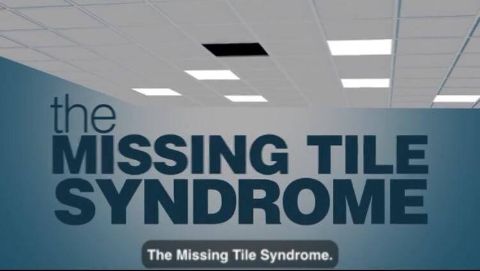
Have you ever thought to yourself, "I wish I were ____"? Adjectives may have included: thinner, taller, smarter, etc. If so, you're like virtually everyone else, and afflicted by "The Missing Tile Syndrome." As Dennis Prager explains, we often focus on the missing tile(s) in our lives, which robs us of happiness. In five minutes, learn how to fix your focus.
Hope you're finding these documentaries fascinating and eye-opening. It's just me, working hard behind the scenes to bring you this enriching content.
Running and maintaining a website like this takes time and resources. That's why I'm reaching out to you. If you appreciate what I do and would like to support my efforts, would you consider "buying me a coffee"?
BTC: bc1q8ldskxh4x9qnddhcrgcun8rtvddeldm2a07r2v
ETH: 0x5CCAAA1afc5c5D814129d99277dDb5A979672116
With your donation through , you can show your appreciation and help me keep this project going. Every contribution, no matter how small, makes a significant impact. It goes directly towards covering server costs.

Was America's first billionaire, John D. Rockefeller, a greedy robber baron, a generous philanthropist, or both? And did the oil tycoon exploit America's poor or give them access to much-needed energy? Historian and Hillsdale College professor Burt Folsom, author of "The Myth of the Robber Barons," reveals the truth about the Rockefeller empire.
2015 • History
Is abortion right, or is it wrong? It's the big question that's lost in a societal debate that's mostly focused on legality. But, really, whether it's right or wrong is the most important question about abortion.
2015 • Health
Have you ever thought to yourself, "I wish I were ____"? Adjectives may have included: thinner, taller, smarter, etc. If so, you're like virtually everyone else, and afflicted by "The Missing Tile Syndrome." As Dennis Prager explains, we often focus on the missing tile(s) in our lives, which robs us of happiness. In five minutes, learn how to fix your focus.
2014 • Lifehack
Why is America the world's richest nation? Is it mostly because of the government, or is it thanks to entrepreneurs and businessmen?
2017 • Economics
Science explains why some cleaning methods work better than others, and that we do not need to purchase multiple cleansers when a few basic ingredients from our pantry and our local pharmacy can get the entire house spic and span.
S1E1 • The Science of Everyday Living • 2011 • Lifehack
Ten years of research and 500 face-to-face-interviews led Richard St. John to a collection of eight common traits in successful leaders around the world.
Bestselling author, popular scholar and existentialist Irvin D. Yalom is one of the most influential living psychotherapists. This cinematic feature is more than a classic biography. Together with Dr. Yalom we travel in an existential journey through the many layers of the human mind while he shares his fundamental insights and wisdom. Dr. Yalom's books sold millions of copies worldwide and critics describe him as: mind-bending, stunning, inspiring, haunting, life-changing.
2014 • Lifehack
Explore the psychology of decision fatigue, what kinds of choices lead us to this state and what we can do to fight it.
Some of us learn best in the classroom, and some of us ... well, we don't. But we still love to learn, to find out new things about the world and challenge our minds. We just need to find the right place to do it, and the right community to learn with. In this charming talk, author John Green shares the world of learning he found in online video.
Dr Kevin Fong makes a personal journey through the moral questions about death that face not just the medical profession, but each and every one of us. The question of how we die is a question that all of us must face, and yet we avoid talking about it. Modern medicine is focused on saving lives. Amazing technical advances have increased doctors' ability to treat a wide range of life-threatening diseases, meaning many more people live longer lives. Life expectancy has surged, and we regard death as something to be battled. It is common for the medical system to throw everything into treating patients right to the very end. But in our attempts to defeat death, the question is this - are we over-medicalising death and the final years of life at the expense of providing better palliative care that would result in a better quality of life? Is it time to reset the system, and learn how to die a better death? Kevin meets medical professionals who are at the heart of these dilemmas, as well as people who are right now facing up to the question of how to die a better death.