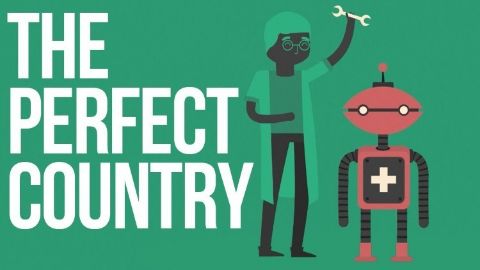
This is a thought experiment about what the perfect country might be like. It's not an idle daydream, it's a way of highlighting some of the problems with our own nations and a way of signalling what the true opportunities might be.
Hope you're finding these documentaries fascinating and eye-opening. It's just me, working hard behind the scenes to bring you this enriching content.
Running and maintaining a website like this takes time and resources. That's why I'm reaching out to you. If you appreciate what I do and would like to support my efforts, would you consider "buying me a coffee"?
BTC: bc1q8ldskxh4x9qnddhcrgcun8rtvddeldm2a07r2v
ETH: 0x5CCAAA1afc5c5D814129d99277dDb5A979672116
With your donation through , you can show your appreciation and help me keep this project going. Every contribution, no matter how small, makes a significant impact. It goes directly towards covering server costs.

If you were setting out to make a country rich, what kind of mindsets and ideas would be most likely to achieve your goals? We invent a country, Richland, and try to imagine the psychology of its inhabitants.
2015 • Economics
The reason why some countries are rich and others poor depends on many things, including the quality of their institutions, the culture they have, the natural resources they find and what latitude they're on.
2014 • Economics
The rules for how to doom a relationship are relatively easy to follow. Here are a selection that are guaranteed to blow up love.
2015 • Lifehack
Nowadays, many atheists declare not just that god is dead but that anyone who believes in him must be stupid. This seems a little harsh – we prefer to think about where religious beliefs come from: the pained parts of ourselves.
2015 • Lifehack
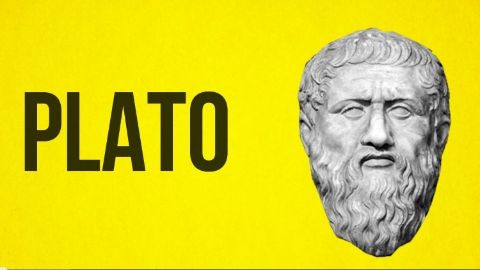
Plato was one of the world's earliest and possibly greatest philosophers. He matters because of his devotion to making humanity more fulfilled.
2014 • People
Karl Marx remains deeply important today not as the man who told us what to replace capitalism with, but as someone who brilliantly pointed out what was inhuman and alienating about it.
2014 • People
This is a thought experiment about what the perfect country might be like. It's not an idle daydream, it's a way of highlighting some of the problems with our own nations and a way of signalling what the true opportunities might be.
2016 • Lifehack
The key to finding fulfilling work is to think a lot, analyse one's fears, understand the market, reflect on capitalism.
2015 • Lifehack
It’s an odd quirk of relationships that, after a time, we tend to develop the sincere conviction that it is all always our partner’s fault.
2016 • Lifehack
We’re still only at the dawn of learning how to use drugs properly – knowing what drugs we need and when we should take them. We look forward to a brighter future for drug use.
2016 • Health
Why are we so captivated and fascinated by news stories about disasters? Is it ghoulish and voyeuristic? Not at all...
2015 • Lifehack
Troubled teens , why some go bad and others come right. What happens when young people run off the rails? Youth offending is very common , almost everyone does dumb things and many of us break the law. However youth offenders consist of two core groups; life present offenders (people who are going to continue offending regardless), and people who given the right conditions will return to become mainstream citizens.
S1E2 • Predict my Future: The Science of Us • 2016 • Lifehack
What motivates us to work? Contrary to conventional wisdom, it isn't just money. But it's not exactly joy either. It seems that most of us thrive by making constant progress and feeling a sense of purpose. Behavioral economist Dan Ariely presents two eye-opening experiments that reveal our unexpected and nuanced attitudes toward meaning in our work.
Adam Curtis - HyperNormalisation Our world is strange and often fake and corrupt. But we think it’s normal because we can’t see anything else. HyperNormalisation - the story of how we got here.
2016 • Lifehack
Advertisements and movies' clichéd and unrealistic portrayal of romance.
S1E4 • How TV Ruined Your Life • 2011 • Lifehack
Explore the psychology of decision fatigue, what kinds of choices lead us to this state and what we can do to fight it.
Meet the most scientifically studied people in the world. A group of 1,037 New Zealanders born in one city have been followed since their births in 1972. Members are now dispersed around the globe but 96% of the original group are still taking part - an extraordinary achievement in such a long running study.
S1E1 • Predict my Future: The Science of Us • 2016 • Lifehack