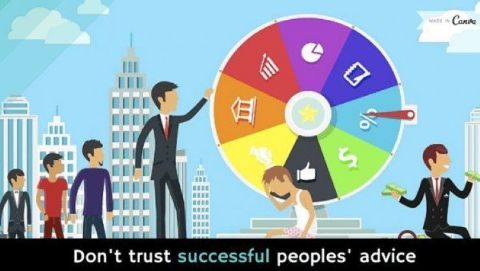
Use Anchoring to your advantage!
Hope you're finding these documentaries fascinating and eye-opening. It's just me, working hard behind the scenes to bring you this enriching content.
Running and maintaining a website like this takes time and resources. That's why I'm reaching out to you. If you appreciate what I do and would like to support my efforts, would you consider "buying me a coffee"?
BTC: bc1q8ldskxh4x9qnddhcrgcun8rtvddeldm2a07r2v
ETH: 0x5CCAAA1afc5c5D814129d99277dDb5A979672116
With your donation through , you can show your appreciation and help me keep this project going. Every contribution, no matter how small, makes a significant impact. It goes directly towards covering server costs.

Use Anchoring to your advantage!
2015 • Lifehack
Dr Kevin Fong makes a personal journey through the moral questions about death that face not just the medical profession, but each and every one of us. The question of how we die is a question that all of us must face, and yet we avoid talking about it. Modern medicine is focused on saving lives. Amazing technical advances have increased doctors' ability to treat a wide range of life-threatening diseases, meaning many more people live longer lives. Life expectancy has surged, and we regard death as something to be battled. It is common for the medical system to throw everything into treating patients right to the very end. But in our attempts to defeat death, the question is this - are we over-medicalising death and the final years of life at the expense of providing better palliative care that would result in a better quality of life? Is it time to reset the system, and learn how to die a better death? Kevin meets medical professionals who are at the heart of these dilemmas, as well as people who are right now facing up to the question of how to die a better death.
The British Sleep Council says that 70 per cent of people in the UK do no get enough sleep. Gaby Roslin and Amir Khan present the first of two programmes in which they aim to put things right, applying the latest science to some of the worst sleepers. They include a sleep deprivation experiment, as well as help for an extreme snorer and a man who suffers from night terrors. A woman who has restless leg syndrome, and a man who has had chronic insomnia for 20 years. The sleep deprivation experiment continues, setting up a mini casino to test for risky behaviour, pain resistance and emotional control. Finally, as the subjects reach the final hours of the challenge, the experiment begins to take its toll as the participants' emotions go into overdrive, with one threatening to quit altogether.
2019 • Lifehack
A documentary that explores how we repeat trauma. It focuses on the childhoods of significant American politicans. It explores the idea that aggressors were originally victims. And that our 'leaders' are deeply wounded and feel powerless. All footage is credited and used under the principles of Fair Use. This video work is both transformative and educational.
2017 • Lifehack
Ten years of research and 500 face-to-face-interviews led Richard St. John to a collection of eight common traits in successful leaders around the world.
Is work oppressive? As illustrated by the recent wave of suicides in major companies, a profound malaise exists. Constant urgency, excessive workloads, lack of training, disarray in corporate organization, management by terror; the 21st Century workplace is continually leaving new victims. Why?
2015 • Lifehack
Why are we so captivated and fascinated by news stories about disasters? Is it ghoulish and voyeuristic? Not at all...
The School of Life • 2015 • Lifehack