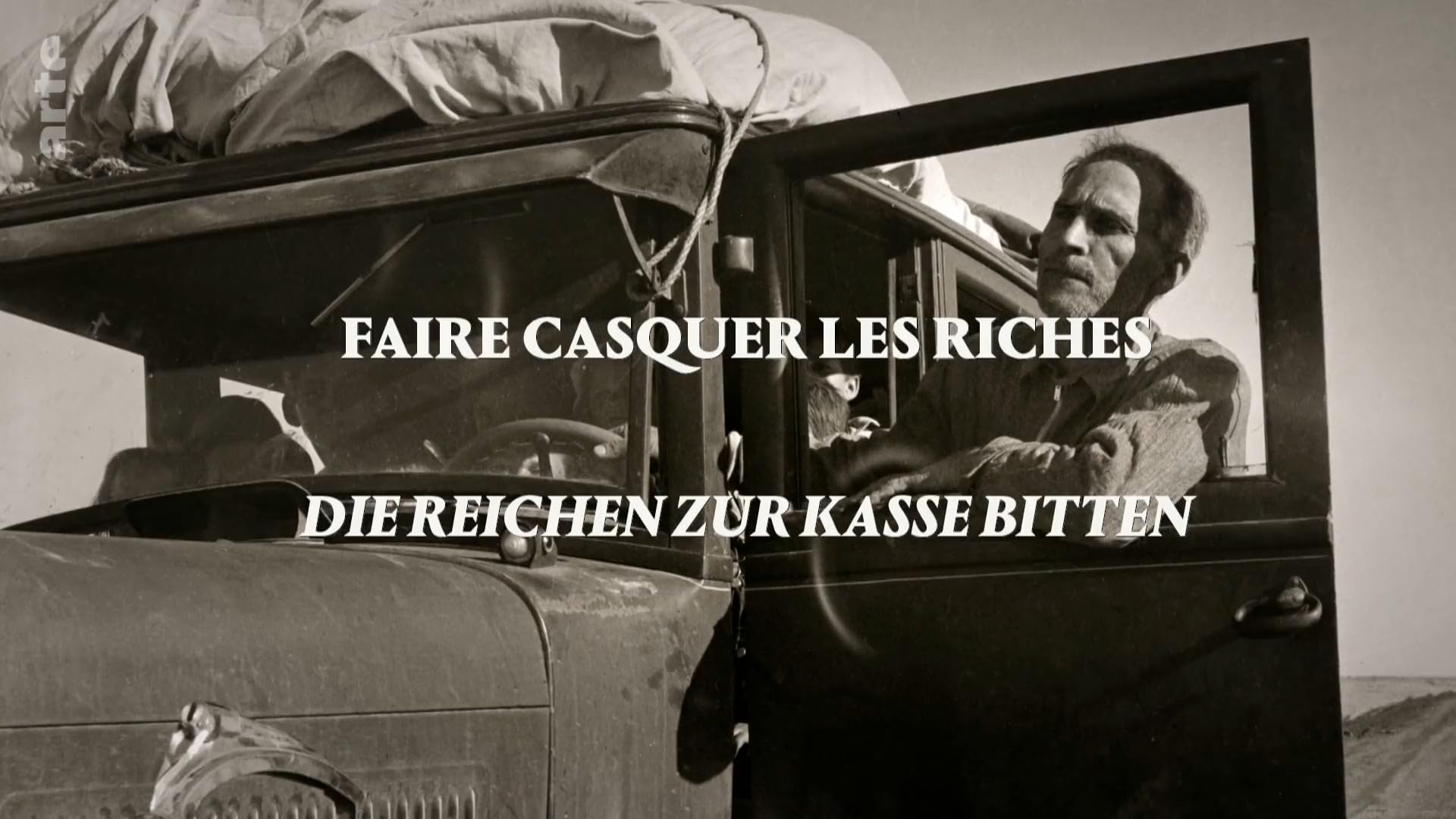
The video suggests that the vast majority of populations are treated essentially like farm animals to maximize the profits of the few. Perhaps its most disturbing suggestion is that choices that are made available to us are really nothing more than tricks to encourage the masses to be more productive.
Hope you're finding these documentaries fascinating and eye-opening. It's just me, working hard behind the scenes to bring you this enriching content.
Running and maintaining a website like this takes time and resources. That's why I'm reaching out to you. If you appreciate what I do and would like to support my efforts, would you consider "buying me a coffee"?
BTC: bc1q8ldskxh4x9qnddhcrgcun8rtvddeldm2a07r2v
ETH: 0x5CCAAA1afc5c5D814129d99277dDb5A979672116
With your donation through , you can show your appreciation and help me keep this project going. Every contribution, no matter how small, makes a significant impact. It goes directly towards covering server costs.
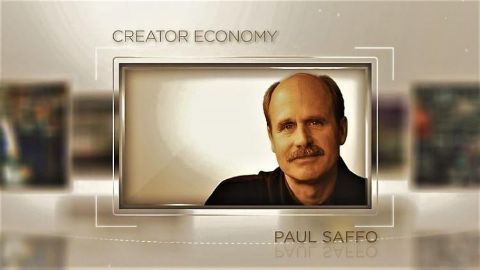
Paul Saffo looks at the development of the US economy through the 20th and into the 21st century. What are the trends that have shaped the economy? How are innovations in technology and communications making the 21st century an entirely different landscape for producers and consumers?
S1E6 • Curiosity Retreats: 2015 Lectures • 2015 • Economics
One hundred and fifty years ago, the corporation was a relatively insignificant entity. Today, it is a vivid, dramatic and pervasive presence in all our lives. Like the Church, the Monarchy and the Communist Party in other times and places, the corporation is today's dominant institution. But history humbles dominant institutions. All have been crushed, belittled or absorbed into some new order. The corporation is unlikely to be the first institution to defy history. Based on Joel Bakan's book, "The Corporation: The Pathological Pursuit of Profit and Power," this documentary is a timely, critical inquiry that examines the very nature of the corporation--its inner workings, curious history, controversial impacts and possible futures. We begin by learning that under the law, corporations have all the rights and yet few of the responsibilities of people. By viewing the behavior of the corporation through the prism of Diagnostic and Statistical Manual (or DSM III, the gold standard of psychiatric evaluation) the filmmakers discover that if the corporation were indeed a person, the person would be considered a psychopath. Featuring candid interviews with CEOs, whistle-blowers, brokers, gurus, spies, players, pawns and pundits, the chronicle charts the spectacular rise of an institution aimed at achieving specific economic goals as it also recounts victories against this seemingly invincible force. Once you see it, you may find yourself thinking twice about what you eat, what you wear, what you watch and what you read.
2003 • Economics
This documentary seeks to be the ultimate Odyssey of exploration into Cannabis and its uses starting from the formation of the Endocannabinoid system in the simple sea squirt, through to its early uses, the plant's medical benefits and landing at the modern legalisation movements across the Globe. Where the billions generated in tax could be re-invested back into hospitals, roads, fire departments, scientific research, community projects and the list goes on.
2018 • Economics
In the 1960s, a radical group of psychotherapists challenged the influence of Freudian ideas, which lead to the creation of a new political movement that sought to create new people, free of the psychological conformity that had been implanted in people's minds by business and politics.
S1E3 • The Century of the Self • Economics
Planned Obsolescence is the deliberate shortening of product life spans to guarantee consumer demand. As a magazine for advertisers succinctly puts it: βThe article that refuses to wear out is a tragedy of business β - and a tragedy for the modern growth society which relies on an ever-accelerating cycle of production, consumption and throwing away. THE LIGHT BULB CONSPIRACY combines investigative research and rare archive footage to trace the untold story of Planned Obsolescence, from its beginnings in the 1920s with a secret cartel, set up expressly to limit the life span of light bulbs, to present-day stories involving cutting edge electronics (such as the iPod) and the growing spirit of resistance amongst ordinary consumers. This film travels to France, Germany, Spain and the US to find witnesses of a business practice which has become the basis of the modern economy, and brings back disquieting pictures from Africa where discarded electronics are piling up in huge cemeteries for electronic waste. Economists and environmentalists believe that the growth society as we know it is unsustainable in the long run and that Planned Obsolescence needs to become a thing of the past, as it is impossible to combine the limitless consumption of resources with a finite planet. But what are the alternatives? The film offers thought-provoking analysis by thinkers working on ways of saving both the economy and the environment, and presents hands-on stories showing entrepreneurs putting new business models into practice.
2010 • Economics