Hope you're finding these documentaries fascinating and eye-opening. It's just me, working hard behind the scenes to bring you this enriching content.
Running and maintaining a website like this takes time and resources. That's why I'm reaching out to you. If you appreciate what I do and would like to support my efforts, would you consider "buying me a coffee"?
BTC: bc1q8ldskxh4x9qnddhcrgcun8rtvddeldm2a07r2v
ETH: 0x5CCAAA1afc5c5D814129d99277dDb5A979672116
With your donation through , you can show your appreciation and help me keep this project going. Every contribution, no matter how small, makes a significant impact. It goes directly towards covering server costs.
Ninety years after the historic double-slit experiment, the quantum revolution shows no sign of slowing. Join a vibrant conversation with renowned leaders in theoretical physics, quantum computation, and philosophical foundations, focused on how quantum physics continues to impact understanding on issues profound and practical, from the edge of black holes and the fibers of spacetime to teleportation and the future of computers.
Caught up in the race to discover the atom’s internal parts — and learn how they fit together — a young British physicist, Harry Moseley, uses newly discovered X-rays to put the Periodic Table in a whole new light. And a young American chemist named Glenn Seaborg creates a new element — plutonium — that changes the world forever, unleashing a force of unimaginable destructive power: the atomic bomb.
Part 3 • The Mystery of Matter: Search for the Elements • 2015 • Physics
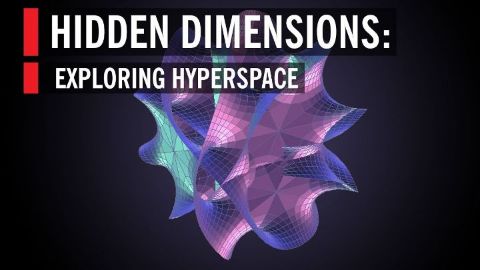
Extra dimensions of space — the idea that we are immersed in hyperspace — may be key to explaining the fundamental nature of the universe. Relativity introduced time as the fourth dimension, and Einstein’s subsequent work envisioned more dimensions still — but ultimately hit a dead end. Modern research has advanced the subject in ways he couldn’t have imagined. John Hockenberry joins Brian Greene, Lawrence Krauss, and other leading thinkers on a visual tour through wondrous spatial realms that may lie beyond the ones we experience.
World Science Festival • 2015 • Physics
Ice is one of the strangest, most beguiling and mesmerising substances in the world. Full of contradictions, it is transparent, yet it can glow with colour, it is powerful enough to shatter rock, but it can melt in the blink of an eye. It takes many shapes, from the fleeting beauty of a snowflake to the multimillion-tonne vastness of a glacier and the eeriness of the ice fountains of far-flung moons. Science writer Dr Gabrielle Walker has been obsessed with ice ever since she first set foot on Arctic sea ice. In this programme, she searches out some of the secrets hidden deep within the ice crystal to try to discover how something so ephemeral has the power to sculpt landscapes, to preserve our past and inform our future.
2011 • Physics
Exploring the universe on a ship that can boldly go where no man has gone before isn't just a sci fi dream. Dr Michio Kaku reveals how we really could one day build a warp drive and set out on our own star trek.
S1E1 • Physics of the Impossible • 2009 • Physics
Just outside Paris, inside a hi-tech vault, and encased in three vacuum-sealed bell jars, rests a small metallic cylinder about the diameter of a golf ball. It may not look like much, but it is one of the most important objects on the planet. It affects nearly every aspect of our lives including the food we eat, the cars we drive, even the medicines we take. It is the kilogramme, the base unit of mass in the International System of Units. This small hunk of metal is the object against which all others are measured. Yet over time, its mass has mysteriously eroded by the weight of an eyelash. A change that, unbeknownst to most, unleashed a crisis with potentially dire consequences. Follows the ensuing high-stakes, two-year race to redefine the weight of the world, and tells the story of one of the most important objects on the planet.
2021 • Physics