Why is America the world's richest nation? Is it mostly because of the government, or is it thanks to entrepreneurs and businessmen?
Hope you're finding these documentaries fascinating and eye-opening. It's just me, working hard behind the scenes to bring you this enriching content.
Running and maintaining a website like this takes time and resources. That's why I'm reaching out to you. If you appreciate what I do and would like to support my efforts, would you consider "buying me a coffee"?
BTC: bc1q8ldskxh4x9qnddhcrgcun8rtvddeldm2a07r2v
ETH: 0x5CCAAA1afc5c5D814129d99277dDb5A979672116
With your donation through , you can show your appreciation and help me keep this project going. Every contribution, no matter how small, makes a significant impact. It goes directly towards covering server costs.
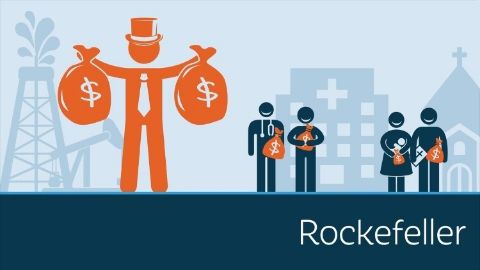
Was America's first billionaire, John D. Rockefeller, a greedy robber baron, a generous philanthropist, or both? And did the oil tycoon exploit America's poor or give them access to much-needed energy? Historian and Hillsdale College professor Burt Folsom, author of "The Myth of the Robber Barons," reveals the truth about the Rockefeller empire.
2015 • History
Is abortion right, or is it wrong? It's the big question that's lost in a societal debate that's mostly focused on legality. But, really, whether it's right or wrong is the most important question about abortion.
2015 • Health
Have you ever thought to yourself, "I wish I were ____"? Adjectives may have included: thinner, taller, smarter, etc. If so, you're like virtually everyone else, and afflicted by "The Missing Tile Syndrome." As Dennis Prager explains, we often focus on the missing tile(s) in our lives, which robs us of happiness. In five minutes, learn how to fix your focus.
2014 • Lifehack
Why is America the world's richest nation? Is it mostly because of the government, or is it thanks to entrepreneurs and businessmen?
2017 • Economics
From its extraction through sale, use and disposal, all the stuff in our lives affects communities at home and abroad, yet most of this is hidden from view. The Story of Stuff is a 20-minute, fast-paced, fact-filled look at the underside of our production and consumption patterns. The Story of Stuff exposes the connections between a huge number of environmental and social issues, and calls us together to create a more sustainable and just world. It'll teach you something, it'll make you laugh, and it just may change the way you look at all the stuff in your life forever. http://storyofstuff.org
2009 • Economics
As we entered the 21st century, the world was guzzling oil, coal and gas like never before. Despite fears of 'peak oil', Professor Iain Stewart discovers that while huge technological advances are helping extend the life of existing oilfields, new unconventional oil and gas supplies like shale gas and tar sands are extending the hydrocarbon age well into the 21st century.
S1E3 • Planet Oil • Economics
If you were setting out to make a country rich, what kind of mindsets and ideas would be most likely to achieve your goals? We invent a country, Richland, and try to imagine the psychology of its inhabitants.
The School of Life • 2015 • Economics
Explores how Xi has made China a more assertive presence on the world stage. For decades, Beijing followed a policy of 'hide your strength and bide your time', but since Xi's accession that has changed, creating alarm in the West over China's growing influence. As Xi faces his greatest test yet - a confrontation in Hong Kong - how will the newly resurgent China react?
S1E2 • China: A New World Order • 2019 • Economics
In the autumn of 2007, Matthew Lee, a worried accounting executive at Lehman Brothers, began to notice serious financial irregularities in the company's practices. When he refused to approve tens of billions of dollars' worth of suspicious transactions, he was fired. Six months later, Lehman Brothers sank with 631 billion dollars of debt. Lee, who has since emerged as a crucial figure in Lehman's downfall, and other whistleblowers recount their personal stories of fraud and deception that went right to the top of the bank. Ultimately, they paid the price for trying to expose the 2008 subprime mortgage crisis.
Storyville • 2019 • Economics
Retiring comfortably middle-class in America requires more than $1 million in savings. How did the dream of golden years leisure get so out of reach?
S1E5 • Money Explained • 2011 • Economics