Nowadays, many atheists declare not just that god is dead but that anyone who believes in him must be stupid. This seems a little harsh – we prefer to think about where religious beliefs come from: the pained parts of ourselves.
Hope you're finding these documentaries fascinating and eye-opening. It's just me, working hard behind the scenes to bring you this enriching content.
Running and maintaining a website like this takes time and resources. That's why I'm reaching out to you. If you appreciate what I do and would like to support my efforts, would you consider "buying me a coffee"?
BTC: bc1q8ldskxh4x9qnddhcrgcun8rtvddeldm2a07r2v
ETH: 0x5CCAAA1afc5c5D814129d99277dDb5A979672116
With your donation through , you can show your appreciation and help me keep this project going. Every contribution, no matter how small, makes a significant impact. It goes directly towards covering server costs.

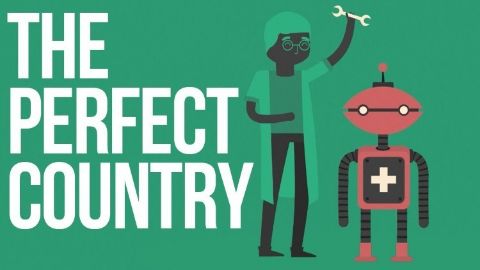
If you were setting out to make a country rich, what kind of mindsets and ideas would be most likely to achieve your goals? We invent a country, Richland, and try to imagine the psychology of its inhabitants.
2015 • Economics
The reason why some countries are rich and others poor depends on many things, including the quality of their institutions, the culture they have, the natural resources they find and what latitude they're on.
2014 • Economics
The rules for how to doom a relationship are relatively easy to follow. Here are a selection that are guaranteed to blow up love.
2015 • Lifehack
Nowadays, many atheists declare not just that god is dead but that anyone who believes in him must be stupid. This seems a little harsh – we prefer to think about where religious beliefs come from: the pained parts of ourselves.
2015 • Lifehack
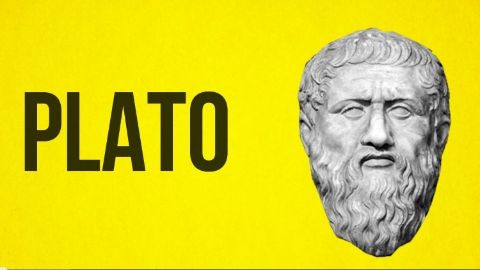
Plato was one of the world's earliest and possibly greatest philosophers. He matters because of his devotion to making humanity more fulfilled.
2014 • People
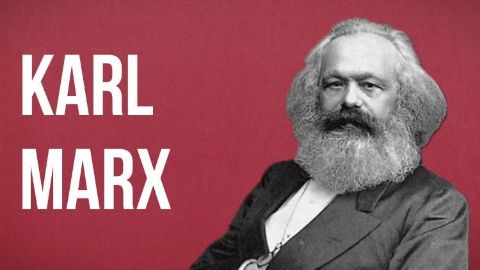
Karl Marx remains deeply important today not as the man who told us what to replace capitalism with, but as someone who brilliantly pointed out what was inhuman and alienating about it.
2014 • People
This is a thought experiment about what the perfect country might be like. It's not an idle daydream, it's a way of highlighting some of the problems with our own nations and a way of signalling what the true opportunities might be.
2016 • Lifehack
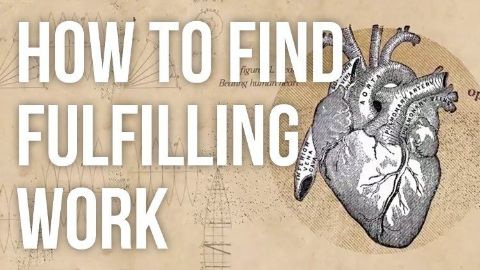
The key to finding fulfilling work is to think a lot, analyse one's fears, understand the market, reflect on capitalism.
2015 • Lifehack
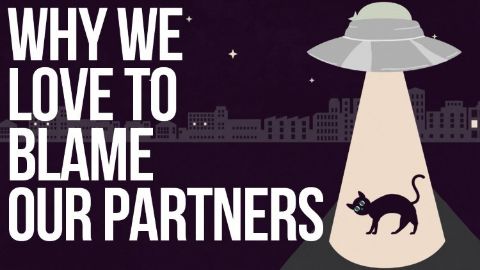
It’s an odd quirk of relationships that, after a time, we tend to develop the sincere conviction that it is all always our partner’s fault.
2016 • Lifehack
We’re still only at the dawn of learning how to use drugs properly – knowing what drugs we need and when we should take them. We look forward to a brighter future for drug use.
2016 • Health
Why are we so captivated and fascinated by news stories about disasters? Is it ghoulish and voyeuristic? Not at all...
2015 • Lifehack
How TV rubs our noses in other people's superior lifestyles.
S1E3 • How TV Ruined Your Life • 2011 • Lifehack
Dr Xand Van Tulleken is single and looking for love. Mathematician Dr Hannah Fry wants to use him as her guinea pig to test whether the algorithms that dating sites use to match people actually work. While Hannah builds a dating site, Xand meets the scientists investigating online dating - and learns what pictures to use and what to write in his profile. He tries out a 'bot' that has automated a swiping app and has an MRI scan to find out whether his brain is equipped for love. 50 members of the public take part in some mini experiments at a date night - and Xand goes on various dates to test whether the algorithm is better than him choosing randomly.
The God Delusion explored the unproven traditions that are given as fact by religious faiths, and the extremes that some followers take them. Dawkins argues that faith is not a way of understanding the world (described as "non-thought"), and is opposed to modern science which tests hypotheses and builds theories to describe the world.
2006 • Lifehack
Is progress really progress, or is progress regress?
S1E5 • How TV Ruined Your Life • 2011 • Lifehack
"(Dis)Honesty – The Truth About Lies" delves into the intricate world of human deception, exploring the ubiquity of lying in our lives. Psychologist Dan Ariely and his team dissect the mechanisms behind dishonesty, from white lies to significant frauds. Through personal accounts, the documentary exposes the rationalizations of individuals, including a Wall Street trader and a cheating spouse, shedding light on the justifications people invent for their deceit. Ariely's research uncovers the complexities of dishonesty, revealing the blurred line between harmless lies and catastrophic deception, questioning our collective morality, and exploring potential solutions to this epidemic of cheating that erodes public trust.
2015 • Lifehack