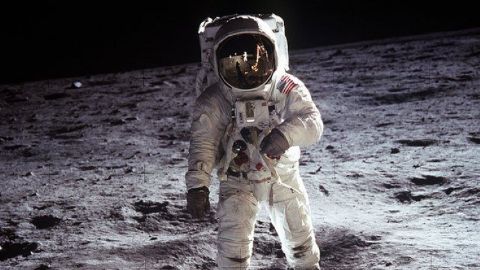
A Beautiful Planet is a breathtaking cinematic journey that offers a rare perspective of our planet as seen from space. Narrated by Jennifer Lawrence and filmed in stunning IMAX 3D, the documentary takes audiences aboard the International Space Station alongside NASA astronauts. Through awe-inspiring visuals, it showcases Earth’s vibrant landscapes, diverse ecosystems, and the delicate balance that sustains life. The film not only highlights the planet’s natural beauty but also draws attention to the environmental challenges we face, including deforestation, pollution, and climate change. By juxtaposing scenes of Earth’s splendor with the visible impacts of human activity, the film delivers a powerful reminder of our shared responsibility to protect our home. More than just a space documentary, it is a moving call for global unity and stewardship of the planet.
Hope you're finding these documentaries fascinating and eye-opening. It's just me, working hard behind the scenes to bring you this enriching content.
Running and maintaining a website like this takes time and resources. That's why I'm reaching out to you. If you appreciate what I do and would like to support my efforts, would you consider "buying me a coffee"?
BTC: bc1q8ldskxh4x9qnddhcrgcun8rtvddeldm2a07r2v
ETH: 0x5CCAAA1afc5c5D814129d99277dDb5A979672116
With your donation through , you can show your appreciation and help me keep this project going. Every contribution, no matter how small, makes a significant impact. It goes directly towards covering server costs.
Planet Hunters follows the astrophysicists – many of them Canadian – at the forefront of the search for Earth's twin, and tells the little-known story of the two Canadians who invented the technique that made modern planet-hunting possible. Gordon Walker and Bruce Campbell also detected the first exoplanet ever discovered. But that's not what the history books say.
S52E04 • The Nature of Things • 2012 • Astronomy
How do astronomers make sense out of the vastness of space? How do they study things so far away? Today Phil talks about distances, going back to early astronomy. Ancient Greeks were able to find the size of the Earth, and from that the distance to and the sizes of the Moon and Sun. Once the Earth/Sun distance was found, parallax was used to find the distance to nearby stars, and that was bootstrapped using brightness to determine the distances to much farther stars.
25 • Crash Course Astronomy • 2015 • Astronomy
Before the ISS, there was Skylab: NASA’s first mission to build a home beyond our planet. This is the spectacular story of the first astronauts who lived on a space station, and the incredible things their work taught us about what it takes for human beings to live, work, and play in outer space.
On the 40th anniversary of the famous ‘Blue Marble’ photograph taken of Earth from space, Planetary Collective presents a short film documenting astronauts’ life-changing stories of seeing the Earth from the outside – a perspective-altering experience often described as the Overview Effect.
Today Phil explains how telescopes work and offers up some astronomical shopping advice.
#6 • Crash Course Astronomy • Astronomy
Commander Stephen Hawking pilots his space ship the SS Hawking on the journey of a lifetime, zooming from black holes to the Big Bang, Saturn to Santa Barbara. After all, why should astronauts have all the fun?
2016 • Astronomy