A Major Malfunction • 2020 • episode "S1E3" Challenger: The Final Flight

Category: History | Subtitle:

After several delays, the crew prepares for launch as engineers and NASA officials tensely discuss concerns about the O-rings and cold weather launch.

Make a donation

Buy a brother a hot coffee? Or a cold beer?

Hope you're finding these documentaries fascinating and eye-opening. It's just me, working hard behind the scenes to bring you this enriching content.

Running and maintaining a website like this takes time and resources. That's why I'm reaching out to you. If you appreciate what I do and would like to support my efforts, would you consider "buying me a coffee"?

Donation addresses

Buy Me a Coffee at ko-fi.com

patreon.com

BTC: bc1q8ldskxh4x9qnddhcrgcun8rtvddeldm2a07r2v

ETH: 0x5CCAAA1afc5c5D814129d99277dDb5A979672116

With your donation through , you can show your appreciation and help me keep this project going. Every contribution, no matter how small, makes a significant impact. It goes directly towards covering server costs.

Challenger: The Final Flight • 2020 • 4 episodes •

Space for Everyone

The new Space Shuttle program captivates America and draws a diverse, determined crop of astronauts. But safety issues arise out of public view.

2020 • History

HELP!

To revive public interest, NASA chooses teacher Christie McAuliffe to be the first civilian on the Shuttle. Issues with the solid rocket boosters linger.

2020 • History

A Major Malfunction

After several delays, the crew prepares for launch as engineers and NASA officials tensely discuss concerns about the O-rings and cold weather launch.

2020 • History

Nothing Ends Here

Challenger's shocking explosion devastates the families of the crew as well as millions watching live, and an investigation puts NASA on the defensive.

2020 • History

You might also like

The Classical Revolution

Alastair unpicks the reasons behind the dazzling revolution that gave birth to classical Greek art, asking how the Greeks got so good so quickly. He travels to the beautiful Valley of the Temples in Agrigento, and to the island of Mozia to see the astonishing charioteer found there in 1979, and marvels at the athletic bodies of the warriors dragged from the seabed - the Riace Bronzes. It was a creative explosion that covered architecture, sculpting in marble, casting in bronze, even painting on vases. Perhaps the most powerful factor was also its greatest legacy - a fascination with the naked human body.

S1E2Treasures of Ancient Greece • 2015 • History

Engineering the Future

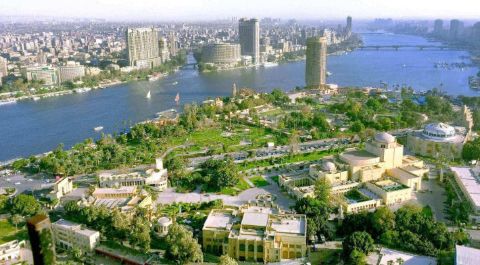
An aerial journey reveals how Egypt is modernizing while preserving its unique past.

S1E2Egypt from Above • 2019 • History

Origins

Chapter 1: Politics Takes us into the corridors of power where Germany's top political mastermind sees an opportunity to use the sudden popularity of the Nazis for his own ends. This sets off a chain of miscalculations, backroom deals and power grabs that will propel Hitler from the fringes of political activism into the heart of government. Hitler wants to become absolute leader of a single-party German state - standing in his way is democracy and the rule of law. After leading a failed coup in 1923, Hitler decides on a new strategy for taking power: instead of being revolutionaries, the Nazis will become a legitimate, mainstream political party operating under the veneer of legality. Hitler aims to win power democratically and then destroy democracy from within. To achieve his goal Hitler must overcome Germany's political elite, including Paul von Hindenburg, the president who looks down on him, and, behind the scenes, political mastermind Kurt von Schleicher, who wants to use him. Whilst this political intrigue plays out at the highest level of government, Hitler faces another obstacle at ground level - a Jewish lawyer called Hans Litten, who is out to prove that the Nazis are far from the legal, legitimate party they claim to be. Chapter 2: The First Six Months in Power At the start of 1933, Hitler is the chancellor of Germany but he does not have absolute power - there is still a democratic parliament beneath him, a head of state above him and the rule of law hanging over him. Hitler sets his sights on dismantling the German state. When Hitler calls a general election to increase Nazi representation in the Reichstag, Hermann Goring sees an opportunity to impress by taking out the left-wing opposition. Goring orders a raid on the Communist Party HQ in the hope of finding evidence of a planned uprising. He doesn't find it, but when a fire breaks out in the Reichstag it is an opportunity to pin the blame on the left. Goring then has the green light to use the stormtroopers to brutally round up communists and social democrats - terror reigns in German streets. Thousands of arrests have been made but to make them legal, Hitler calls on president von Hindenburg and a decree is passed giving the Nazis emergency powers to ban free speech, the right to protest and to arrest without charge. When the Reichstag burned the Nazis persuaded the German people and their president that this was the first sign of a left-wing insurrection. The ensuing fear of left-wing violent lawlessness means that Hitler can push through another law that suspends democracy, allowing him to act without the approval of parliament. Soon, the first laws to restrict the freedom of the Jewish population are passed. One Jewish baker is found dead with a swastika carved into his chest. Goring has eradicated the Nazis' parliamentary opposition. He is rewarded with more power and more prestige. Another Nazi wants this type of power and influence but in early 1933 Henrich Himmler is based in Munich, not Berlin. He is the unassuming, uncharismatic head of an elite force of fanatical Nazis known as the SS. Himmler wants to make the SS the central institution in Germany in charge of political repression. Now that Himmler can arrest perceived Nazi opponents indiscriminately, he needs somewhere to put them. He gives a press conference regarding the opening of a camp to re-educate political prisoners. It has a capacity of around 5,000. The camp is near the small town of Dachau. In April 1933 a 39-year-old deputy state prosecutor called Josef Hartinger receives a telephone call. Four detainees have tried to escape from the camp at Dachau, three have been shot dead. Under German law it is Hartinger's job to investigate these unnatural deaths. He visits Dachau and sees the bodies - he realises something is very wrong. The official story just doesn't add up and it is strange that all the dead happen to be Jewish. Hartinger is sure these deaths are murders and that they are not an isolated case. He collates enough evidence to implicate the commandant of Dachau in the murders. This means going up against Himmler, whose power is growing. Himmler is in the process of bringing every state in Germany under SS control. He does not want the wider world to know that Dachau is a place of savage brutality and murder. Hartinger's boss will not go against Himmler's authority and shuts his deputy down but Hartinger will not be silenced and files a report. Himmler is worried - the SS does not have the right under German law to kill political opponents. To placate his critics, Himmler fires the commandant and as far as the German public are concerned the concentration camps are benign and humane. Hartinger's file goes all the way to Berlin and the killings stop at Dachau - it seems like a victory for the law. But Himmler is starting to impress, and he manages to persuade Hitler to block the legal investigations into Dachau. Now Himmler and the SS feel emboldened and the killings continue. Goring realises he has to take Himmler seriously and that his grip on power could be under threat, but he has his own secret weapon. He has created a surveillance organisation that listens in on anyone that could move against him. To act on the information gathered, Goring creates a new branch of the secret police, known as the Gestapo. But Himmler wants Goring's secret police - this is after all his territory. Goring will not relinquish control. These rivalries mean nothing to Hitler - books are being burned, Jewish people, gay people, intellectuals, anyone held to have anti-Nazi beliefs are disappearing. Germany is well on its way to becoming a Nazi dictatorship, but there is a serious obstacle in Hitler's way: the country's elderly president. Chapter 3: Night of the Long Knives Adolf Hitler has been chancellor of Germany for just under a year. It is a challenging balancing act. On the one hand, the Nazis must be mindful of President Paul von Hindenburg and Vice Chancellor Franz von Papen, who are members of Germany's traditional aristocratic ruling elite. On the other, there is the Nazis' own power base- the stormtroopers - millions of angry, disenfranchised men who wreak havoc on German streets. The stormtroopers are led by Ernst Rohm, one of Hitler's oldest and closest friends. Rohm wants Hitler to fulfil his promise to sweep away the traditional ruling class. Hitler owes Rohm: he has paved the way for Hitler's political career, and his stormtroopers have helped to eradicate left-wing opposition to the Nazi Party. Now, though, they're a potential threat - stormtrooper violence is undermining Hitler's credibility as chancellor. In a bid to placate Rohm, Hitler makes him a minister, but Rohm tries to wrestle control of the existing army that reports to President Hindenburg, putting Hitler is in a difficult position, stuck between his president and his old friend. Rohm's actions present Hermann Goring with an opportunity to persuade Hitler that his old comrade is no longer a friend, but a threat. But G?ring will also need the help of his own rival, Heinrich Himmler. Himmler agrees to help destroy Rohm and his stormtroopers and make the SS Germany's only paramilitary force.

S1Rise of the Nazis • 2019 • History

Trouble in the Family: 1337-1360

Edward III rips up the medieval rule book and crushes the flower of French knighthood at the Battle of Crecy with his low-born archers. His son, the Black Prince, conducts a campaign of terror, helping to bring France to her knees.

S1E1Chivalry and Betrayal: The Hundred Years War • 2013 • History

Beyond Utopia: Escape from North Korea

A suspenseful, immersive look at the lengths to which people will go to gain freedom. The film follows various individuals as they attempt to flee North Korea, one of the most oppressive places on earth and a land they grew up believing was a paradise. At the film's core are a mother desperate to reunite with the child she was forced to leave behind; a family of five - including small children and an elderly grandmother - embarking on a treacherous journey across the Yalu River and into the hostile mountains of China; and a South Korean Christian pastor on a mission to help them. Leaving their homeland is fraught with danger - severe punishment if caught and possibly even execution - as well as potential exploitation by unscrupulous brokers. Family members who remain behind may also face retribution. Yet these individuals are driven to take the risk. Gripping, visceral and urgent, Madeleine Gavin's film embeds the viewer with these family members as they attempt their perilous escape, palpably conveying life-or-death stakes.

2024 • History

Part 2: Propagation: The Gulag in the turmoil of the "Great Terror" and war (1934-1945)

Glorified at the XVIIth Congress of the Communist Party, in 1934, Stalin launched major projects that would go down in history. The NKVD, which succeeded the GPU, multiplies the camps. The number of deportees passed the one million mark in 1935. A spectacular showcase for the great terror unleashed in 1937, the Moscow trials concealed the extent of the repression that blindly fell on all of Soviet society and anonymous people. In August 1939, after the signing of the German-Soviet pact, hundreds of thousands of Poles, Balts, Western Ukrainians and Moldavians joined some 2 million Soviet deportees in the Gulag camps. Conditions of detention deteriorated appallingly with the invasion of the USSR by the Wehrmacht in June 1941; and in 1945, despite the victory over Nazi Germany, the number of oppressed increased by tens of thousands of men, women and even children who often had no other fault than to have survived the Nazi occupation...

S1E2Gulag: The Story • 2019 • History