Aerial Ireland • 2017

Category: Nature | Torrent: | Subtitle:

Take a cross-country flight over Ireland's natural wonders and ancient ruins. In this spectacular overview of the historically significant Emerald Isle, we explore the sites, the people, and the milestones of this unique gem of Western Europe.

Make a donation

Buy a brother a hot coffee? Or a cold beer?

Hope you're finding these documentaries fascinating and eye-opening. It's just me, working hard behind the scenes to bring you this enriching content.

Running and maintaining a website like this takes time and resources. That's why I'm reaching out to you. If you appreciate what I do and would like to support my efforts, would you consider "buying me a coffee"?

Donation addresses

Buy Me a Coffee at ko-fi.com

patreon.com

BTC: bc1q8ldskxh4x9qnddhcrgcun8rtvddeldm2a07r2v

ETH: 0x5CCAAA1afc5c5D814129d99277dDb5A979672116

With your donation through , you can show your appreciation and help me keep this project going. Every contribution, no matter how small, makes a significant impact. It goes directly towards covering server costs.
You might also like

Passionate

In the Pacific, the quest to multiply has spawned a stunning array of unusual behaviors and adaptations. There are forest penguins with a tenuous marriage, the secret rendezvous of great white sharks, and the tale of male pregnancy.

S1E4 • Big Pacific • 2017 • Nature

There Was No First Human

If you traced your family tree back 185 million generations, you wouldn't be looking at a human, a primate, or even a mammal. You'd be looking at a fish. So where along that line does the first human show up? The answer may surprise you.

Nature

South America

The documentary series gives a bird's-eye view of South America, as condors soar along the Andes, scarlet macaws explore the heart of the Amazon and hummingbirds and vultures see the continent's greatest sights. It is a journey that includes Machu Picchu, the Nasca Lines and the cities of Rio de Janeiro and Santiago. In Patagonia, giant petrels shadow killer whales as they hunt seals by stranding their huge bodies on the beach. At Iguassu Falls, dusky swifts dive through the cascades to huddle in communal roosts while hummingbirds bathe below. In a secret Andean location, condors soar in flocks over 40-strong and scavenge on casualties from herds of fighting guanacos. Elsewhere, a mother condor gently pushes her youngster to the edge of a 200-metre cliff, as flight school begins. Deep in the Amazon, macaws seek medicinal clay. They are joined by a host of secretive jungle animals, including spider monkeys and tapirs, all after the same remedy. In Peru, condors soar over fighting sealions waiting for casualities and on a mass exodus north, birds converge on the Panama Canal. In Costa Rica, black vultures descend on turtles as they lay their eggs in the sand and pick off the eggs that ping-pong through the air.

S1E4 • Earthflight • 2012 • Nature

Cast Adrift

Isolated since the time of the dinosaurs, New Zealand's wildlife has been left to its own devices, with surprising consequences. Its ancient forests are still stalked by predators from the Jurassic era. It's also one of the most geologically active countries on earth. From Kiwis with their giant eggs, to forest-dwelling penguins and helicopter-riding sheep dogs, meet the astonishing creatures and resilient people who must rise to the challenges of their beautiful, dramatic and demanding home.

Part 1 • New Zealand: Earth's Mythical Islands • 2016 • Nature

Frozen in Time

In episode three, Fortey looks at the Ice Age. 2.8 million years ago - triggered by slight changes in the Earth's orbit around the sun and shifts in its ocean currents - the world began to cool. Within a few thousand years much of the planet was shrouded in a dense cloak of ice that would come and go until only 10,000 years ago. We call this age of ice - the Pleistocene Age - and it transformed the hierarchy of nature. This is the story of how a few specialist species that evolved to live in the biting cold survived into the present day.

S1E3 • Survivors: Nature's Indestructible Creatures • 2012 • Nature

Say It with Sound

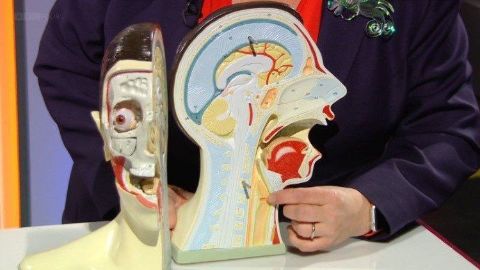
Sophie is joined in the theatre by chirping crickets, hissing cockroaches and groaning deer to reveal the very different ways that animals have adapted their bodies to send audible messages that are vital to their species. She also explores how and why the human voice evolved to become the most versatile sound producer in the natural world. She demonstrates what sound actually is and how it travels. Unpacking the power behind sound, she uses it to shatter glass and reveal how the human body can resonate in a way that amplifies our voices to send our messages further. She also explores how different species use very different frequencies to communicate and why humans can only hear a fraction of these animal messages. Finally, she investigates why we all have unique vocal prints, and how computers are learning to recognise these.

S1E1 • Royal Institution Christmas Lectures: The Language of Life • 2017 • Nature