African Deserts • 2024 • episode "S1E7" • Earth Sounds

Category: Nature | Subtitle:

Silence may seem golden in the desert, but secret sounds connect curious meerkats - and tip off eavesdropping predators like cobras and eagles.

Make a donation

Buy a brother a hot coffee? Or a cold beer?

Hope you're finding these documentaries fascinating and eye-opening. It's just me, working hard behind the scenes to bring you this enriching content.

Running and maintaining a website like this takes time and resources. That's why I'm reaching out to you. If you appreciate what I do and would like to support my efforts, would you consider "buying me a coffee"?

Donation addresses

Buy Me a Coffee at ko-fi.com

patreon.com

BTC: bc1q8ldskxh4x9qnddhcrgcun8rtvddeldm2a07r2v

ETH: 0x5CCAAA1afc5c5D814129d99277dDb5A979672116

With your donation through , you can show your appreciation and help me keep this project going. Every contribution, no matter how small, makes a significant impact. It goes directly towards covering server costs.

Earth Sounds • 2024 • 12 episodes •

Australian Forests

In ancient woodlands, a crocodile relies on sound to protect her babies, koalas release powerful roars, and an enchanting frog choir communes.

2024 • Nature

The Himalayas

Mountains act as a huge echo chamber for elusive creatures-like snow leopards-who use the landscape to amplify their rarely heard love songs.

2024 • Nature

The Rainforests

In one of the richest soundscapes, howler monkeys attempt to out-voice each other and sloths break their silence to search for mates.

2024 • Nature

The Pacific

Whale songs and dolphin clicks hold hidden meaning in an underwater world full of clever acoustic tricks.

2024 • Nature

African Plains

Predators listen for frantic footsteps, cocktail ants craft a battle cry, and lions embrace the transformative power of rolling rain and thunder.

2024 • Nature

Polar Worlds

In subzero conditions, emperor penguins use custom calls to find their families. After dark, the northern lights make mesmerizing music.

2024 • Nature

African Deserts

Silence may seem golden in the desert, but secret sounds connect curious meerkats - and tip off eavesdropping predators like cobras and eagles.

2024 • Nature

Atlantic Coasts

Where land meets sea, rockhopper penguins, orca whales, and elephant seals find incredible ways to cut through the chaos.

2024 • Nature

Winter Woodlands

In North America's forests, a snowy game of hide-and-seek unfolds between foxes and voles. When seasons change, elk strike up a sonic rivalry.

2024 • Nature

African Water Worlds

The Okavango Delta is awash with sound. And locals - from pied kingfishers to hippos - tune in to life above and below water to survive.

2024 • Nature

Shallow Seas

New technology reveals a raucous symphony of pops and squeaks in an underwater amphitheater full of flirtatious fish and graceful manatees.

2024 • Nature

Listening to Our Planet

Meet the scientists studying sound around the globe to help stop the rapid progression of climate change and wildlife endangerment.

2024 • Nature

You might also like

Secrets of the Deep

The team set off beneath the waves to explore this spectacular archipelago. It is an exciting opportunity for the team to delve into a world that still largely remains a mystery to science. Venturing down in the Nadir, a specially equipped deep sea submersible, Liz goes in search of an elusive ocean giant, the mola, or sunfish, to understand more about its little-known behaviour in the deep. On the way back to the Alucia, Liz checks in on a playful sea lion population to see how they have been affected by a recent extreme weather event, El Nino. Back on board the Alucia, the team sets sail north for the most remote and inhospitable islands in the Galapagos - Wolf and Darwin. Here, Liz joins the team tagging and tracking hammerhead sharks that school at this location in huge numbers as they try to unlock the secrets of this stunning behaviour. But nothing can prepare the Alucia crew for the power of the ocean in this isolated marine wonderland.

S1E2 • Galapagos with Liz Bonnin • 2017 • Nature

Extinction: The Facts

With a million species at risk of extinction, Sir David Attenborough explores how this crisis of biodiversity has consequences for us all, threatening food and water security, undermining our ability to control our climate and even putting us at greater risk of pandemic diseases. Extinction is now happening up to 100 times faster than the natural evolutionary rate, but the issue is about more than the loss of individual species. Everything in the natural world is connected in networks that support the whole of life on earth, including us, and we are losing many of the benefits that nature provides to us. The loss of insects is threatening the pollination of crops, while the loss of biodiversity in the soil also threatens plants growth. Plants underpin many of the things that we need, and yet one in four is now threatened with extinction. Last year, a UN report identified the key drivers of biodiversity loss, including overfishing, climate change and pollution. But the single biggest driver of biodiversity loss is the destruction of natural habitats. Seventy-five per cent of Earth's land surface (where not covered by ice) has been changed by humans, much of it for agriculture, and as consumers we may unwittingly be contributing towards the loss of species through what we buy in the supermarket. Our destructive relationship with the natural world isn’t just putting the ecosystems that we rely on at risk. Human activities like the trade in animals and the destruction of habitats drive the emergence of diseases. Disease ecologists believe that if we continue on this pathway, this year’s pandemic will not be a one-off event.

2020 • Nature

Alligator Bodyguards

A look at how a dung beetle standing on its head can roll a ball in a straight line; if egrets ever regret hanging out next to hungry alligators; and what ghostly creature was caught on camera 3000 feet below the ocean's surface.

S1E20 • Nature's Strangest Mysteries: Solved • 2019 • Nature

The evolution of the human eye

The human eye is an amazing mechanism, able to detect anywhere from a few photons to a few quadrillion, or switch focus from the screen in front of you to the distant horizon in a third of a second. How did these complex structures evolve? Joshua Harvey details the 500 million year story of the human eye.

TED-Ed • Nature

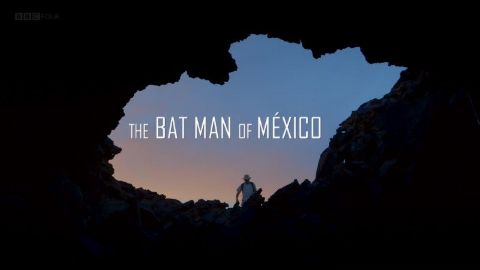
The Bat Man of Mexico

David Attenborough narrates the story of Rodrigo Medellin. Since he first kept vampire bats in his bathroom as a child, Rodrigo has dedicated his life to saving them. Now Mexico's most famous export, tequila, is at stake. Rodrigo's beloved lesser long-nosed bat is crucial to the liquor - pollinating the plants the drink is made from. To save both, Rodrigo must track the bats' epic migration across Mexico - braving hurricanes, snakes, Mayan tombs and seas of cockroaches. The threats are very real for not only Rodrigo and the bats, but also for anyone with a taste for tequila.

Natural World • 2014 • Nature

Cast Adrift

Isolated since the time of the dinosaurs, New Zealand's wildlife has been left to its own devices, with surprising consequences. Its ancient forests are still stalked by predators from the Jurassic era. It's also one of the most geologically active countries on earth. From Kiwis with their giant eggs, to forest-dwelling penguins and helicopter-riding sheep dogs, meet the astonishing creatures and resilient people who must rise to the challenges of their beautiful, dramatic and demanding home.

Part 1 • New Zealand: Earth's Mythical Islands • 2016 • Nature