The Future of AI: Dream or a Nightmare • 2023 • episode "S1E3" BBC Royal Institution Christmas Lectures: The Truth about AI

Category: Technology | Torrent: | Subtitle:

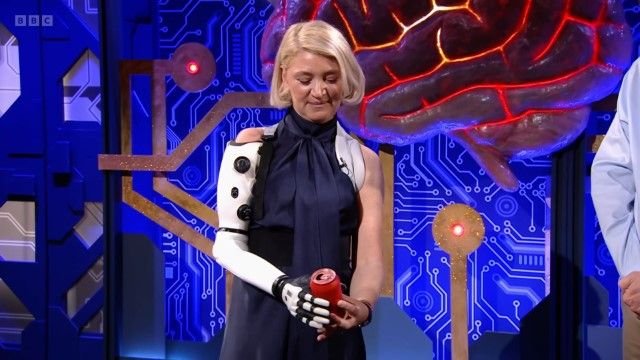
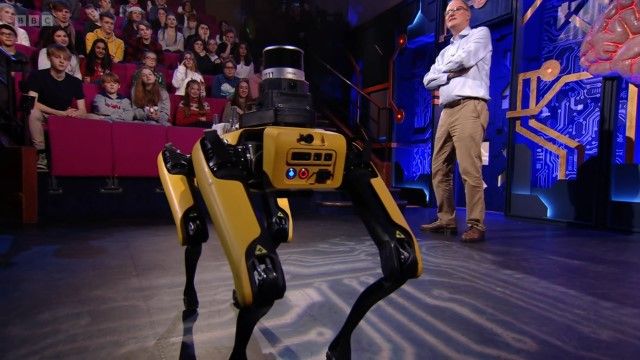
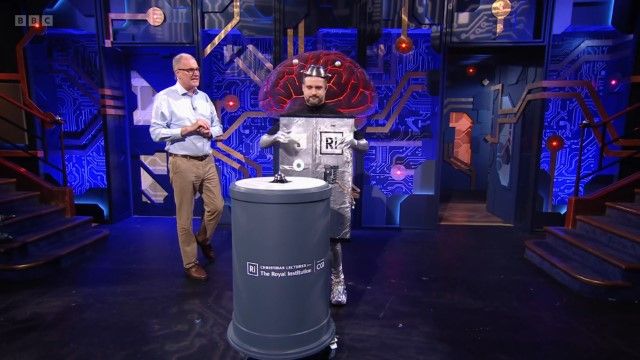
Mike Wooldridge grapples with the future of AI in the third and final Christmas lecture. Mike takes a ride in a driverless car. Autonomous vehicles, once a science fiction dream, are now a reality. Many AI researchers believe removing human drivers will eventually make our streets much safer. Mike explores how the car ‘sees' and perceives the world – and how with the help of AI, it gets better the more it drives. Although AI will create many exciting opportunities, advances in AI have raised fears – some justified, others not. With the help of expert guests, Mike talks us through some of the risks AI poses. He unpacks the very real danger of bias in AI, asking how we avoid creating AI that favours those who resemble its creators, and he explores the dangers of 'fake news' and how AI algorithms can lead to dangerous online 'echo chambers', helping to foment extreme views. Mike also demonstrates deepfake technology and asks if AI means we simply can't trust our eyes any more? The prospect of super-intelligent AI means that in the future we may be able to mobilise AI to uncover radical large-scale solutions to the biggest problems facing humanity, such as climate change. But we need to think carefully about what we want to let AI control. Could AI in charge of weapons accidentally begin wars – and present a risk to our survival? And, as AI gets ever more intelligent, how should we treat it? How does our audience feel about kicking an AI robot dog? This lecture addresses the big question of AI: can it ever truly be like us, or are humans unique? As AI advances, it seems these ethical questions are destined to get ever more complex… The Christmas Lectures are the most prestigious event in the Royal Institution calendar, dating from 1825 when Michael Faraday founded the series. They are the world's longest running science television series, and always promise to inspire and amaze each year through explosive demonstrations and interactive experiments with the live theatre audience.

Make a donation

Buy a brother a hot coffee? Or a cold beer?

Hope you're finding these documentaries fascinating and eye-opening. It's just me, working hard behind the scenes to bring you this enriching content.

Running and maintaining a website like this takes time and resources. That's why I'm reaching out to you. If you appreciate what I do and would like to support my efforts, would you consider "buying me a coffee"?

Donation addresses

Buy Me a Coffee at ko-fi.com

patreon.com

BTC: bc1q8ldskxh4x9qnddhcrgcun8rtvddeldm2a07r2v

ETH: 0x5CCAAA1afc5c5D814129d99277dDb5A979672116

With your donation through , you can show your appreciation and help me keep this project going. Every contribution, no matter how small, makes a significant impact. It goes directly towards covering server costs.
BBC Royal Institution Christmas Lectures: The Truth about AI • 2023 • 3 episodes •

How to Build an Intelligent Machine

Mike Wooldridge examines real-life neurons in action and explains how artificial neural networks are inspired by neural structures in the brain. To demonstrate how AI learns, we watch drones as they are trained to recognise and fly through structures in the lecture theatre autonomously. AI exploded into the public consciousness in 2022 with the release of ChatGPT and boasts around 100 million monthly users. Mike unravels the mystery of how large language models like ChatGPT work, and he finds out if one day this technology - along with a whole suite of different AI tools - will allow us to understand the animals we share this planet with. The Christmas Lectures are the most prestigious event in the Royal Institution calendar, dating from 1825, when Michael Faraday founded the series. They are the world's longest running science television series and always promise to inspire and amaze each year through explosive demonstrations and interactive experiments with the live theatre audience.

2023 • Technology

My AI Life

Mike Wooldridge reveals the huge role AI already plays in our daily lives – sometimes without us even realising its role. Mike investigates how games like chess and Go have become a training ground for AI, helping to bring about key advances we are now seeing in the field, and he reveals how simple methods of learning, like rewarding success, have been used to train AI in spectacular ways. We also feature some of the revolutionary innovations that AI has brought about in healthcare, from the use of AI tools in planning cancer treatment, to monitoring Parkinson's. Mike is joined by members of DeepMind's AlphaFold team, who use AI to predict the structures of large numbers of proteins, which will revolutionise the creation of new drugs across the world. We also reveal the huge impact AI has had on our creative lives – as it is able to write songs and create artworks in seconds. With the help of artist Eric Drass (aka shardcore), the audience creates a collaborative artwork and discovers how image generation works. Mike explores the thorny question of who the creator is – the AI itself, the human who set it to work, or the creators of the art that AI has learned from? The Christmas Lectures are the most prestigious event in the Royal Institution calendar, dating from 1825, when Michael Faraday founded the series. They are the world's longest running science television series, and always promise to inspire and amaze each year through explosive demonstrations and interactive experiments with the live theatre audience.

2023 • Technology

The Future of AI: Dream or a Nightmare

Mike Wooldridge grapples with the future of AI in the third and final Christmas lecture. Mike takes a ride in a driverless car. Autonomous vehicles, once a science fiction dream, are now a reality. Many AI researchers believe removing human drivers will eventually make our streets much safer. Mike explores how the car ‘sees' and perceives the world – and how with the help of AI, it gets better the more it drives. Although AI will create many exciting opportunities, advances in AI have raised fears – some justified, others not. With the help of expert guests, Mike talks us through some of the risks AI poses. He unpacks the very real danger of bias in AI, asking how we avoid creating AI that favours those who resemble its creators, and he explores the dangers of 'fake news' and how AI algorithms can lead to dangerous online 'echo chambers', helping to foment extreme views. Mike also demonstrates deepfake technology and asks if AI means we simply can't trust our eyes any more? The prospect of super-intelligent AI means that in the future we may be able to mobilise AI to uncover radical large-scale solutions to the biggest problems facing humanity, such as climate change. But we need to think carefully about what we want to let AI control. Could AI in charge of weapons accidentally begin wars – and present a risk to our survival? And, as AI gets ever more intelligent, how should we treat it? How does our audience feel about kicking an AI robot dog? This lecture addresses the big question of AI: can it ever truly be like us, or are humans unique? As AI advances, it seems these ethical questions are destined to get ever more complex… The Christmas Lectures are the most prestigious event in the Royal Institution calendar, dating from 1825 when Michael Faraday founded the series. They are the world's longest running science television series, and always promise to inspire and amaze each year through explosive demonstrations and interactive experiments with the live theatre audience.

2023 • Technology

You might also like

Glass

Join Steven Johnson and consider how the invention of the mirror spurred on the Renaissance, how glass lenses allow us to reveal worlds within worlds and how, deep beneath the ocean, glass is essential to communication. Johnson learns about the daring exploits of glassmakers who were forced to work under threat of the death penalty, a physics teacher who liked to fire molten glass from a crossbow and a scientist whose tinkering with a glass lens allowed 600 million people to see a man set foot on the moon. The link between the worlds of art, science, astronomy, disease prevention and global communication starts with the little-known maverick innovators of glass.

S1E3How We Got to Now • 2014 • Technology

Power Games

Electricity powers the life support systems that keep our cities running. Lights, transport, communications, and even hospitals rely on this invisible force. Without it, our cities come to a standstill and lives are put at risk. Meet the people who spend tireless hours to make sure that city power grids remain safe, efficient, and uninterrupted

S1E1How Cities Work • 2013 • Technology

Which trends will affect our lives in the future

A futurist, a demographer and a museum curator spot trends that will affect the way people live and work.

The Economist • 2015 • Technology

Pools

Jeff Goldblum examines the world of pools. He takes a trip to a water park, a therapy center, and even NASA's labs in a quest to discover all there is to learn about our favorite pastime.

S1E11The World According to Jeff Goldblum • 2020 • Technology

Rising Concerns

With its survival challenged by a rapidly growing and aging population and by accelerating climate change, where can land-poor Singapore expand? The futurists offer a radical solution: a massive vertical city. What will it be like living high up in the sky?

S1E1Futuropolis: Mapping the City of Tomorrow • 2018 • Technology

Digital Transcendence

Jason Silva is a positive futurist who wants us to be excited about "the adjacent possible" and the ways we need to embrace the coming technological changes -- the "tools" that will change us as a people and alter humankind.

S1E4Curiosity Retreats: 2015 Lectures • 2015 • Technology