Drama-documentary about Winston Churchill's extraordinary experiences during the Great War, with intimate letters to his wife Clementine allowing the story to be told largely in his own words. Just 39 and at the peak of his powers running the Royal Navy, Churchill in 1914 dreamt of Napoleonic glory, but suffered a catastrophic fall into disgrace and humiliation over the Dardanelles disaster. The film follows his road to redemption, beginning in the trenches of Flanders in 1916, revealing how he became the 'godfather' of the tank and his forgotten contribution to final victory in 1918 as Minister of Munitions. Dark political intrigue, a passionate love story and remarkable military adventures on land, sea and air combine to show how the Churchill of 1940 was shaped and forged by his experience of the First World War.
Hope you're finding these documentaries fascinating and eye-opening. It's just me, working hard behind the scenes to bring you this enriching content.
Running and maintaining a website like this takes time and resources. That's why I'm reaching out to you. If you appreciate what I do and would like to support my efforts, would you consider "buying me a coffee"?
BTC: bc1q8ldskxh4x9qnddhcrgcun8rtvddeldm2a07r2v
ETH: 0x5CCAAA1afc5c5D814129d99277dDb5A979672116
With your donation through , you can show your appreciation and help me keep this project going. Every contribution, no matter how small, makes a significant impact. It goes directly towards covering server costs.
How did an insignificant cluster of Latin hill villages on the edge of the civilised world become the greatest empire the world has known? In the fifth programme of the series, archaeologist and historian Richard Miles examines the phenomenon of the Roman Republic, from its fratricidal mythical beginnings, with the legend of Romulus and Remus, to the all too real violence of its end, dragged to destruction by war lords like Pompey the Great and Julius Caesar. Travelling to Sicily and North Africa, Richard tells the story of Rome's century-long struggle for dominance with the other great regional power, Carthage. It was a struggle that would end with the total destruction of this formidable enemy and the transformation of landlubber Rome into a seapower, and the Republic into an Empire. But with no-one left to beat, the only enemy that Rome had left was itself.
S1E5 • Ancient Worlds • 2010 • History
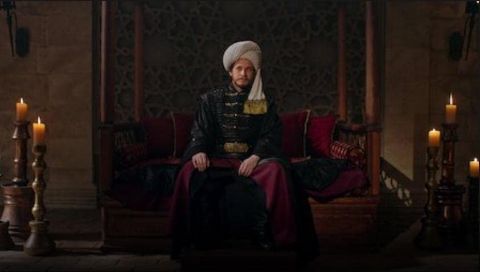
Our third and final episode looks at the Ottoman Empire’s slow decline in the face of Russian expansion and explores the complex alliances it would forge with European powers in an effort to survive. The map of Europe would be radically redrawn and the Ottoman Empire would come to a humiliating end, giving birth to the modern Turkish Republic.
S1E3 • Ottomans Versus Christians: Battle for Europe • 2016 • History
Begins with the story of the signature scientific achievement of our time: the mapping of the human genome. As scientists learn to read the genetic code, they grapple with the dangers inherent in increasingly sophisticated and easily available methods of intervening in the very essence of what makes us human, our DNA.
S1E2 • The Gene: An Intimate History • 2020 • History
The strategies behind the U.S. atomic bombings of Japan are explored as well as the new mythology that emerged from the war. The bombing haunted the Soviets and mistrust towards the Allies grew quickly. The consequences of beginning a process that could end life on the planet are examined.
S1E3 • Oliver Stone's Untold History of the United States • 2013 • History
The opening episode tells the story of the outbreak of war in 1914. In the decades since the last European War the world changed.
S01E01 • The Great War in Numbers • 2017 • History
In late Victorian England, women began to organize to gain the right to vote. The fight for women's suffrage lasted well into the early 20th Century.
S2E2 • Butterfly Effect • 2017 • History