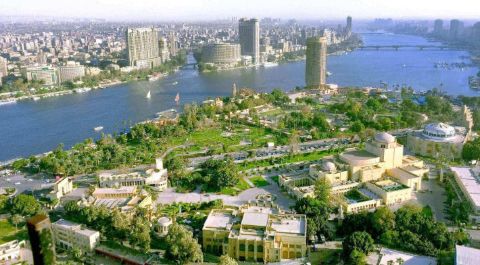
An aerial journey reveals how Egypt is modernizing while preserving its unique past.
Hope you're finding these documentaries fascinating and eye-opening. It's just me, working hard behind the scenes to bring you this enriching content.
Running and maintaining a website like this takes time and resources. That's why I'm reaching out to you. If you appreciate what I do and would like to support my efforts, would you consider "buying me a coffee"?
BTC: bc1q8ldskxh4x9qnddhcrgcun8rtvddeldm2a07r2v
ETH: 0x5CCAAA1afc5c5D814129d99277dDb5A979672116
With your donation through , you can show your appreciation and help me keep this project going. Every contribution, no matter how small, makes a significant impact. It goes directly towards covering server costs.
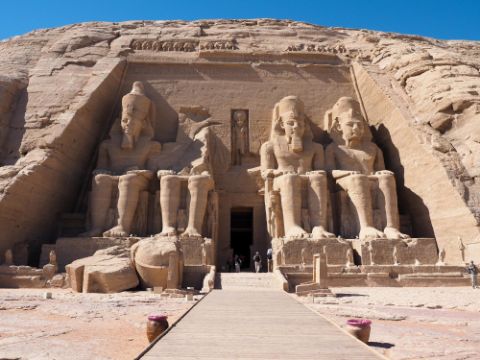
Flying across Egypt reveals how the ancients' achievements shaped the modern nation.
2019 • History
An aerial journey reveals how Egypt is modernizing while preserving its unique past.
2019 • History
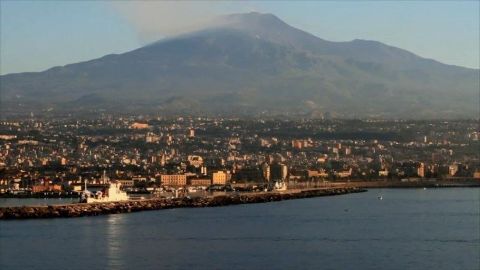
Historian Michael Scott begins his journey through Sicily on the slopes of Mount Etna, Europe's largest active volcano. For the ancient Greeks, the island was a land of gods and monsters - a dangerous and unpredictable world. Michael discovers how 3,000 years ago, the Greeks began to settle on Sicily's east coast - planting their olives and vines and building great city states that soon came to rival even Athens itself. He learns how great battles were fought between the Greeks and the Carthaginians for control of the island. How the Romans made it their first foreign colony and stripped Sicily of its forests to plant vast fields of grain.
S1E1 • Sicily: The Wonder of the Mediterranean • 2017 • History
He continues his personal account of Britain's empire by looking at how traders, conquerors and settlers spread the British way of doing things around the world - in particular how they created a very British idea of home. He begins in India, where early traders wore Indian costume and took Indian wives. Their descendants still cherish their mixed heritage. Victorian values put a stop to that as inter racial mixing became taboo. In Singapore he visits a club where British colonials gathered together, in Canada he finds a town whose inhabitants are still fiercely proud of the traditions of their Scottish ancestors, in Kenya he meets the descendants of the first white settlers - men whose presence came to be bitterly resented as pressure for African independence grew. And he traces the story of an Indian family in Leicester whose migrations have been determined by the changing fortunes of the British empire.
Deciphering the meaning of strange symbols in Egyptian art gives insight into ancient knowledge of sacred cosmology. A new way of interpreting hieroglyphics is presented, indicating that the ancients had sophisticated understanding of physics, biology and celestial mechanics. The team goes on an expedition into the open desert in search of a remote site of extreme antiquity called nabta playa. Here, Neolithic stone circles were found marking the motion of the same stars as were tracked in pharonic civilization. The possible connection is discussed.
S1E3 • The Pyramid Code • 2010 • History
This is the story of how humans built a world of their own design. From bone huts to skyscrapers, shelter inspired new technologies and societies.
S1E6 • Origins: The Journey of Humankind • 2017 • History
Corruption, loose morals, depravity – the German monk Martin Luther had enough of this and demanded a pure church and a pure faith. His goal was nothing less than a revolution: the Reformation of the church and the ousting of the "depraved" popes. Instead, the freedom within every Christian believer was to be expressed. The first example was the Peasants' Wars. Christianity once again became divided after the downfall of Byzantium: there were now Catholics, Lutherans and Reformed, for the rebels soon went their own way. The new longing for a purer Christianity soon led to the biggest catastrophe in Europe, the Thirty Years' War. It was not foremost a religious war, although it was easier to kill more mercilessly without a legitimation than have to worry about "eternal life." Europe lost half of its population during this period. The horror of the roving hordes of soldiers, the plunge into the most terrible atrocities that humans are capable of, caused the educated to doubt the beneficial power of religion. The separation of church and state is the result of the European experience of so-called religious wars. Outlining the provincial causes and ravaging effects of Europe's Thirty Years' War, this program illustrates the ability of religious fervor to inflame nationalism and drive the quest for power. With background on Martin Luther's split with the Catholic Church and the St. Bartholomew's Day Massacre, Dr. Helmut Neuhaus of Friedrich Alexander University offers detailed analysis of the Hapsburg-Bohemian conflict, the shifting alliances of Catholics and Protestants, and the mercenary campaigns of Wallenstein—leading to a comparison with large-scale natural disaster. The program clearly identifies the three-decade inferno as an inspiration for later divisions of church and state.
S1E2 • The Holy Wars: War and Religion • 2004 • History
A unique excavation unravels the complex and creative nature of Neanderthals, shattering preconceptions through the lens of a landmark discovery - the best-preserved Neanderthal skeleton found in over 25 years.
2024 • History