Episode 1 • 2018 • episode "S1E1" Big Cats

Category: Nature | Download:

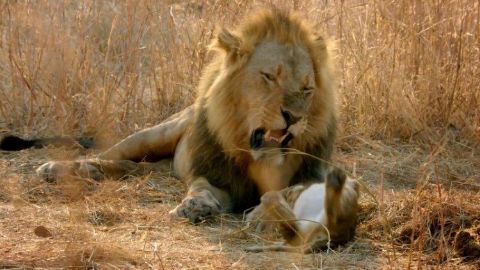
In Ruaha, Tanzania, lions form huge super prides in order to hunt giants. Amongst cats lions are unusual, the only one to live in groups. In numbers they find the strength and audacity to hunt the most formidable prey. In Sri Lanka a tiny rusty-spotted cat explores his forest home - 200 times smaller than a lion, the rusty-spotted is the smallest of all cats, but just as curious. The Canada lynx lives further north than any cat, relying on snowshoe hares to survive the bitterly cold winters. Until now, lynx were creatures of mystery, but now technology provides an insight into their secret lives.

Make a donation

Buy a brother a hot coffee? Or a cold beer?

Hope you're finding these documentaries fascinating and eye-opening. It's just me, working hard behind the scenes to bring you this enriching content.

Running and maintaining a website like this takes time and resources. That's why I'm reaching out to you. If you appreciate what I do and would like to support my efforts, would you consider "buying me a coffee"?

Donation addresses

Buy Me a Coffee at ko-fi.com

patreon.com

BTC: bc1q8ldskxh4x9qnddhcrgcun8rtvddeldm2a07r2v

ETH: 0x5CCAAA1afc5c5D814129d99277dDb5A979672116

With your donation through , you can show your appreciation and help me keep this project going. Every contribution, no matter how small, makes a significant impact. It goes directly towards covering server costs.
Big Cats • 2018 • 2 episodes •

Episode 1

In Ruaha, Tanzania, lions form huge super prides in order to hunt giants. Amongst cats lions are unusual, the only one to live in groups. In numbers they find the strength and audacity to hunt the most formidable prey. In Sri Lanka a tiny rusty-spotted cat explores his forest home - 200 times smaller than a lion, the rusty-spotted is the smallest of all cats, but just as curious. The Canada lynx lives further north than any cat, relying on snowshoe hares to survive the bitterly cold winters. Until now, lynx were creatures of mystery, but now technology provides an insight into their secret lives.

2018 • Nature

Episode 3

This new age of discovery is revealing there is still so much to learn about the cat family. Using high-tech collars, Professor Alan Wilson has discovered it is not straight-line speed that is a cheetah's greatest weapon but their ability to break, change direction and accelerate. His research is rewriting what we understand about the fastest animal on land. This is also a crucial time for cat conservation - most are threatened, facing extreme habitat loss and conflict with humans. Yet there are many positive stories of cats bouncing back from the brink,

2018 • Nature

You might also like

Descent into the Mariana Trench

Exploring an unknown world 10,000 m beneath the waves. After capturing a giant squid on film, NHK's deep-sea film crew explores our planet's deepest point The Mariana Trench is nearly 7 miles deep. The water pressure is immense, and it's a world that's long been out of our reach. What creatures could survive such hostile conditions? This is an expedition to explore the earth's deepest frontier. Narrated By David Attenborough.

Part 3Deep Ocean • 2018 • Nature

Commuters

More than a billion people around the world commute into cities each day, and they are not alone. The world's wildlife is commuting too. A steady flow of animals journey in and out of cities to find food and shelter or to start a family. Leaving the wilderness they must overcome the unique challenges that the urban world throws at them to benefit from the opportunities on offer. This episode explores whether the secret to an animal's success in this fast-changing world is to keep one foot in the wild and one in the city, becoming a wild commuter. It seems that all over the world animals are finding that the city can offer opportunities that are harder to come by in the natural world. Some, like African penguins, whose population has plummeted by 80 per cent in the last 50 years, find shelter in the city. By nesting in Cape Town they are safer from predators, and with relatively easy access to their fishing grounds they have the best of both worlds. Many other animals commute into cities because they are filled with food. In St Lucia, South Africa, that includes hippos. Able to eat up to fifty kilograms of grass in a single sitting, they have developed a taste for the short, manicured lawns and come to town every night to dine out. St Lucia's human residents have learnt to give the hippos the space they need during their night-time raids. Black bears need to eat more than 20,000 calories a day to survive their six-month hibernation through winter, and using their acute sense of smell they can easily track down leftovers. In North America they come into towns and cities in search of food. Many animals displaced from their natural habitat are now using their wild skill set in the city to help fulfill their needs. Could this be the beginning of a new and very modern migration?

S1E2Cities: Nature's New Wild • 2018 • Nature

The Northern Forests

Begins in northern Norway, 500 kilometres north of the Arctic Circle. Here, there is only just enough light for the pine trees to survive, but it is extremely cold during the winter. Pine cone seeds provide one of the few foods available at this time of year, and large herbivores such as the moose must also rely on their fat reserves.

3/12The Living Planet • 1984 • Nature

Building Bodies

The next programme explores the various sea-living invertebrates. In Morocco, the limestones are 600 million years old, and contain many invertebrate fossils. They fall broadly into three categories: shells, crinoids and segmented shells. The evolution of shelled creatures is demonstrated with the flatworm, which eventually changed its body shape when burrowing became a necessity for either food or safety. It then evolved shielded tentacles and the casings eventually enveloped the entire body: these creatures are the brachiopods. The most successful shelled animals are the molluscs, of which there are some 80,000 different species.

2/13Life on Earth • 1979 • Nature

Human Evolution

In which John Green and Hank Green teach you about how human primates moved out of Africa and turned Earth into a real-life Planet of the Apes. And the apes are people! John and Hank teach you about how humans evolved, and the sort of tricks they picked up along the way like complex tool use, big brains, and fighting. Learn more: http://www.bighistoryproject.com

6Crash Course Big HistoryNature

The Hungry Leopard

At 13, Kamuti is one of the oldest leopards in the Luangwa region of Zambia. Old age brings many challenges, from hunting antelope to keeping a watchful eye on the lion pride nearby. Using a military-grade thermal camera, we lift the veil on the secret world of this enigmatic nocturnal predator for the first time.

S1E1Africa's Hunters • 2015 • Nature