Simon explores modern Istanbul in search of the last desperate centuries of Christian Byzantium, in which the once glorious city was buffeted by enemies in both East and West, and yet still produced a golden artistic renaissance. This is story of the Christian crusaders who destroyed the city, and the Ottoman Muslims who restored it to life as an imperial capital after the epic siege of 1453.
Hope you're finding these documentaries fascinating and eye-opening. It's just me, working hard behind the scenes to bring you this enriching content.
Running and maintaining a website like this takes time and resources. That's why I'm reaching out to you. If you appreciate what I do and would like to support my efforts, would you consider "buying me a coffee"?
BTC: bc1q8ldskxh4x9qnddhcrgcun8rtvddeldm2a07r2v
ETH: 0x5CCAAA1afc5c5D814129d99277dDb5A979672116
With your donation through , you can show your appreciation and help me keep this project going. Every contribution, no matter how small, makes a significant impact. It goes directly towards covering server costs.
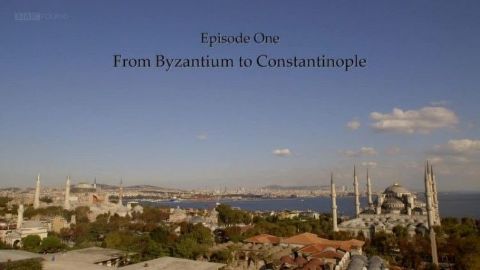
Simon uncovers the city's ancient Greek roots, maps its transformation into the imperial capital of a Christian Empire by Emperor Constantine the Great and reveals how ecclesiastical clashes forced Eastern and Western Churches apart.
2013 • History
Simon explores modern Istanbul in search of the last desperate centuries of Christian Byzantium, in which the once glorious city was buffeted by enemies in both East and West, and yet still produced a golden artistic renaissance. This is story of the Christian crusaders who destroyed the city, and the Ottoman Muslims who restored it to life as an imperial capital after the epic siege of 1453.
2013 • History
Simon discovers surprises in Istanbul as it rose to become the imperial capital and Islam's most powerful city. Visiting the great mosques and palaces built by the Ottoman emperors, he tells the stories behind them - of royal concubines, murderous bodyguards and sultans both the powerful and the depraved. He shows how the Christians, Muslims and Jews of the city once co-existed before the waves of nationalist rebellions brought the Ottoman empire to its knees. In the 20th century the ancient capital was once more transformed by the new secular vision of Ataturk.
2013 • History
Even during the brutality of the Dark Ages, the Vikings of Northern Europe were considered particularly fearsome, ruthless, and dangerous. For centuries, historians believed all Viking warriors were men, but new archaeological discoveries on a small island in central Sweden have revealed evidence that some of the fighters were women. See how modern forensic testing helped identify the sex of one female war chief.
2019 • History
How a Future US President Faced Death in the War in the Pacific Set against the backcloth of motor torpedo boats attracting adventurous spirits in both world wars, this is the story of the future US President and his struggle to survive after the sinking of his PT-109 off New Georgia in the Solomons in July 1943. Few people know how close JFK came to death in World War II when his PT-109 was rammed by a Japanese destroyer in the Pacific killing two of its crew. While on night patrol in the Solomon Islands, skipper Jack Kennedy's torpedo boat was cut in half by a Japanese destroyer. Although injured himself, Kennedy pulled one badly wounded man to the shore, then swam to nearby islands to find help for his crew. Kennedy's torpedo boat was the only one to be rammed by the Japanese navy during the war, which led to accusations of poor leadership. However, nobody could doubt the courage of Kennedy to lead his 10 men to safety as he swam for over five hours to raise the alarm and be rescued by a navy that had given him up for dead. His exceptional courage and leadership saved his men... and made him one of World War II's most notable heroes.
15/20 • The True Action Adventures of the Twentieth Century • 1996 • History
Corruption, loose morals, depravity – the German monk Martin Luther had enough of this and demanded a pure church and a pure faith. His goal was nothing less than a revolution: the Reformation of the church and the ousting of the "depraved" popes. Instead, the freedom within every Christian believer was to be expressed. The first example was the Peasants' Wars. Christianity once again became divided after the downfall of Byzantium: there were now Catholics, Lutherans and Reformed, for the rebels soon went their own way. The new longing for a purer Christianity soon led to the biggest catastrophe in Europe, the Thirty Years' War. It was not foremost a religious war, although it was easier to kill more mercilessly without a legitimation than have to worry about "eternal life." Europe lost half of its population during this period. The horror of the roving hordes of soldiers, the plunge into the most terrible atrocities that humans are capable of, caused the educated to doubt the beneficial power of religion. The separation of church and state is the result of the European experience of so-called religious wars. Outlining the provincial causes and ravaging effects of Europe's Thirty Years' War, this program illustrates the ability of religious fervor to inflame nationalism and drive the quest for power. With background on Martin Luther's split with the Catholic Church and the St. Bartholomew's Day Massacre, Dr. Helmut Neuhaus of Friedrich Alexander University offers detailed analysis of the Hapsburg-Bohemian conflict, the shifting alliances of Catholics and Protestants, and the mercenary campaigns of Wallenstein—leading to a comparison with large-scale natural disaster. The program clearly identifies the three-decade inferno as an inspiration for later divisions of church and state.
S1E2 • The Holy Wars: War and Religion • 2004 • History
Most people describe the Vikings as a people who were dedicated exclusively to raiding the European coasts in search of gold and silver, but in this series we are going to delve deeper into what these Scandinavian sailors were really like. We will follow the Vikings on a journey through the centuries and see how they transformed populations, politics, trade, culture, religion and societies in general. In this first episode we will discover why they left Scandinavia to become pirates.
S1E1 • The Last Journey of the Vikings • 2019 • History
The end of the American Civil War allows Mankind to go into overdrive. This is an age of innovation, transformation and mass production. People believe that ‘Anything, everything, is possible.’ Japan goes from feudal society to industrial superpower within 50 years. But progress has its dark side. The demand for rubber devastates Africa. And the desire to build bigger, faster, better leads to a titanic disaster…
11/12 • Mankind: The Story of All of Us • 2012 • History
Himmler, Goebbels and Goering jockey for position while the Nazis rise to control Germany and plot to launch their vicious antisemitic programs.
4/10 • Hitler's Circle of Evil • 2017 • History