What is it really like to go to war? Filled with terror, pain and grief, it also brings exhilaration, and a profound sense of purpose. In Going to War, renowned authors Karl Marlantes and Sebastian Junger help us make sense of this paradox and get to the heart of what it’s like to be a soldier at war. Veterans of various conflicts reveal some universal truths of combat with unflinching candor.
Hope you're finding these documentaries fascinating and eye-opening. It's just me, working hard behind the scenes to bring you this enriching content.
Running and maintaining a website like this takes time and resources. That's why I'm reaching out to you. If you appreciate what I do and would like to support my efforts, would you consider "buying me a coffee"?
BTC: bc1q8ldskxh4x9qnddhcrgcun8rtvddeldm2a07r2v
ETH: 0x5CCAAA1afc5c5D814129d99277dDb5A979672116
With your donation through , you can show your appreciation and help me keep this project going. Every contribution, no matter how small, makes a significant impact. It goes directly towards covering server costs.
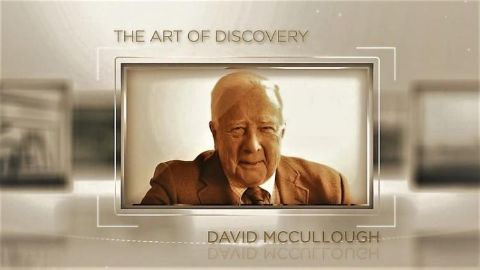
It is hard to imagine a sky without an airplane in it. But David McCullough takes us back to the first days of aviation. We learn about the Wright Brothers, not only through their achievements, but by discovering who they were as people and the early family influences that shaped their characters.
S1E3 • Curiosity Retreats: 2015 Lectures • 2015 • People
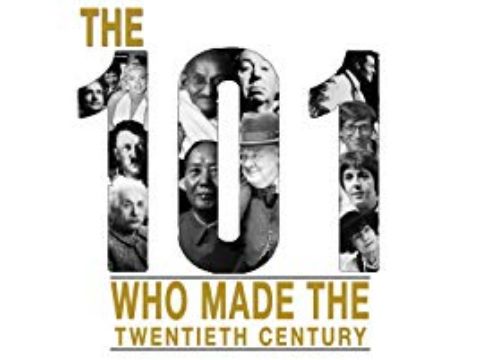
If this episode teaches us anything it’s that revolutionaries come in many different forms. All thirteen of our subjects have been pioneers and leaders in their fields and have changed everything, from the way we watch films to how we connect and work. For some the word revolutionary might only be a title but for others, such as Castro and Ghandi, it is far more real. This episode of heroes and villains features some of the most famous and infamous faces of the twentieth century.
S1E5 • The 101 People who Made the 20th Century • 2016 • People
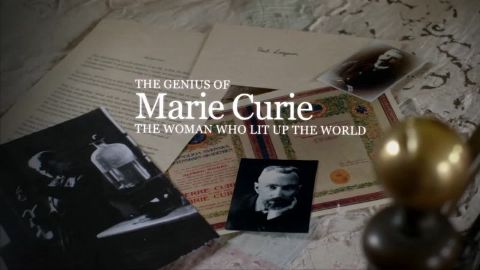
Nearly 80 years after her death, Marie Curie remains by far the best known female scientist. In her lifetime, she became that rare thing: a celebrity scientist, attracting the attention of the news cameras and tabloid gossip. They were fascinated because she was the first woman to win the Nobel Prize and is still the only person to have won two Nobels in two different sciences. But while the bare bones of her scientific life, the obstacles she had to overcome, the years of painstaking research, and the penalty she ultimately paid for her discovery of radium have become one of the iconic stories of scientific heroism, there is another side to Marie Curie: her human story. This multi-layered film reveals the real Marie Curie, an extraordinary woman who fell in love three times, had to survive the pain of loss, and the public humiliation of a doomed love affair. It is a riveting portrait of a tenacious mother and scientist, who opened the door on a whole new realm of physics, which she discovered and named: radioactivity. Full title - The Genius of Marie Curie: The Woman Who Lit Up the World
2013 • People
While Al Capone is locked up in prison, the empire he left behind is dealing with a new problem—Prohibition has recently been repealed and one of The Outfit's most important sources of income dries up. With Capone cut off from them, his most-trusted men, Frank Nitti, Tony Accardo, and Paul Ricca must keep his organization afloat, and Nitti takes the reins. With thousands of Americans flocking to the theaters, the film industry is raking in millions of dollars a month. So Nitti wants to hold the movie business hostage. In the 1930s, the Chicago mafia tried to get into the Hollywood film business in order to open up new sources of money. Their local man is Willie Bioff. In 1939, Al Capone was released early from prison. But the once powerful gang boss is seriously ill. Responsibility now lies with Tony Accardo and Paul Ricca. They expand the Chicago mafia to Las Vegas
S1E6 • The Making of the Mob: Chicago • 2016 • People
Feminism has ushered in sweeping changes to society, securing rights for women around the world. How much further do we have to go?
S1E7 • History 101 • 2020 • People
According to the UN, it is predicted that the human population could reach ten billion people by the year 2050. For broadcaster and naturalist Chris Packham, who has dedicated his life to championing the natural world, the subject of our growing population and the impact it is having on our planet is one of the most vital – and often overlooked – topics of discussion in an era of increasing environmental awareness. Chris is worried that a world of ten billion may simply be too many people for the earth to sustain, given the impact 7.7 billion humans are already having. Travelling around the globe in search of answers to difficult and sometimes controversial questions, Chris investigates why our population is growing so rapidly, what impact it is having on the natural world, and whether there is anything that can be done. Chris travels to Brazil to discover a megacity on the verge of running out of water and an industry expanding to feed our growing numbers – with dire consequences for biodiversity. In Nigeria, a country set to become the third most populous nation on earth by 2050, overtaking the United States, Chris visits an extraordinary community surviving against the odds and a school that might hold the answer to a future fall in the birth rate. Back home in Britain, Chris interviews Sir David Attenborough – like Chris, he is a patron of the charity Population Matters. Chris also examines the role of falling birth rates around the world, the impact of an aging population, and meets a couple who are struggling to get pregnant through IVF. With interviews from several population experts, Chris's focus ultimately turns to the impact our levels of consumption are already having, and asks whether the world can rebalance to accommodate the needs of over two billion more people.