Documentary which tells the story of the most ambitious project ever conceived on the internet and the people who tried to stop it. In 1937 HG Wells predicted the creation of the 'world brain', a giant global library that contained all human knowledge which would lead to a new form of higher intelligence. 70 years later the realisation of that dream was under way, as Google scanned millions of books for its Google Books website. However, over half those books were still in copyright and authors across the world launched a campaign to stop them, climaxing in a New York courtroom in 2011. A film about the dreams, dilemmas and dangers of the internet, set in spectacular locations in China, USA, Europe and Latin America.
Hope you're finding these documentaries fascinating and eye-opening. It's just me, working hard behind the scenes to bring you this enriching content.
Running and maintaining a website like this takes time and resources. That's why I'm reaching out to you. If you appreciate what I do and would like to support my efforts, would you consider "buying me a coffee"?
BTC: bc1q8ldskxh4x9qnddhcrgcun8rtvddeldm2a07r2v
ETH: 0x5CCAAA1afc5c5D814129d99277dDb5A979672116
With your donation through , you can show your appreciation and help me keep this project going. Every contribution, no matter how small, makes a significant impact. It goes directly towards covering server costs.

What if aliens landed on Earth? Much of science fiction explores the moment of first contact – what will people do when the aliens land? From H. G. Wells’ pioneering The War of the Worlds to Independence Day, Men in Black, and District 9, Invasion deals with our fears of alien invasions of earth. David Tennant explains the appeal of Doctor Who’s Daleks and Cybermen while John Carpenter and Chris Carter explore the rich appeal of the paranoia fuelled by hidden aliens with The Thing and The X-Files. It also asks what if the monsters were our own creation? With the aid of rarely seen animation tests, Phil Tippett takes us behind the scenes in the creation of the dinosaurs of Jurassic Park. But not all invasions are hostile. Peter Coyote and Richard Dreyfuss discuss the creation of Spielberg’s spellbinding classics E.T. the Extra-Terrestrial and Close Encounters of the Third Kind. There is more than one kind of invasion.
Part 3 • The Real History of Science Fiction • 2014 • Technology
We live in a world where technology is constantly changing. Sadly you know as you leave the store, that your brand new SmartPhone is already out of date – somebody, somewhere has just upgraded it. Keeping up with the latest everything can be a challenge. We asked Dr. Jennifer Gardy to explore current scientific research that will impact us all in the future. Dr. Gardy is a Senior Scientist, Molecular Epidemiology at the British Columbia Centre for Disease Control. On this journey, Jennifer travels from Toronto to New York, Los Angeles, Tokyo, and Munich and back home to Vancouver – all in the name of science exploration.
S54E03 • The Nature of Things • 2014 • Technology
The World Trade Center and Sears Tower were record-setting skyscrapers made possible by cutting-edge engineering innovations, but just as these American icons set new standards in construction, dark and insidious forces were poised to undo it all.
S1E3 • Skyscrapers Engineering the Future • 2019 • Technology
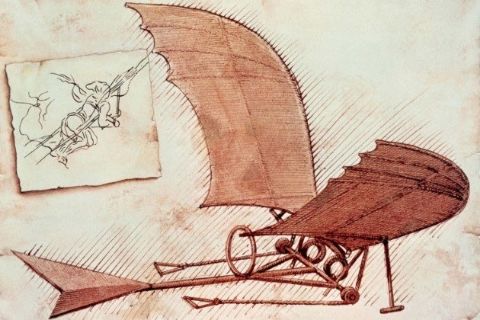
This program looks at the beginnings of flight, with innovators such as Benjamin Franklin and Leonardo DaVinci coming up with new ways to give man wings, and chronicles the invention of hot air balloons, Zeppelins, box kites, and of course the story of the most influential aviation inventors of all - Wilbur and Orville Wright.
1/13 • The Amazing World Of Aviation • 2009 • Technology
Artificial intelligence is examined. Included: the effort to build intelligent machines by reverse-engineering the brain and by inventing completely new kinds of computers, with exponentially greater speed and processing power.
3 • Nova Wonders • 2018 • Technology
By the end of the 21st century, humanity is becoming desperate. Decades of heatwaves and droughts have led to unusually poor harvests, while the warming oceans yield fewer fish each year. In the tropical zones, millions suffer from famine and resource wars have made millions more flee to the north. As things quickly get worse, in an act of desperation, the world's governments decide to enact an emergency plan...
In a Nutshell • 2020 • Technology