Discover the secrets of humanity’s advanced skill set and predominance on earth. It was the rapid growth of our brain, originating about 2 million years ago, that allowed us to be the predominant species of the world. What caused this rapid growth of our cerebral cortex?
Hope you're finding these documentaries fascinating and eye-opening. It's just me, working hard behind the scenes to bring you this enriching content.
Running and maintaining a website like this takes time and resources. That's why I'm reaching out to you. If you appreciate what I do and would like to support my efforts, would you consider "buying me a coffee"?
BTC: bc1q8ldskxh4x9qnddhcrgcun8rtvddeldm2a07r2v
ETH: 0x5CCAAA1afc5c5D814129d99277dDb5A979672116
With your donation through , you can show your appreciation and help me keep this project going. Every contribution, no matter how small, makes a significant impact. It goes directly towards covering server costs.
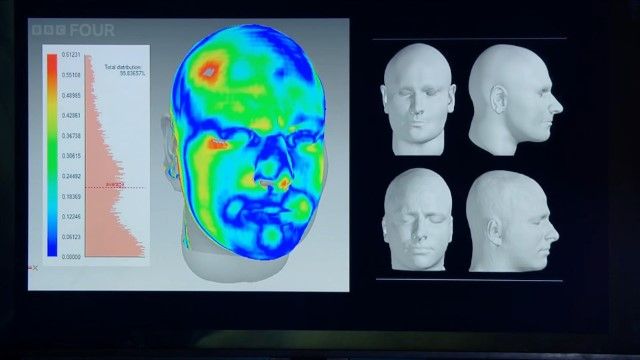
The cutting-edge research of our organs networking activities greatly contributes to scientists pursuit of the largest mystery about human life and birth. How does a single cell ultimately grows into all the varieties of our organs each with complex structure and function?
Just about every solid, liquid, or gas in the world as we know it begins with reactions between individual atoms and molecules. Host David Pogue dives into the transformative world of chemical reactions, from the complex formula that produces cement to the single reaction that’s allowed farmers to feed a global population by the billions.
S1E2 • Beyond the Elements • 2020 • Science
Just 92 elements made up the world, but the belief that were only four - earth, fire, air and water - persisted until the 19th Century. Professor Al-Khalili retraces the footsteps of the alchemists who first began to question the notion of the elements in their search for the secret of everlasting life. He reveals the red herrings and rivalries which dogged scientific progress, and explores how new approaches to splitting matter brought us both remarkable elements and the new science of chemistry.
S1E1 • Chemistry: A Volatile History • 2010 • Science
The final lecture in the series begins with a 'heist'. A jewel thief steals a precious man-made diamond from the Royal Institution's collection. Can forensic evidence conclusively identify and convict the criminal responsible? To find out, the Royal Institution's lecture theatre is transformed into a courtroom and the audience acts as jury on the case, with a special guest king's counsel invited to defend the suspect. Forensic evidence is based on probability; it can never be 100 per cent certain. So, how convincing does the evidence need to be for the court of the Royal Institution's own jury to reach a guilty verdict? Includes insights from real criminal investigations.
S1E3 • Secrets of Forensic Science • 2022 • Science
Anatomist Alice Roberts embarks on an audacious scientific stunt - to rebuild her own body from scratch, editing out errors left behind by evolution; to create the perfect body. With the help of one of the world's best virtual sculptors, Scott Eaton, and top SFX model maker Sangeet Prabhaker, Alice creates a life-size model of the perfect human body, to be revealed in front of 150 people at London's Science Museum. Through natural selection, animals have evolved incredible biological designs, from supersharp senses to superpowered limbs. Alice is on a hunt to find the very best designs the natural world has to offer and use them to fix the flaws in our own human anatomy. By meeting leading medical and animal experts, Alice finds out what the body's biggest problems are, and how amazing adaptations in the rest of the animal kingdom could provide inspiration for her perfect body. Using incredible CGI to morph her existing body into new forms, she demonstrates how rethinking our bodies could overcome millennia of natural selection. Finally, in an epic reveal, Alice unveils the life-sized model of her perfect self in the Science Museum. There, in front of an audience, Alice meets the 'perfect human' version of herself for the first time. Ambitious, audacious and packed with cutting-edge science, Can Science Make Me Perfect? With Alice Roberts challenges everything you thought you knew about the perfect body.
2018 • Science
Glass so strong you can jump on it, rubber so tough it protects a clay pot dropped from 50 feet, endless varieties of plastic. Scientists and engineers have created virtually indestructible versions of common materials by manipulating the chains of interlocking atoms that give them strength—but have they made them too tough? Host David Pogue explores the fantastic chemistry behind the everyday.
S1E1 • Beyond the Elements • 2020 • Science