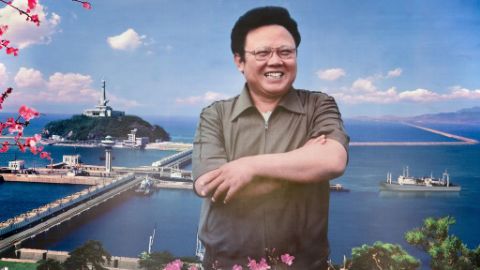
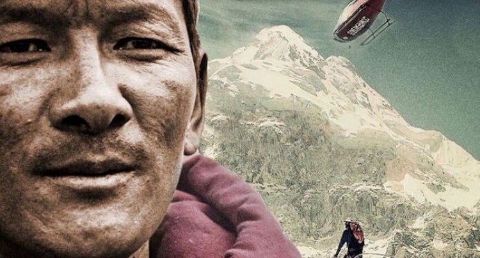
For decades, Korea and its people labor under Japanese imperialist rule. But in 1912, in a small town outside Pyongyang, a child is born, Kim Il Sung, coinciding with an omen of imperialism’s doom.
Hope you're finding these documentaries fascinating and eye-opening. It's just me, working hard behind the scenes to bring you this enriching content.
Running and maintaining a website like this takes time and resources. That's why I'm reaching out to you. If you appreciate what I do and would like to support my efforts, would you consider "buying me a coffee"?
BTC: bc1q8ldskxh4x9qnddhcrgcun8rtvddeldm2a07r2v
ETH: 0x5CCAAA1afc5c5D814129d99277dDb5A979672116
With your donation through , you can show your appreciation and help me keep this project going. Every contribution, no matter how small, makes a significant impact. It goes directly towards covering server costs.
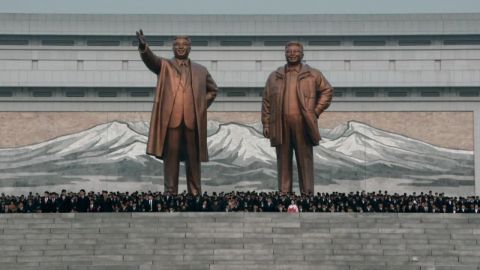
For decades, Korea and its people labor under Japanese imperialist rule. But in 1912, in a small town outside Pyongyang, a child is born, Kim Il Sung, coinciding with an omen of imperialism’s doom.
2018 • People
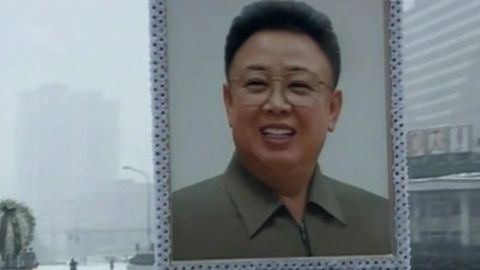
Unpacking the unique Kim father-son relationship further, “Son of God” tracks the decline of Kim Il Sung and the rise of his son, Kim Jong Il.
2018 • People
“A Nuclear Family” begins as the Cold War ends — and North Korea has lost Soviet patronage, and with it, the security it guarantees and the economic support that has sustained the country for nearly half a century
2018 • People
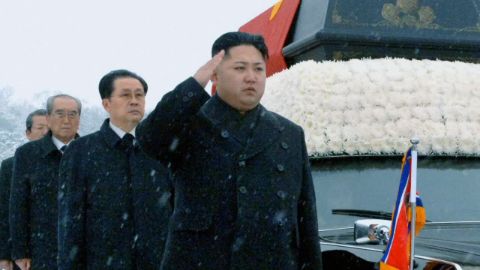
The final episode starts with the death of Kim Jong Il and the rise of the new leader of North Korea — his son, Kim Jong Un, taking power at the age of 28.
2018 • People
The Birds do it. The bees do it. It seems we all do it. But we like to think we are different from other animals. So are we? Decoding Desire unravels the mysteries of sex and desire and explores how sexual diversity and the experience of pleasure itself may be the key to species survival. Traditionally, the common assumption has been that men are sexually dominant with strong desires, while females are more interested in security and monogamy. But is this really true? Scientists are increasingly looking at animals to reveal more about our own sexual behaviour.
S54E05 • The Nature of Things • 2014 • People
What makes us good or evil? It's a simple but deeply unsettling question. One that scientists are now starting to answer. Horizon meets the researchers who have studied some of the most terrifying people behind bars - psychopathic killers. But there was a shock in store for one of these scientists, Professor Jim Fallon, when he discovered that he had the profile of a psychopath. And the reason he didn't turn out to be a killer holds important lessons for all of us. We meet the scientist who believes he has found the moral molecule and the man who is using this new understanding to rewrite our ideas of crime and punishment.
This documentary uses the recordings Princess Diana made for the book that was written by Andrew Morton. In this documentary Diana narrates her life and the events that surrounded her.
2017 • People
Desperate for money, Rembrandt takes on commissions that even his pupils have passed up on, pupils who are now getting the grand offers that once came through Rembrandt’s door.
S1E3 • Looking for Rembrandt • 2019 • People
Italian magistrate Giovanni Falcone became the symbol of the struggle against the mob and in the US John Gotti flaunted his mob involvement before being jailed. The glory days may have gone but the mafia is far from dead.
According to the UN, it is predicted that the human population could reach ten billion people by the year 2050. For broadcaster and naturalist Chris Packham, who has dedicated his life to championing the natural world, the subject of our growing population and the impact it is having on our planet is one of the most vital – and often overlooked – topics of discussion in an era of increasing environmental awareness. Chris is worried that a world of ten billion may simply be too many people for the earth to sustain, given the impact 7.7 billion humans are already having. Travelling around the globe in search of answers to difficult and sometimes controversial questions, Chris investigates why our population is growing so rapidly, what impact it is having on the natural world, and whether there is anything that can be done. Chris travels to Brazil to discover a megacity on the verge of running out of water and an industry expanding to feed our growing numbers – with dire consequences for biodiversity. In Nigeria, a country set to become the third most populous nation on earth by 2050, overtaking the United States, Chris visits an extraordinary community surviving against the odds and a school that might hold the answer to a future fall in the birth rate. Back home in Britain, Chris interviews Sir David Attenborough – like Chris, he is a patron of the charity Population Matters. Chris also examines the role of falling birth rates around the world, the impact of an aging population, and meets a couple who are struggling to get pregnant through IVF. With interviews from several population experts, Chris's focus ultimately turns to the impact our levels of consumption are already having, and asks whether the world can rebalance to accommodate the needs of over two billion more people.