Koalas • 2017 • episode "S1E2" Wildlife

Category: Nature

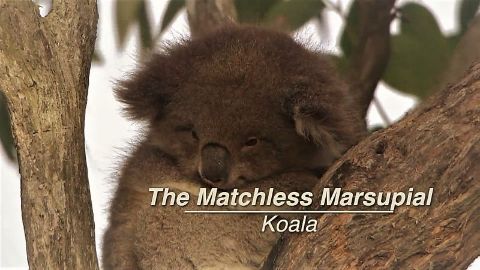
Arguably in the top three on everyone's list of "cutest animals", the koala lives a sleep-filled life. This film follows the koala community of Otway Forest, south of Melbourne, Australia. How do koalas behave? -- and when are they awake?

Make a donation

Buy a brother a hot coffee? Or a cold beer?

Hope you're finding these documentaries fascinating and eye-opening. It's just me, working hard behind the scenes to bring you this enriching content.

Running and maintaining a website like this takes time and resources. That's why I'm reaching out to you. If you appreciate what I do and would like to support my efforts, would you consider "buying me a coffee"?

Donation addresses

Buy Me a Coffee at ko-fi.com

patreon.com

BTC: bc1q8ldskxh4x9qnddhcrgcun8rtvddeldm2a07r2v

ETH: 0x5CCAAA1afc5c5D814129d99277dDb5A979672116

With your donation through , you can show your appreciation and help me keep this project going. Every contribution, no matter how small, makes a significant impact. It goes directly towards covering server costs.
Wildlife • 2017 • 6 episodes •

The Western Lowland Gorilla

Following a large family of gorillas over nine years, this film captures many aspects of unique behavior as well as revealing touching stories of compassion among this gorilla family in the tropical rainforests of Gabon.

2017 • Nature

Koalas

Arguably in the top three on everyone's list of "cutest animals", the koala lives a sleep-filled life. This film follows the koala community of Otway Forest, south of Melbourne, Australia. How do koalas behave? -- and when are they awake?

2017 • Nature

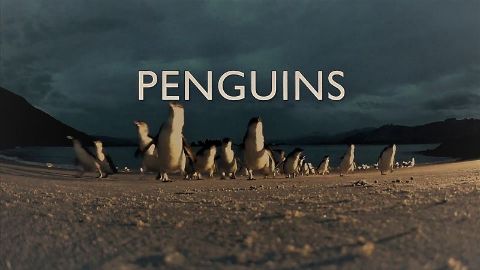
Penguins

So, you think you know penguins? Experience life in "Penguin Paradise", on South Island, New Zealand, from which the first penguins are supposed to have evolved. Home to unusual penguins like the Little Penguin, and the forest-dwelling crested Fiordland Penguin - it is a penguin wonderland!

2017 • Nature

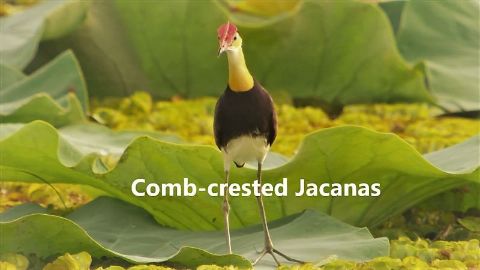
Comb crested Jacanas

The Comb-crested Jacanas are unique birds that use their long toes to walk delicately across lotus leaves and catch underwater prey. This episode, filmed between the rainy season and dry season in Kakadu, follows a father bird raising his chicks through their dramatic and difficult first year.

2017 • Nature

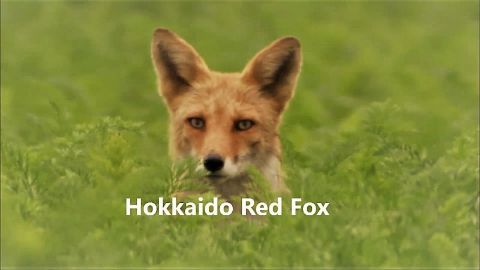
Hokkaido Red Fox

This story takes place in the vast northern land near the coast of the Sea of Okhotsk in eastern Hokkaido. Taking center stage are two mother Hokkaido red foxes caring for 10 pups. The mothers, who are in fact mother and daughter, each use their strengths and display amazing parental teamwork.

2017 • Nature

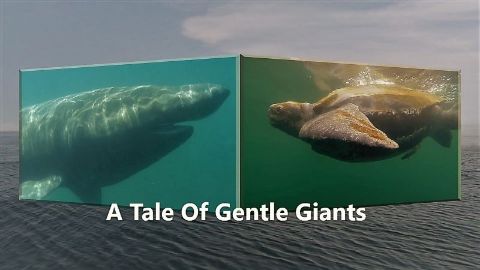
A Tale of Gentle Giants

During summer, the Atlantic coast of the northeastern United States attracts huge amounts of fish and wildlife. Particularly interesting are the basking sharks, the world’s second-largest fish, and the leatherback sea turtles, which weigh one ton and are the world’s largest reptile.

2017 • Nature

You might also like

The Ordovician

For nearly 4 billion years, the continents of Earth were a lifeless wasteland. But beneath the sea, our planet was teeming with life. Many strange creatures evolved, from eel-like conodonts to voracious cephalopods, until nearly all life was wiped out in our planet’s first mass extinction.

S1E1Ancient Oceans • 2019 • Nature

Dark

Focuses on animals that thrive in the dark, from leopards that use night vision to hunt their prey to bats using echolocation to navigate the night skies.

S1E1Mammals with David Attenborough • 2024 • Nature

Return of the Prairie Bandit

Their habitat once stretched across the Prairies, but when humans wiped out the one thing they eat, the black-footed ferret disappeared. The only native North American ferret, this mysterious animal became the most endangered species in the world. For many years, they survived only in zoos. Now a fledgling project is attempting to bring the black-footed ferret back to Saskatchewan. This dramatic story of the ferrets’ reintroduction to the wild unfolds in Return of the Prairie Bandit, a new documentary by Kenton Vaughan set in the stunning prairie of southern Saskatchewan.

S50E13The Nature of Things • 2011 • Nature

Super Small Animals

From a primate that's no bigger than a mouse, to a chameleon that can fit on your fingertip, the natural world is full of fantastically small animals. Biologist Patrick Aryee explores the fascinating secrets behind these miniature marvels and shows that they're not the underdogs you might think they are. Super Small Animals follows him as he meets the leading experts on these pint sized superstars, and finds out what makes them some of the most successful on the planet. First up, he reveals the huge benefits that being small can bring. There's the little lemur whose diminutive frame helps it to exploit a unique gap in the eco-system, the tiny hummingbird that uses its size to out-manoeuvre the competition, and the world's smallest seahorse that never has to leave home. He also explores why small animals are proportionally the strongest in the world, and introduces a peanut-sized beetle that can pull over a thousand times its own weight. Next he explores the challenges that animals face when they shrink in size, and the ingenious ways they overcome them. We find out how the smallest armadillo in the world manages to control its temperature in the searing desert sun, and the how the world's smallest fish can survive in nothing more than a puddle, because it never really grows up. Patrick meets a secretive hippo that lives in the dense jungle, and looks like it's been shrunk in the wash, and some of the world's smallest snakes that give birth to enormous babies. He also meets a scientist that studies how really tiny spiders have a surprising trick that enables them to travel an incredible 40 miles per day, using almost no energy. Then there are the animals that refuse to be pigeon holed as small, and manage to punch way above their weight. He puts some astonishing invertebrates to the test, to see how they work together to become much bigger than the sum of their parts and meets a pint-sized predator that takes on some of the largest and most dangerous creatures on the planet, getting hands on to discover how its build helps it to be brave. Finally he uncovers the incredible lengths that deep sea anglerfish go to in order to be big and small at the same time, and has an endearing encounter with a tiny carnivore that manages to be small in just one direction. Whether their size helps them to hunt, hide or survive, all these remarkable animals prove that good things really do come in small packages.

2017 • Nature

Wilderness

Simon discusses the challenge of preserving unspoilt wildernesses, from the icy expanses of Siberia to the tropical forests of central and South America. Simon reflects on how his past series have dealt with the causes and impact of climate change, as well as remembering a memorable report exposing the extent of plastic pollution in the ocean. He also recalls meeting indigenous people around the world and hearing their first-hand experiences of ecological damage.

S1E4Incredible Journeys with Simon Reeve • 2021 • Nature

Somewhere in Spacetime

Professor Brian Cox follows Earth's epic journey through space. He takes to the air in a top-secret fighter jet to race the spin of the planet and reverse the passage of the day. In Brazil, a monstrous wave that surges up the Amazon River provides an epic ride of a different kind - chased by a top surfer through the rainforest, this tidal wave marks Earth's constant dance with the Moon. Greenland experiences some of the biggest swings in seasons in the world, but despite the deep freeze, the harsh winter brings opportunity to the Inuit people who live there. All this spectacle here on Earth signals that we are thundering through the universe at breakneck speed. Brian explains why we can't feel it and how understanding motion brings us to understanding the nature of space and time itself, leading to the astonishing conclusion that the past, present and future all exist right now.

Part 2Forces of Nature With Brian Cox • 2016 • Nature