In the first programme of the series, music agent Emma Banks looks at how the music business finds talent and creates superstars. Over 25 years as one of the top agents in the business, Emma has worked with some of the world's most famous artists, including Katy Perry, Kanye West and Red Hot Chili Peppers. She's seen first-hand the fine line between success and failure, following the careers of hundreds of acts - from geniuses who never quite made it to megastars who conquered the world.
Hope you're finding these documentaries fascinating and eye-opening. It's just me, working hard behind the scenes to bring you this enriching content.
Running and maintaining a website like this takes time and resources. That's why I'm reaching out to you. If you appreciate what I do and would like to support my efforts, would you consider "buying me a coffee"?
BTC: bc1q8ldskxh4x9qnddhcrgcun8rtvddeldm2a07r2v
ETH: 0x5CCAAA1afc5c5D814129d99277dDb5A979672116
With your donation through , you can show your appreciation and help me keep this project going. Every contribution, no matter how small, makes a significant impact. It goes directly towards covering server costs.
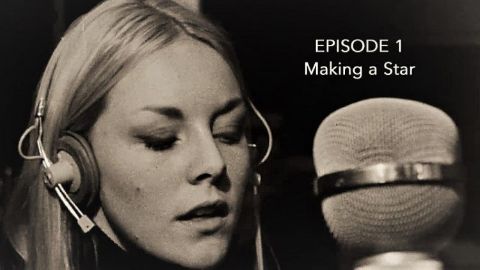
In the first programme of the series, music agent Emma Banks looks at how the music business finds talent and creates superstars. Over 25 years as one of the top agents in the business, Emma has worked with some of the world's most famous artists, including Katy Perry, Kanye West and Red Hot Chili Peppers. She's seen first-hand the fine line between success and failure, following the careers of hundreds of acts - from geniuses who never quite made it to megastars who conquered the world.
2018 • Music
Music promoter John Giddings takes us on an entertaining ride behind the stage lights to tell the story of how live performance has become a billion-pound industry. As the founder and promoter of the modern Isle of Wight festival and one of the world's biggest live promoters, John knows more than most how to put a show on the road. And how the world of live performance has changed. Where once bands would tour to promote an album, in the age of downloads and disappearing record sales, the live arena is a huge business. Bigger than ever before.
2018 • Music
Suzy Klein reaches the 1930s, when the totalitarian dictators sought to use and abuse music for ideological ends. Suzy looks at the lives of Richard Strauss, Dmitri Shostakovich and Sergei Prokofiev, who produced some of the 20th-century's best-loved music whilst working for Hitler and Stalin. The political message of Peter and the Wolf is revealed as well as the secret code hidden in Shostakovich's quartets and Strauss's personal reasons for trying to please the Nazis. Suzy also uncovers why Hitler adored Wagner but banned Mendelssohn's Wedding March; how Stalin used music to subtly infiltrate minds; and why Carl Orff's Carmina Burana, a Nazi favourite, appeals to our most primitive senses. Suzy also raises some intriguing questions: Can we pin meaning onto music? What are the moral responsibilities of artists? And did the violence and tyranny of those regimes leave an indelible stain on the music they produced?
S1E2 • Tunes for Tyrants • 2017 • Music
A film about the sound of Australian rock and the emergence of one of the world's greatest rock bands - AC/DC, or Acca Dacca as they are known in Australia, and the legendary music company, Albert Music (Alberts) that helped launched them on to the global rock scene. Through the 1960s, 70s and 80s, Alberts created a house of hits in Australia that literally changed the sound of Australian popular music. It started with the Easybeats and their international hit Friday On My Mind back in the 60s. In the 1970s when Australia was in the midst of a deep recession, a rough and ready pub rock sound emerged, characterised by bands like Rose Tattoo who were promoted by family-run company, Alberts. The raw power and fat guitar sound that characterised Aussie rock was pioneered by the Alberts and took Australia and the world by storm.
2016 • Music
Suzy Klein takes us back to the volatile years following the Russian Revolution and World War I, when music was seen as a tool to change society. Suzy explores the gender-bending cabarets of 1920s Berlin and smashes a piano in the spirit of the Bolshevik revolution. She also reveals why one orchestra decided to work without a conductor, uncovers the dark politics behind Mack the Knife and probes the satirical songs which tried to puncture the rise of the Nazis. Suzy's musical stories are brought to life with the help of the BBC National Orchestra of Wales and its Chorus, as well as solo performers. This was a golden age for music, and its jazz, popular songs, experimental symphonies and classics like Rachmaninoff all provoke debate - what kind of culture do we want? Is music for the elite or for the people? Was this a new age of liberal freedom to be relished - or were we hurtling towards the apocalypse?
S1E1 • Tunes for Tyrants • 2017 • Music
When you listen to music, multiple areas of your brain become engaged and active. But when you actually play an instrument, that activity becomes more like a full-body brain workout. What's going on? Anita Collins explains the fireworks that go off in musicians' brains when they play, and examines some of the long-term positive effects of this mental workout.
The Korean Wave is taking the world by storm, and Korean Pop, or K-pop, is at the forefront. Krishnan Guru-Murthy goes inside South Korea's K-pop dance schools, investigating the hidden cost of becoming the next big idol. He learns how teenagers are crafted to be idols with relentless training regimes, scripted answers and picture-perfect looks, though just one per cent will 'make it big'.
2024 • Music
'My personal lullaby for a frenetic world. A manifesto for a slower pace of existence' - Max Richter. Max Richter's Sleep is a meditative respite from the rush and chaos of modern life that studies a universal experience. This documentary film follows acclaimed composer and musician Max Richter and his creative partner, artist and Bafta-winning film-maker Yulia Mahr, as they navigate an ambitious performance of his celebrated eight-hour opus Sleep at an open-air concert in Los Angeles. Emmy-nominated director Natalie Johns weaves in Mahr's personal archive and performance footage from Berlin, Sydney and Paris to create a rich portrait of a shared artistic process, along with contributions that illuminate both the science and the story behind the work.
2020 • Music