Documentary offering a chronological timeline of how and why the central alliance between Great Britain, the United States and the Soviet Union was formed in the years leading into the Second World War. It was an uneasy alliance and one fraught with power struggles, false promises and deadly suspicions. Plus, an in-depth picture of the race to ultimate victory and post-war supremacy, concluding with V day on the May 8 1945.
Hope you're finding these documentaries fascinating and eye-opening. It's just me, working hard behind the scenes to bring you this enriching content.
Running and maintaining a website like this takes time and resources. That's why I'm reaching out to you. If you appreciate what I do and would like to support my efforts, would you consider "buying me a coffee"?
BTC: bc1q8ldskxh4x9qnddhcrgcun8rtvddeldm2a07r2v
ETH: 0x5CCAAA1afc5c5D814129d99277dDb5A979672116
With your donation through , you can show your appreciation and help me keep this project going. Every contribution, no matter how small, makes a significant impact. It goes directly towards covering server costs.
Documentary offering a chronological timeline of how and why the central alliance between Great Britain, the United States and the Soviet Union was formed in the years leading into the Second World War. It was an uneasy alliance and one fraught with power struggles, false promises and deadly suspicions. Plus, an in-depth picture of the race to ultimate victory and post-war supremacy, concluding with V day on the May 8 1945.
2020 • History
On December 7 1941, Pearl Harbor was attacked by the Japanese, who killed more than 2,000 Americans. It soon became evident the US continue could no longer remain neutral in the Second World War.
2020 • History
An exploration of the tensions at the heart of the Allied war effort, as the dominant powers weigh up the moral ambiguity and actions of their alliance.
2020 • History
How, after a year of fraught relations and tension, the big three leaders met in Tehran seeking to find the unity they need to help the Allies win the Second World War.
2020 • History
In September 1944, Allied forces undertook Operation Market Garden, a joint air and ground mission with the aim of ending the Second World War by Christmas. Though the initiative liberated much of the Netherlands from Nazi occupation and established a foothold from which the Allies could make later offensives into Germany, it was considered a costly failure with lasting consequences.
2020 • History
A look at the decisive final months of the Second World War, from the American attacks on Hiroshima and Nagasaki to the race to reach Berlin.
2020 • History
Deciphering the meaning of strange symbols in Egyptian art gives insight into ancient knowledge of sacred cosmology. A new way of interpreting hieroglyphics is presented, indicating that the ancients had sophisticated understanding of physics, biology and celestial mechanics. The team goes on an expedition into the open desert in search of a remote site of extreme antiquity called nabta playa. Here, Neolithic stone circles were found marking the motion of the same stars as were tracked in pharonic civilization. The possible connection is discussed.
S1E3 • The Pyramid Code • 2010 • History
Jeremy Paxman continues his personal account of Britain's empire, looking at how the empire began as a pirates' treasure hunt, grew into an informal empire based on trade and developed into a global financial network. He travels from Jamaica, where sugar made plantation owners rich on the backs of African slaves, to Calcutta, where British traders became the new princes of India. Jeremy then heads to Hong Kong, where British-supplied opium threatened to turn the Chinese into a nation of drug addicts - leading to the brutal opium wars, in which Britain triumphed and took the island of Hong Kong as booty. Unfair trading helped spark the independence movement in India, led by Mahatma Gandhi; in a former cotton spinning town in Lancashire, Jeremy meets two women who remember Gandhi's extraordinary visit in 1931.
War heroes, disaffected workers, a wealthy playwright and an enigmatic veteran named Adolf Hitler create a movement fuelled by mythology and racism.
1/10 • Hitler's Circle of Evil • 2017 • History
Hitler gets rid of his political opponents and those who brought him to power with lies and violence. Now he only has to get rid of the leaders within the NSDAP. What will he do?
4/13 • The Hitler Chronicles • 2018 • History
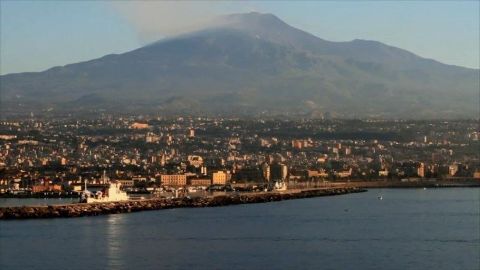
Historian Michael Scott begins his journey through Sicily on the slopes of Mount Etna, Europe's largest active volcano. For the ancient Greeks, the island was a land of gods and monsters - a dangerous and unpredictable world. Michael discovers how 3,000 years ago, the Greeks began to settle on Sicily's east coast - planting their olives and vines and building great city states that soon came to rival even Athens itself. He learns how great battles were fought between the Greeks and the Carthaginians for control of the island. How the Romans made it their first foreign colony and stripped Sicily of its forests to plant vast fields of grain.
S1E1 • Sicily: The Wonder of the Mediterranean • 2017 • History
How did an insignificant cluster of Latin hill villages on the edge of the civilised world become the greatest empire the world has known? In the fifth programme of the series, archaeologist and historian Richard Miles examines the phenomenon of the Roman Republic, from its fratricidal mythical beginnings, with the legend of Romulus and Remus, to the all too real violence of its end, dragged to destruction by war lords like Pompey the Great and Julius Caesar. Travelling to Sicily and North Africa, Richard tells the story of Rome's century-long struggle for dominance with the other great regional power, Carthage. It was a struggle that would end with the total destruction of this formidable enemy and the transformation of landlubber Rome into a seapower, and the Republic into an Empire. But with no-one left to beat, the only enemy that Rome had left was itself.
S1E5 • Ancient Worlds • 2010 • History