Our Infinite Universe is a new, entertaining and engaging, high-quality documentary film, exploring one of the most significant unanswered questions of our time ‘Does infinity exist?’ and if so, what are the implications of an infinite universe.
Hope you're finding these documentaries fascinating and eye-opening. It's just me, working hard behind the scenes to bring you this enriching content.
Running and maintaining a website like this takes time and resources. That's why I'm reaching out to you. If you appreciate what I do and would like to support my efforts, would you consider "buying me a coffee"?
BTC: bc1q8ldskxh4x9qnddhcrgcun8rtvddeldm2a07r2v
ETH: 0x5CCAAA1afc5c5D814129d99277dDb5A979672116
With your donation through , you can show your appreciation and help me keep this project going. Every contribution, no matter how small, makes a significant impact. It goes directly towards covering server costs.
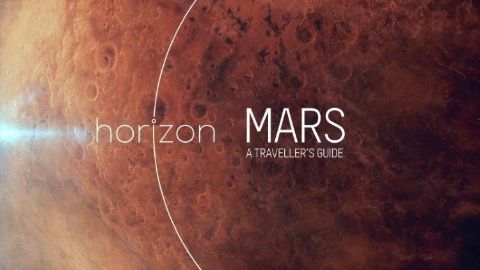
On the anniversary of the launch of one of the most successful space mission to Mars, the National Geographic Channel is set to premiere a documentary on the Mars Orbiter Mission (MOM) also known as Mangalyaan. The MOM, was launched on November 5 in 2013 by Indian Space Research Organisation (ISRO) and entered the orbit of the red planet on September 24, 2014. The documentary produced by Miditech captures its enthralling journey of over 650 million kilometeres. In its most daring missions to date, India successfully sent a spacecraft to orbit around Mars, making it the fourth space agency in the world and the first Asian country, to successfully send a mission to the red planet. And they did this in record time, choosing a unique route and on a shoe-string budget, pulling off what is now globally recognised as the cheapest ride to Mars! So how did the (ISRO) scientists, with no previous experience in sending an inter planetary mission, design, develop and successfully launch and navigate Mangalyaan through space? What were the hurdles they faced and what out of the box solutions did they come up with to address those challenges? Using a combination of live action, expert interviews, archive footage and graphic representations the film captures the tension and drama points of the space mission. The documentary also focus on the salient features of the mission, all the drama, excitement, last minute preparations, the countdown and the successful launch.
2017 • Astronomy
In this episode, they investigate whether we should really be giving up bacon and sausages, after new research suggested they're bad for us. The programme explores why eggs, for years demonised as unhealthy, are now firmly back in fashion and apparently now about as healthy as you can get. Could butter or dripping be next? Plus why white bread isn't necessarily as unhealthy as assumed.
S1E4 • Food: Truth or Scare • 2016 • Astronomy
Brian Cox continues his exploration of the solar system with a visit to a planet that dwarfs all the others: Jupiter. Its size gives it a great power that it has used to manipulate the other planets.
S1E3 • The Planets 2019 • 2019 • Astronomy
Explore the story behind the man who found the first clues to life's beginnings on Earth.
3/13 • Cosmos: Possible Worlds • 2020 • Astronomy
Documentary marking the fiftieth anniversary of Yuri Gagarin's flight into space. It was hailed by the Soviet Union as a triumph for socialist science over capitalism, but the true story is much stranger. George Carey's film shows how the Soviet space programme was kick-started by a mystic who taught that science would make us immortal, and carried forward by a scientist who believed that we should evolve into super-humans who could leave our overcrowded planet to colonise the universe. Stranger still, Carey shows how those ideas have survived Communism and adapted themselves to the science of the modern world.
2011 • Astronomy
Jupiter is the biggest planet in our solar system. The gas giant is NOT a failed star, but a really successful planet! It has a dynamic atmosphere with belts and zones, as well as an enormous red spot that’s actually a persistent hurricane. Jupiter is still warm from its formation, and has an interior that’s mostly metallic hydrogen, and it may not even have a core.
16 • Crash Course Astronomy • Astronomy