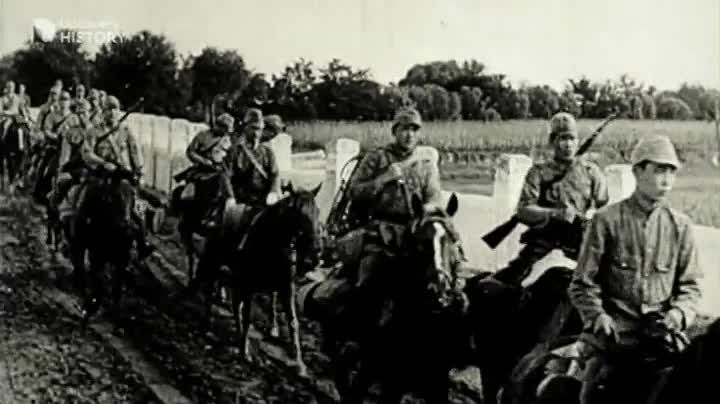
A great short history of the Japanese Empire, from the early mediaeval strife of the time of the code of the Samurai which carried through to to the opening of Japan to Western trade. There's good detail on how Japan began to rely on its military caste and its deification of its Emperor. The search for Empire is its very undoing as the military seize political power and begins to rival the colossus of the USA for domination of Asia, a disastrous policies that ends beneath the foreboding mushroom clouds over Hiroshima and Nagasaki.
Hope you're finding these documentaries fascinating and eye-opening. It's just me, working hard behind the scenes to bring you this enriching content.
Running and maintaining a website like this takes time and resources. That's why I'm reaching out to you. If you appreciate what I do and would like to support my efforts, would you consider "buying me a coffee"?
BTC: bc1q8ldskxh4x9qnddhcrgcun8rtvddeldm2a07r2v
ETH: 0x5CCAAA1afc5c5D814129d99277dDb5A979672116
With your donation through , you can show your appreciation and help me keep this project going. Every contribution, no matter how small, makes a significant impact. It goes directly towards covering server costs.
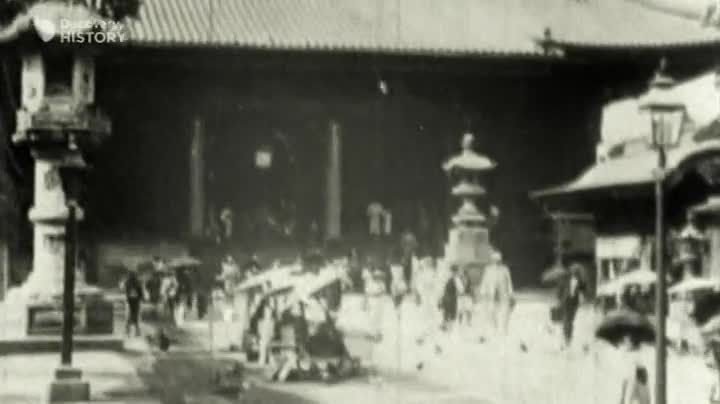
A great short history of the Japanese Empire, from the early mediaeval strife of the time of the code of the Samurai which carried through to to the opening of Japan to Western trade. There's good detail on how Japan began to rely on its military caste and its deification of its Emperor. The search for Empire is its very undoing as the military seize political power and begins to rival the colossus of the USA for domination of Asia, a disastrous policies that ends beneath the foreboding mushroom clouds over Hiroshima and Nagasaki.
2011 • History
A great short history of the Japanese Empire, from the early mediaeval strife of the time of the code of the Samurai which carried through to to the opening of Japan to Western trade. There's good detail on how Japan began to rely on its military caste and its deification of its Emperor. The search for Empire is its very undoing as the military seize political power and begins to rival the colossus of the USA for domination of Asia, a disastrous policies that ends beneath the foreboding mushroom clouds over Hiroshima and Nagasaki.
2011 • History
We explore the legacies of the Ancient Greeks, what they have given us today, and asks why these legacies have lasted through time. Democracy, art, architecture, philosophy, science, sport, theatre - all can be traced back to ancient Greece. Travelling across the ancient Greek world, from Athens to Olympia, Macedon, Turkey and Sicily, Michael discovers why the ancient Greeks were so successful, why their culture and way of life spread across continents and through time and why they still have such a powerful hold over our imaginations today.
S1E2 • Who Were the Greeks? • 2013 • History
Neil reveals how the clans plotted against Mary Stewart, Queen of Scots, ultimately leading to the beheading of the most charismatic queen in Scottish history. The tale turns on a brother's plot to overthrow his sister in a ruthless bid for power. James Stewart, Earl of Moray, uses clan power to first control and then rid Scotland of his sister Mary. As she battles conspiracies, plots and counterplots, Mary is trapped in the cruel and tumultuous world of clan blood feuds. After they murder her husband Lord Darnley and Mary flees into the arms of the Earl of Bothwell, the most ruthless of Scotland's clan chiefs, civil war breaks out. Mary escapes to England, never to return again.
S1E3 • Rise of the Clans • 2018 • History
This is the story of the rise and fall of the man who became a role model to Hitler and some of history's worst dictators of the twentieth century and beyond - Benito Mussolini.
7/10 • Evolution of Evil • 2015 • History
Exploring the myth of the crude savage Attila. Part genius, part psychopath, Attila is unlike the other Huns. A calculating, ruthless gambler, his one goal is conquest - and he's set his sights on Roman cities to test out his brilliant new siege tactics. The Roman Empire is about to fall. Tribes hungry for booty are invading from Asia, the Huns being the fiercest of them. Only two things unite them: The greed for Roman gold and their leader, Attila. He is the greatest warrior the Huns have ever seen, as brutal as he is brilliant. Through skilful tactics and unscrupulous lust for power, he briefly creates an empire that stretches from the steppes of Central Asia to the Danube.
S1E6 • Warriors: Great Men of History • 2007 • History
Alastair unpicks the reasons behind the dazzling revolution that gave birth to classical Greek art, asking how the Greeks got so good so quickly. He travels to the beautiful Valley of the Temples in Agrigento, and to the island of Mozia to see the astonishing charioteer found there in 1979, and marvels at the athletic bodies of the warriors dragged from the seabed - the Riace Bronzes. It was a creative explosion that covered architecture, sculpting in marble, casting in bronze, even painting on vases. Perhaps the most powerful factor was also its greatest legacy - a fascination with the naked human body.
S1E2 • Treasures of Ancient Greece • 2015 • History
Alastair Sooke charts the decline and fall of the Roman Empire through some of its hidden and most magical artistic treasures. He travels to Leptis Magna in Libya, shortly after the overthrow of Gaddafi, and finds one of the best preserved Roman cities in the world and the cradle of later Roman art. Sooke discovers glorious mosaics which have never been filmed before but also finds evidence of shocking neglect of Libya's Roman heritage by the Gaddafi regime. His artistic tour takes him to Egypt and the northern frontiers of the empire where he encounters stunning mummy paintings and exquisite silver and glassware. As Rome careered from one crisis to another, official art became more hard boiled and militaristic and an obscure cult called Christianity rose up to seize the mantle of Western art for centuries to come.
S1E3 • Treasures of Ancient Rome • 2012 • History